Archives par étiquette : NASA

A Nibble on the Sun

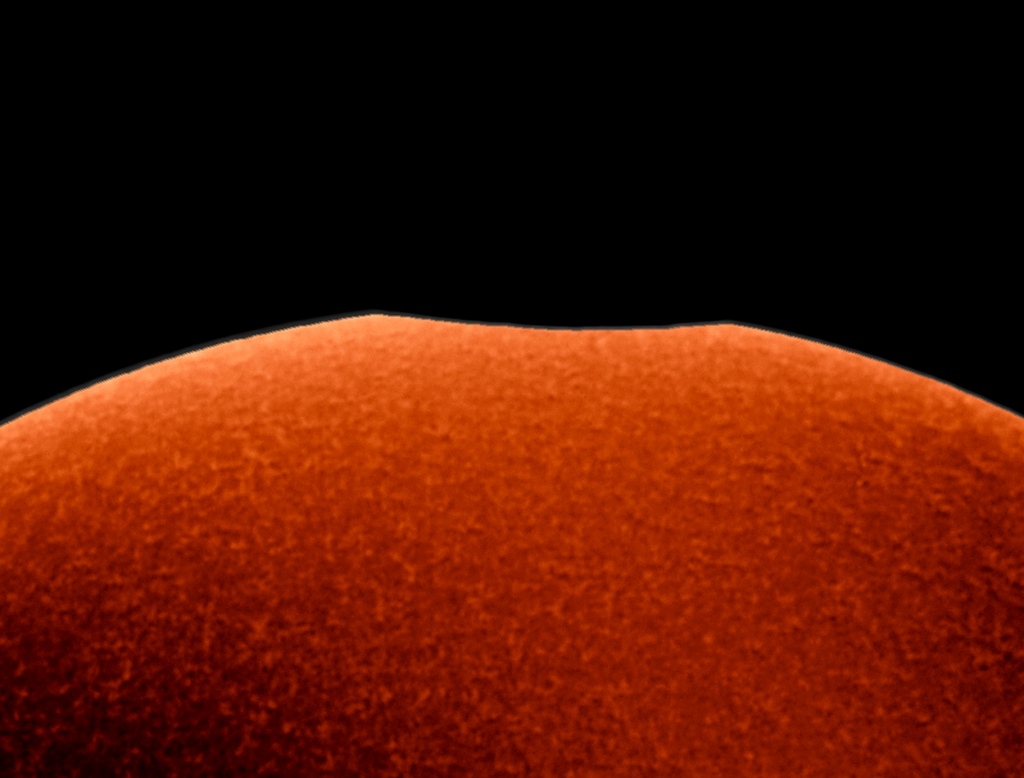
The smallest of the three partial solar eclipses during 2018 was just yesterday, Friday, July 13. It was mostly visible over the open ocean between Australia and Antarctica. Still, this video frame of a tiny nibble on the Sun was captured through a hydrogen-alpha filter from Port Elliott, South Australia, during the maximum eclipse visible from that location. There, the New Moon covered about 0.16 percent of the solar disk. The greatest eclipse, about one-third of the Sun’s diameter blocked by the New Moon, could be seen from East Antarctica near Peterson Bank, where the local emperor penguin colony likely had the best view. During this prolific eclipse season, the coming Full Moon will bring a total lunar eclipse on July 27, followed by yet another partial solar eclipse at the next New Moon on August 11. via NASA https://ift.tt/2Liqnhg
Centaurus A

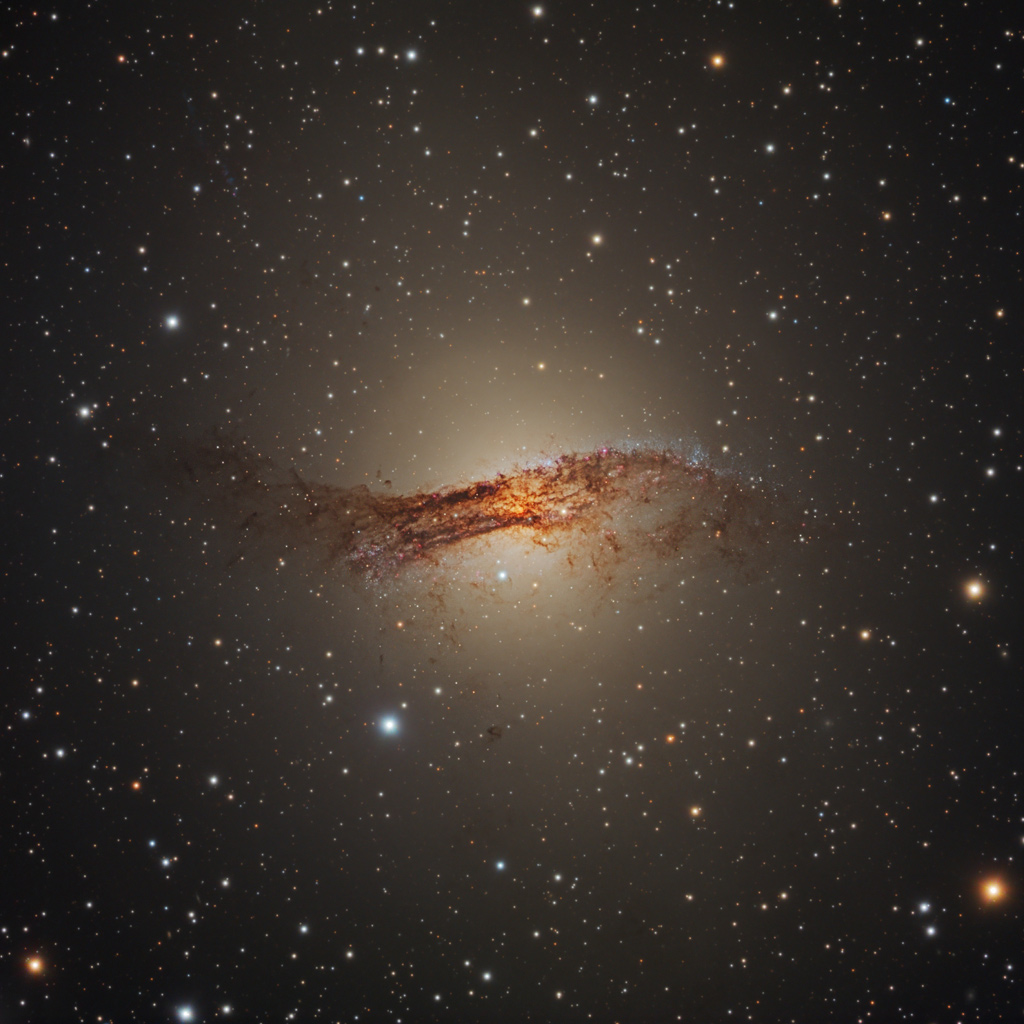
Only 11 million light-years away, Centaurus A is the closest active galaxy to planet Earth. Spanning over 60,000 light-years, the peculiar elliptical galaxy also known as NGC 5128, is featured in this sharp telescopic view. Centaurus A is apparently the result of a collision of two otherwise normal galaxies resulting in a fantastic jumble of star clusters and imposing dark dust lanes. Near the galaxy’s center, left over cosmic debris is steadily being consumed by a central black hole with a billion times the mass of the Sun. As in other active galaxies, that process likely generates the radio, X-ray, and gamma-ray energy radiated by Centaurus A. via NASA https://ift.tt/2L4s98z

Noctilucent Clouds over Paris Fireworks

It’s northern noctilucent cloud season — perhaps a time to celebrate! Composed of small ice crystals forming only during specific conditions in the upper atmosphere, noctilucent clouds may become visible at sunset during late summer when illuminated by sunlight from below. Noctilucent clouds are the highest clouds known and now established to be polar mesospheric clouds observed from the ground. Although observed with NASA’s AIM satellite since 2007, much about noctilucent clouds remains unknown and so a topic of active research. The featured time-lapse video shows expansive and rippled noctilucent clouds wafting over Paris, France, during a post-sunset fireworks celebration on Bastille Day in 2009 July. This year, several locations are already reporting especially vivid displays of noctilucent clouds. via NASA https://ift.tt/2m4T9qw

Road to Mars

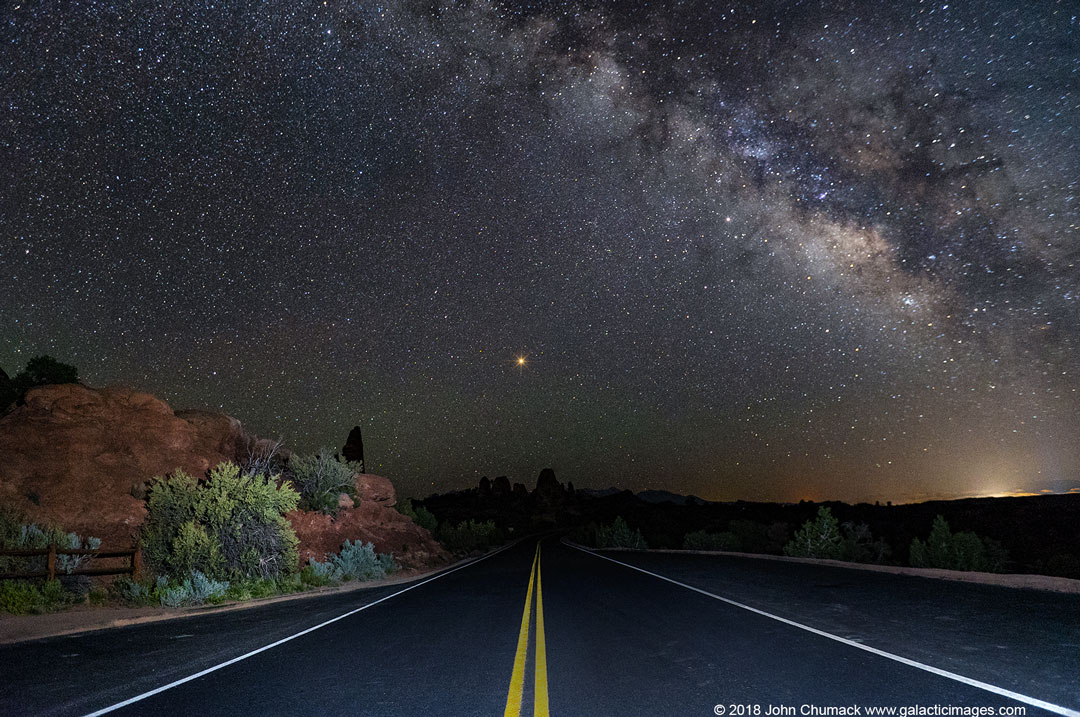
What’s that light at the end of the road? Mars. This is a good month to point out Mars to your friends and family because our neighboring planet will not only be its brightest in 15 years, it will be visible for much of night. During this month, Mars will be about 180 degrees around from the Sun, and near the closest it ever gets to planet Earth. In terms of orbits, Mars is also nearing the closest point to the Sun in its elliptical orbit, just as Earth moves nearly between it and the Sun — an alignment known as perihelic opposition. In terms of viewing, orange Mars will rise in the east just as the Sun sets in the west, on the opposite side of the sky. Mars will climb in the sky during the night, reach its highest near midnight, and then set in the west just as the Sun begins to rise in the east. The red planet was captured setting beyond a stretch of road in Arches National Park in mid-May near Moab, Utah, USA. via NASA https://ift.tt/2KJoPjQ

The Extraordinary Spiral in LL Pegasi

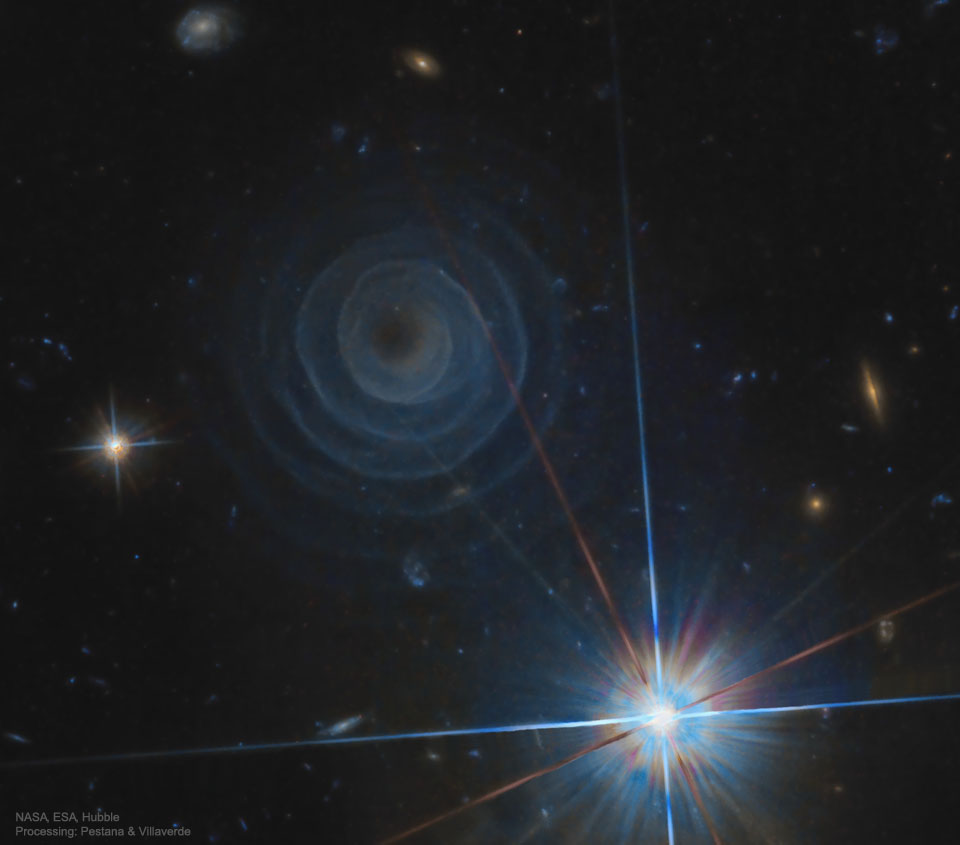
What created the strange spiral structure on the upper left? No one is sure, although it is likely related to a star in a binary star system entering the planetary nebula phase, when its outer atmosphere is ejected. The huge spiral spans about a third of a light year across and, winding four or five complete turns, has a regularity that is without precedent. Given the expansion rate of the spiral gas, a new layer must appear about every 800 years, a close match to the time it takes for the two stars to orbit each other. The star system that created it is most commonly known as LL Pegasi, but also AFGL 3068. The unusual structure itself has been cataloged as IRAS 23166+1655. The featured image was taken in near-infrared light by the Hubble Space Telescope. Why the spiral glows is itself a mystery, with a leading hypothesis being illumination by light reflected from nearby stars. via NASA https://ift.tt/2u0pEL2

A Northern Summer s Night

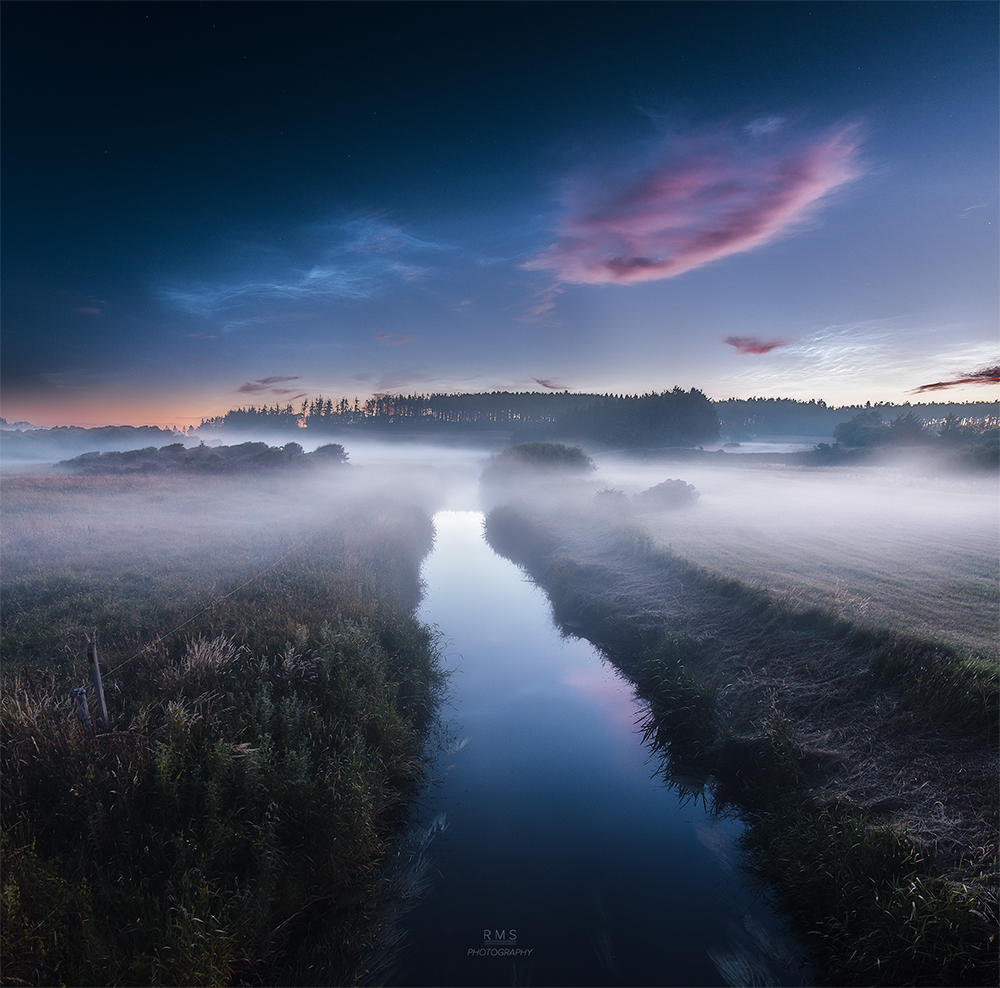
Near a summer’s midnight a mist haunts the river bank in this dreamlike skyscape taken on July 3rd from northern Denmark. Reddened light from the Sun a little below the horizon gives an eerie tint to low hanging clouds. Formed near the edge of space, the silvery apparitions above them are noctilucent or night shining clouds. The icy condensations on meteoric dust or volcanic ash are still in full sunlight at the extreme altitudes of the mesophere. Usually seen at high latitudes in summer months, wide spread displays of the noctilucent clouds are now being reported. via NASA https://ift.tt/2KD0Um5

Shadow Rise on the Inside Passage

At sunset look east not west. As Earth’s dark shadow rises from the eastern horizon, faint and subtle colors will appear opposite the setting Sun. This beautiful evening sea and skyscape records the reflective scene from a cruise on the well-traveled Alaskan Inside Passage in the Pacific Northwest. Along the horizon the fading sunset gives way to the the pinkish anti-twilight arch, more poetically known as the Belt of Venus. Often overlooked at sunset in favor of the brighter western horizon, the lovely arch is tinted by filtered sunlight backscattered in the dense atmosphere, hugging the planet’s rising blue-grey shadow. via NASA https://ift.tt/2KPnioD

Dawn s Early Light, Rocket s Red Glare

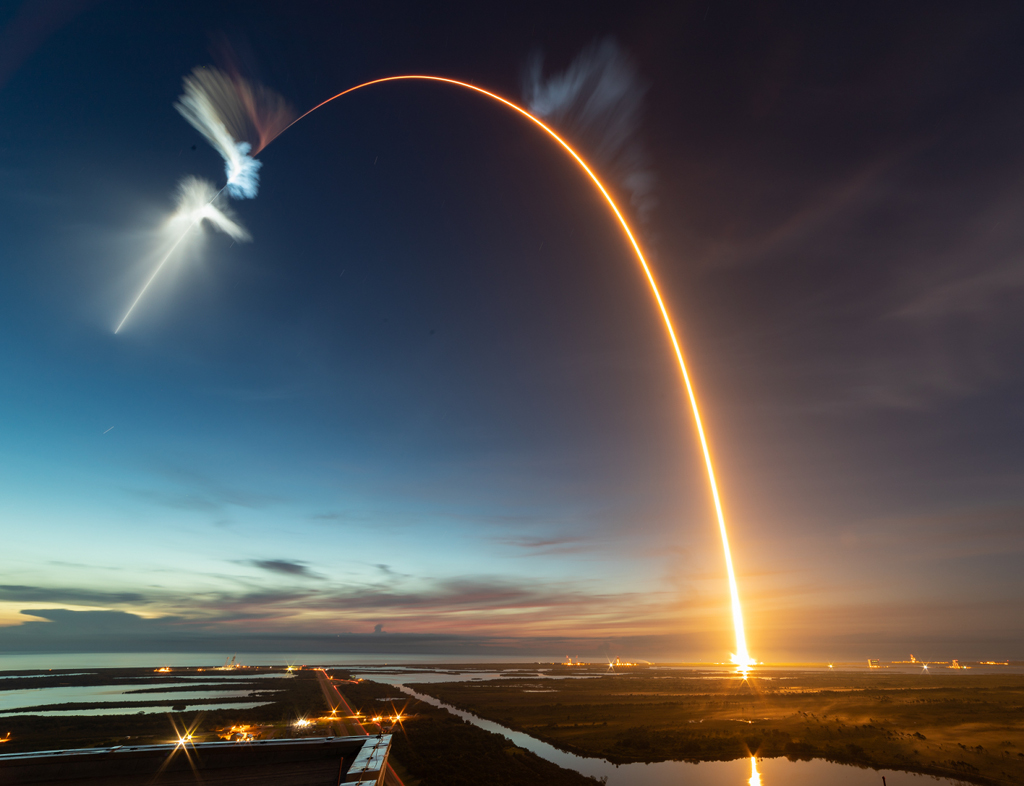
If you saw the dawn’s early light from Cape Canaveral Air Force Station last Friday, June 29, then you could have seen this rocket’s red glare. The single 277-second long exposure, made from the roof of NASA’s Vehicle Assembly building, shows a predawn Falcon 9 launch, the rocket streaking eastward into the sky about 45 minutes before sunrise. At high altitude, its stage separation plume is brightly lit by the Sun still below the eastern horizon. The Falcon 9 rocket’s first stage had been launched before, lofting the Transiting Exoplanet Survey Satellite (TESS) into orbit on April 18, only 72 days earlier. For this launch of SpaceX Commercial Resupply Service mission 15 (CRS-15) it carried an also previously flown Dragon capsule. But no further reuse of this Falcon 9 was planned so no dramatic first stage landing followed the launch. The Dragon capsule arrived at the International Space Station on July 2. via NASA https://ift.tt/2z8js8B

An Airplane in Front of the Moon

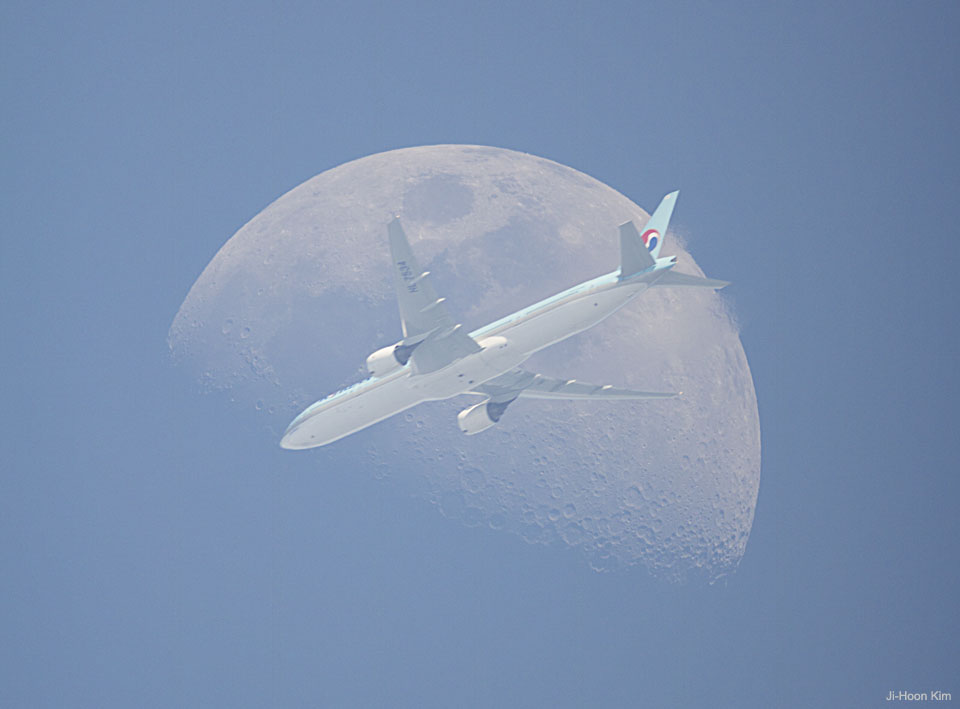
If you look closely at the Moon, you will see a large airplane in front of it. Well, not always. OK, hardly ever. Actually, to capture an image like this takes precise timing, an exposure fast enough to freeze the airplane and not overexpose the Moon — but slow enough to see both, a steady camera, and luck — because not every plane that approaches the Moon crosses in front. Helpful equipment includes a camera with fast continuous video mode and a mount that automatically tracks the Moon. The featured fleeting superposition was captured from Seoul, South Korea two weeks ago during a daytime waxing gibbous moonrise. Within 1/10th of a second, the airplane crossing was over. via NASA https://ift.tt/2lQ8f3b

From the Galactic Plane through Antares

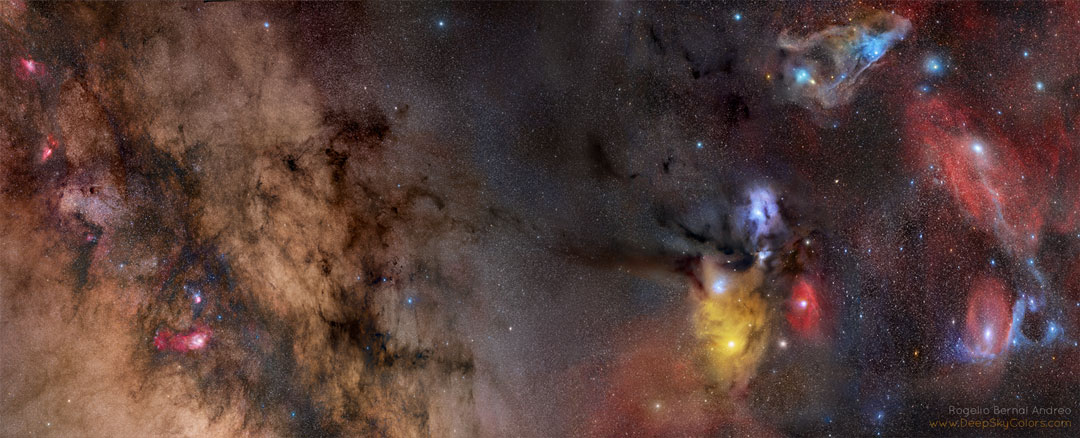
Behold one of the most photogenic regions of the night sky, captured impressively. Featured, the band of our Milky Way Galaxy runs diagonally along the far left, while the colorful Rho Ophiuchus region including the bright orange star Antares is visible just right of center, and the nebula Sharpless 1 (Sh2-1) appears on the far right. Visible in front of the Milk Way band are several famous nebulas including the Eagle Nebula (M16), the Trifid Nebula (M21), and the Lagoon Nebula (M8). Other notable nebulas include the Pipe and Blue Horsehead. In general, red emanates from nebulas glowing in the light of exited hydrogen gas, while blue marks interstellar dust preferentially reflecting the light of bright young stars. Thick dust appears otherwise dark brown. Large balls of stars visible include the globular clusters M4, M9, M19, M28, and M80, each marked on the annotated companion image. This extremely wide field — about 50 degrees across — spans the constellations of Sagittarius is on the lower left, Serpens on the upper left, Ophiuchus across the middle, and Scorpius on the right. It took over 100 hours of sky imaging, combined with meticulous planning and digital processing, to create this image. via NASA https://ift.tt/2lOJXXf