The Pale Blue Dot

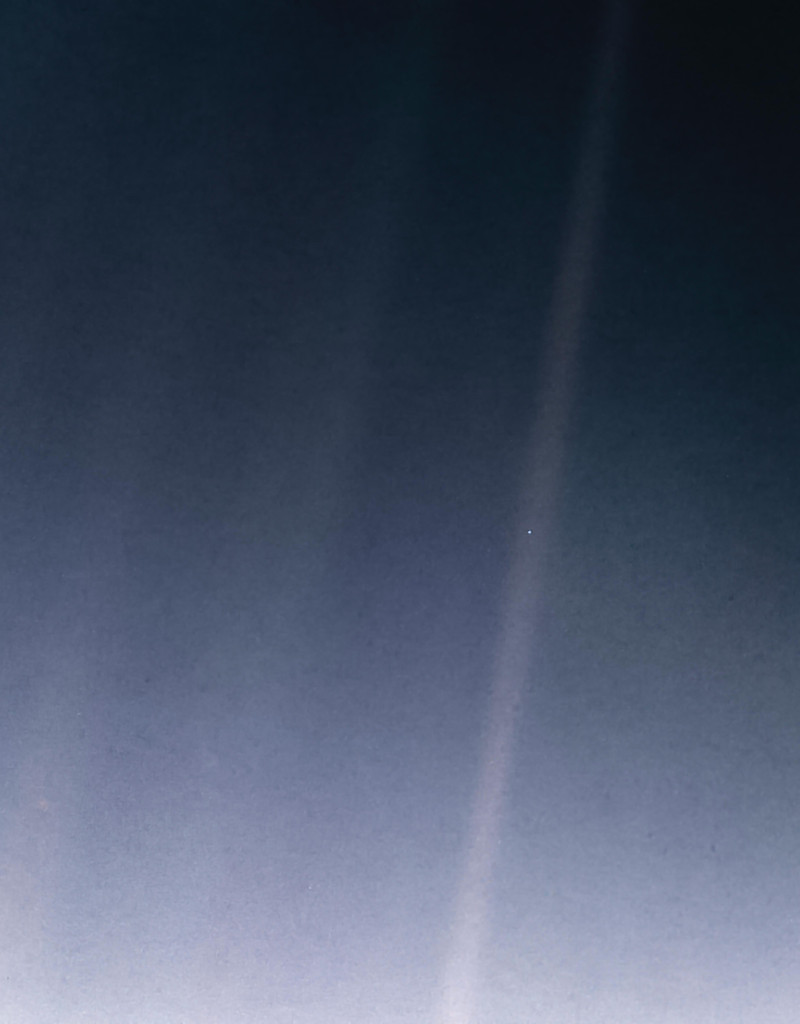
On Valentine’s Day in 1990, cruising four billion miles from the Sun, the Voyager 1 spacecraft looked back one last time to make the first ever Solar System family portrait. The portrait consists of the Sun and six planets in a 60 frame mosaic made from a vantage point 32 degrees above the ecliptic plane. Planet Earth was captured within a single pixel in this single frame. It’s the pale blue dot within the sunbeam just right of center in this reprocessed version of the now famous view from Voyager. Astronomer Carl Sagan originated the idea of using Voyager’s camera to look back toward home from a distant perspective. Thirty years later, on this Valentine’s day, look again at the pale blue dot. via NASA https://ift.tt/38rKipw
Spitzer s Trifid

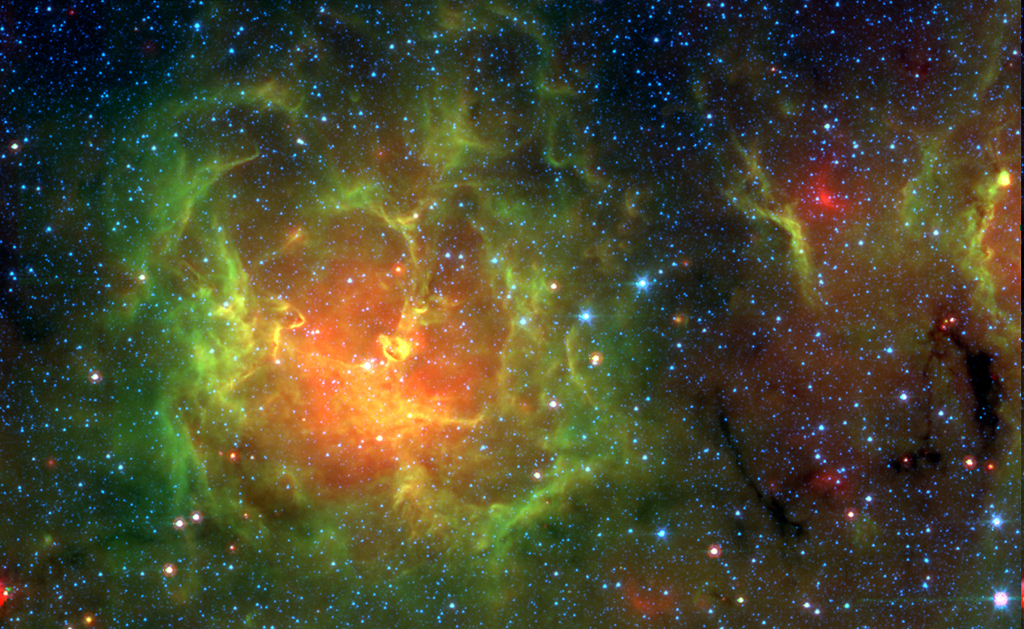
The Trifid Nebula, also known as Messier 20, is easy to find with a small telescope. About 30 light-years across and 5,500 light-years distant it’s a popular stop for cosmic tourists in the nebula rich constellation Sagittarius. As its name suggests, visible light pictures show the nebula divided into three parts by dark, obscuring dust lanes. But this penetrating infrared image reveals the Trifid’s filaments of glowing dust clouds and newborn stars. The spectacular false-color view is courtesy of the Spitzer Space Telescope. Astronomers have used the infrared image data to count newborn and embryonic stars which otherwise can lie hidden in the natal dust and gas clouds of this intriguing stellar nursery. Launched in 2003, Spitzer explored the infrared Universe from an Earth-trailing solar orbit until its science operations were brought to a close earlier this year, on January 30. via NASA https://ift.tt/2SkOxNY

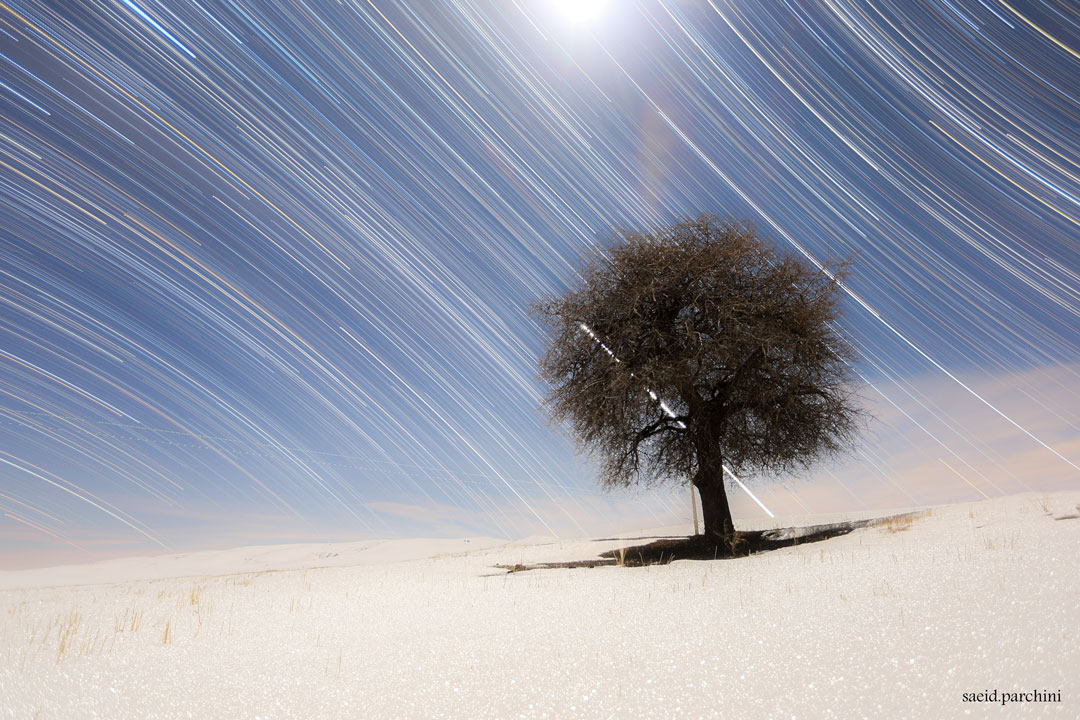
Star Trails of the North and South

What divides the north from the south? It all has to do with the spin of the Earth. On Earth’s surface, the equator is the dividing line, but on Earth’s sky, the dividing line is the Celestial Equator — the equator’s projection onto the sky.  You likely can’t see the Earth’s equator around you, but anyone with a clear night sky can find the Celestial Equator by watching stars move.  Just locate the dividing line between stars that arc north and stars that arc south. Were you on Earth’s equator, the Celestial Equator would go straight up and down.  In general, the angle between the Celestial Equator and the vertical is your latitude.  The featured image combines 325 photos taken every 30 seconds over 162 minutes. Taken soon after sunset earlier this month, moonlight illuminates a snowy and desolate scene in northwest Iran. The bright streak behind the lone tree is the planet Venus setting. via NASA https://ift.tt/2ULvIFo

Solar Eclipse over the UAE

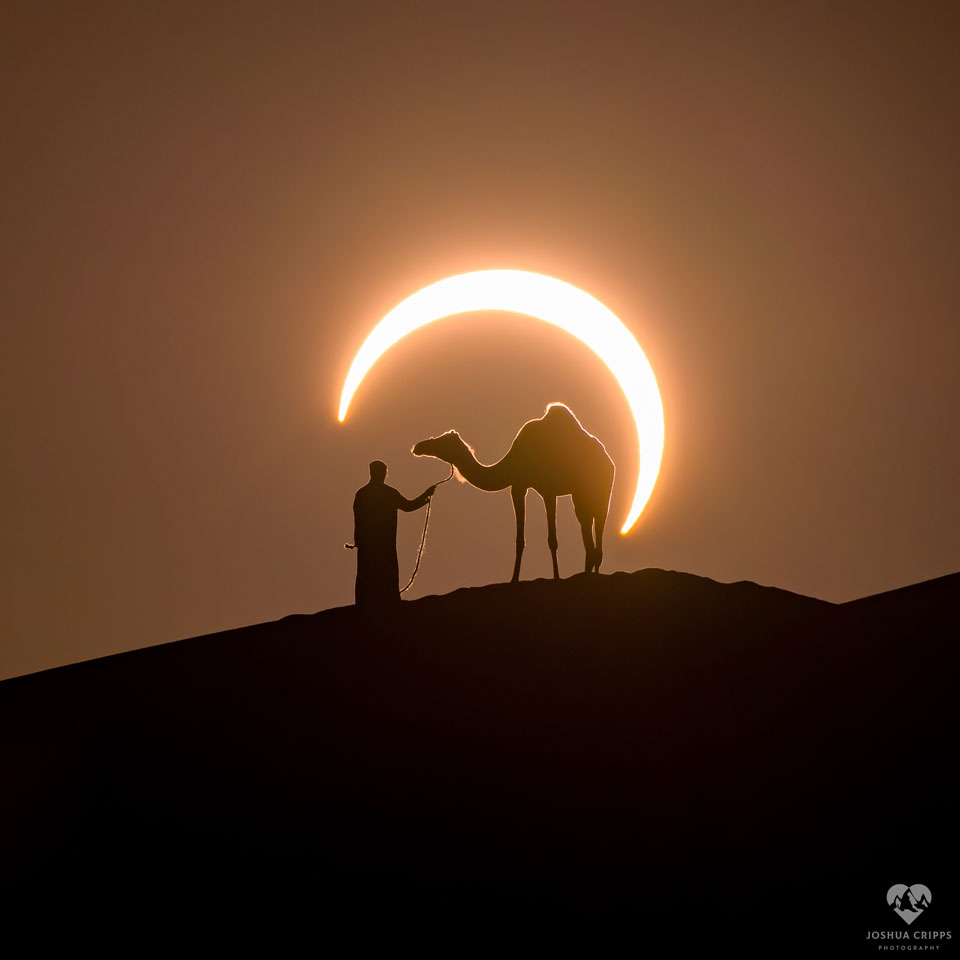
What’s happening behind that camel? A partial eclipse of the Sun. About six and a half weeks ago, the Moon passed completely in front of the Sun as seen from a narrow band on the Earth. Despite (surely) many camels being located in this narrow band, only one found itself stationed between this camera, the distant Moon, and the even more distant Sun. To create this impressive superposition, though, took a well-planned trip to the United Arab Emirates, careful alignments, and accurate timings on the day of the eclipse. Although the resulting featured image shows a partially eclipsed Sun rising, the Moon went on to appear completely engulfed by the Sun in an annular eclipse known as a ring of fire. Forward scattering of sunlight, dominated by quantum mechanical diffraction, gives the camel hair and rope fray an unusual glow. The next solar eclipse is also an annular eclipse and will occur this coming June. via NASA https://ift.tt/2OGmExD

To Fly Free in Space

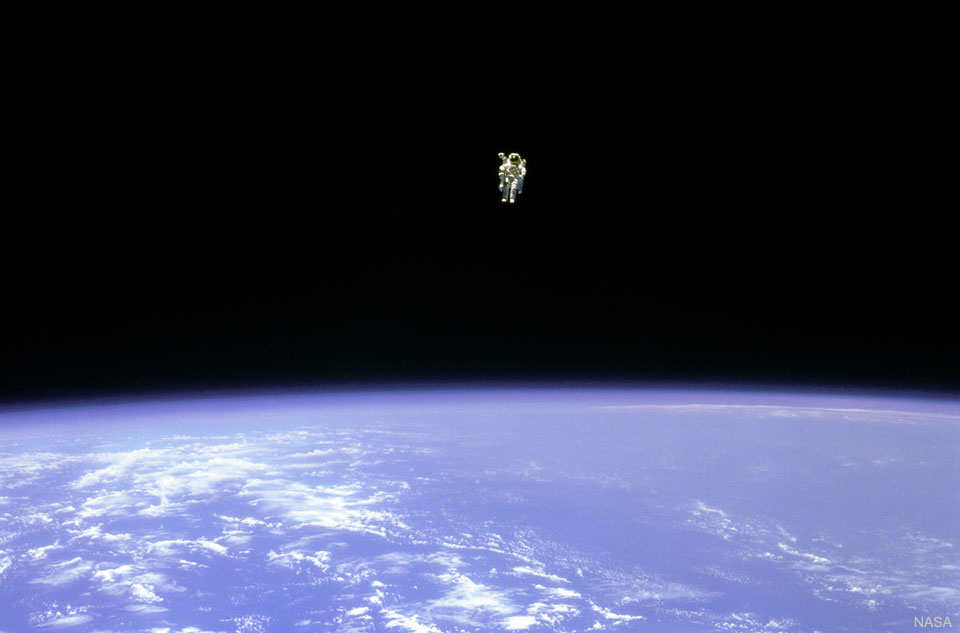
What would it be like to fly free in space? At about 100 meters from the cargo bay of the space shuttle Challenger, Bruce McCandless II was living the dream — floating farther out than anyone had ever been before. Guided by a Manned Maneuvering Unit (MMU), astronaut McCandless, pictured, was floating free in space. McCandless and fellow NASA astronaut Robert Stewart were the first to experience such an « untethered space walk » during Space Shuttle mission 41-B in 1984. The MMU worked by shooting jets of nitrogen and was used to help deploy and retrieve satellites. With a mass over 140 kilograms, an MMU is heavy on Earth, but, like everything, is weightless when drifting in orbit. The MMU was later replaced with the SAFER backpack propulsion unit. via NASA https://ift.tt/2HbtpDe

NGC 7331 Close Up

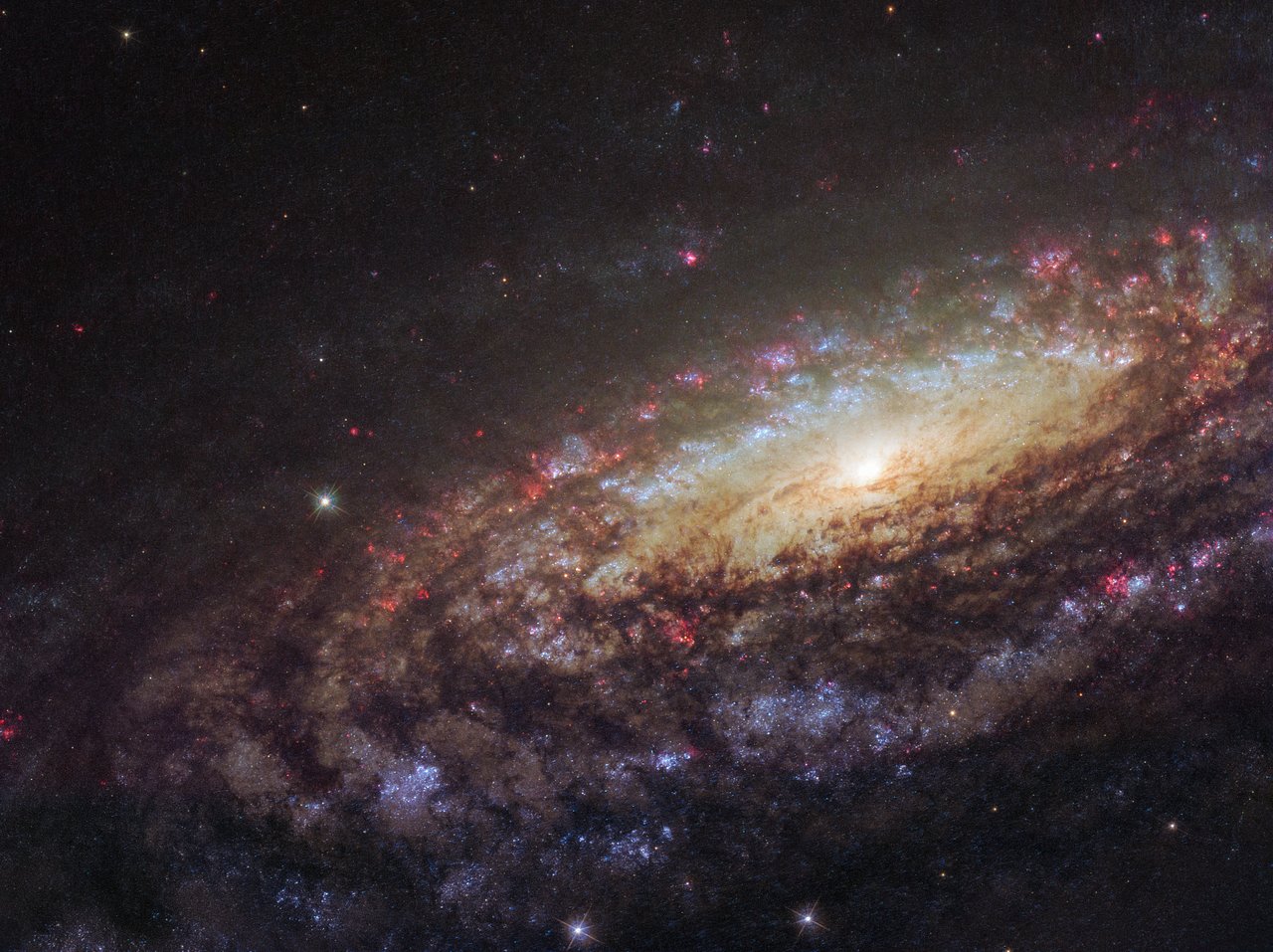
Big, beautiful spiral galaxy NGC 7331 is often touted as an analog to our own Milky Way. About 50 million light-years distant in the northern constellation Pegasus, NGC 7331 was recognized early on as a spiral nebula and is actually one of the brighter galaxies not included in Charles Messier’s famous 18th century catalog. Since the galaxy’s disk is inclined to our line-of-sight, long telescopic exposures often result in an image that evokes a strong sense of depth. In this Hubble Space Telescope close-up, the galaxy’s magnificent spiral arms feature dark obscuring dust lanes, bright bluish clusters of massive young stars, and the telltale reddish glow of active star forming regions. The bright yellowish central regions harbor populations of older, cooler stars. Like the Milky Way, a supermassive black hole lies at the core of spiral galaxy NGC 7331. via NASA https://ift.tt/2H0rvVY

Southern Moonscape

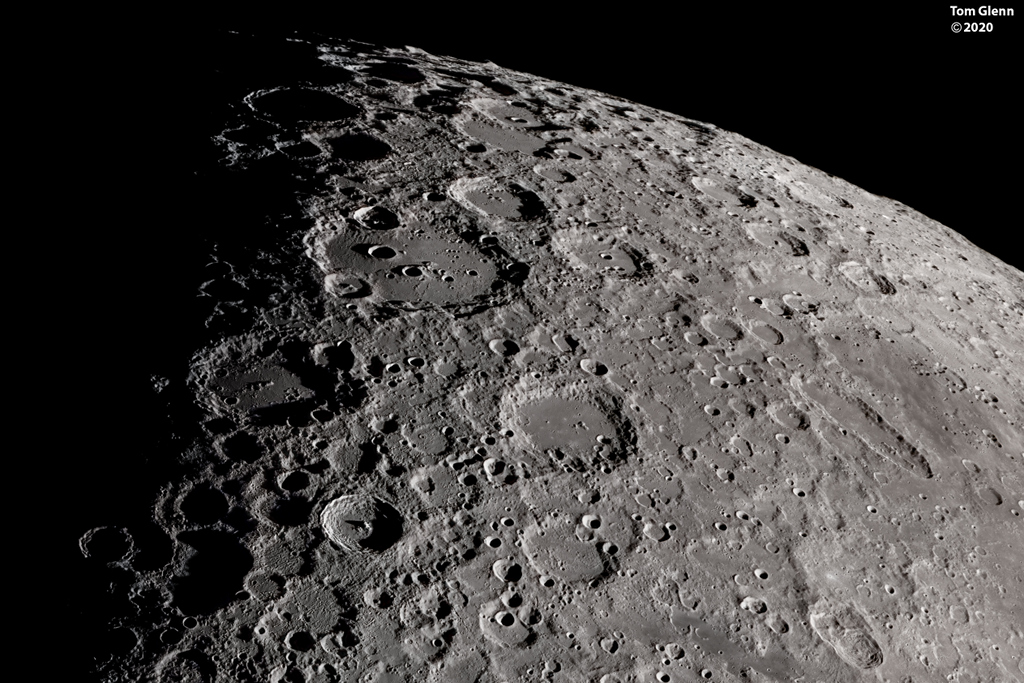
The Moon’s south pole is near the top of this detailed telescopic view. Looking across the rugged southern lunar highlands it was captured from southern California, planet Earth. At the Moon’s third quarter phase the lunar terminator, the sunset shadow line, is approaching from the left. The scene’s foreshortened perspective heightens the impression of a dense field of craters and makes the craters themselves appear more oval shaped close to the lunar limb. Below and left of center is sharp-walled crater Tycho, 85 kilometers in diameter. Young Tycho’s central peak is still in sunlight, but casts a long shadow across the crater floor. The large prominent crater to the south (above) Tycho is Clavius. Nearly 231 kilometers in diameter its walls and floor are pocked with smaller, more recent, overlaying impact craters. Mountains visible along the lunar limb at the top can rise about 6 kilometers or so above the surrounding terrain. via NASA https://ift.tt/2ty7tiB

Lunar Eclipse Perspectives

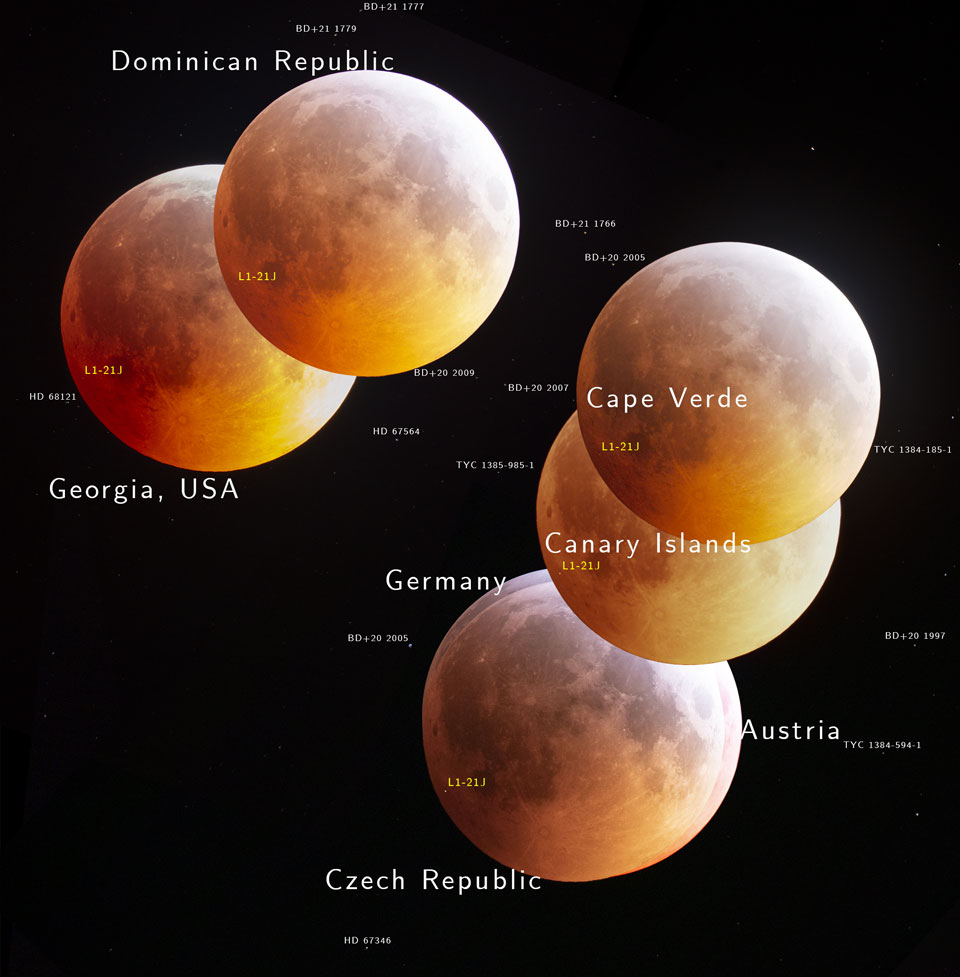
Do we all see the same Moon? Yes, but we all see it differently. One difference is the apparent location of the Moon against background stars — an effect known as parallax. We humans use the parallax between our eyes to judge depth. To see lunar parallax, though, we need eyes placed at a much greater separations — hundreds to thousands of kilometers apart. Another difference is that observers around the Earth all see a slightly different face of our spherical Moon — an effect known as libration. The featured image is a composite of many views across the Earth, as submitted to APOD, of the total lunar eclipse of 2019 January 21. These images are projected against the same background stars to illustrate both effects. The accurate superposition of these images was made possible by a serendipitous meteorite impact on the Moon during the lunar eclipse, labeled here L1-21J — guaranteeing that these submitted images were all taken within a split second. via NASA https://ift.tt/2RYKSFl

A Sunset Night Sky over the Grand Canyon

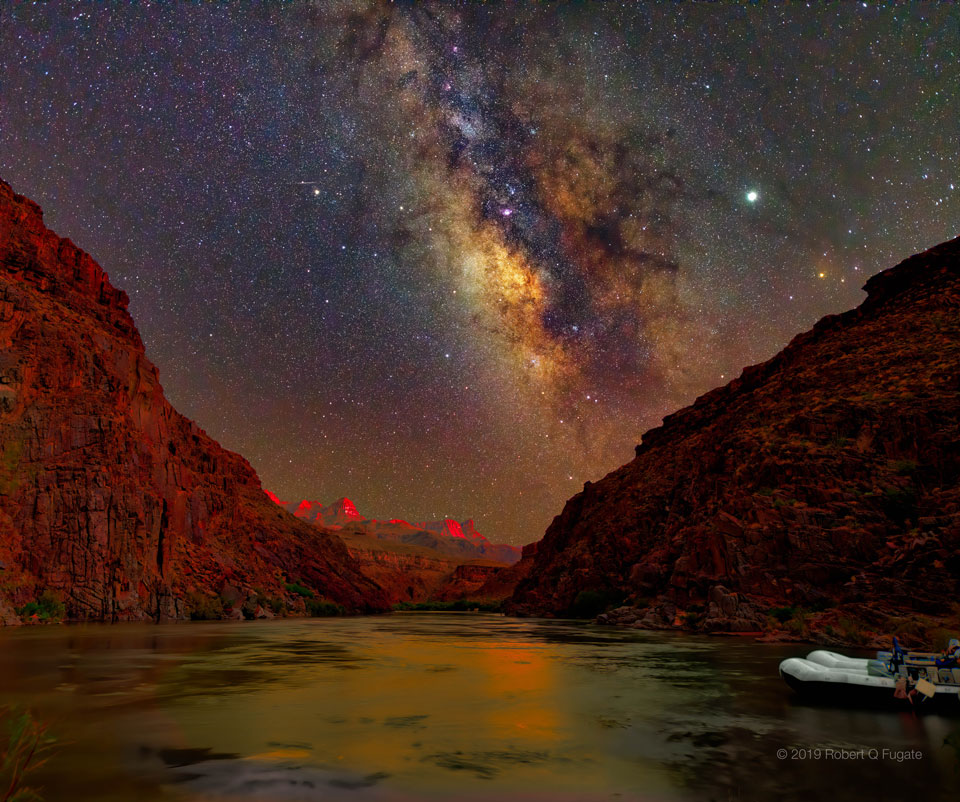
Seeing mountain peaks glow red from inside the Grand Canyon was one of the most incredible sunset experiences of this amateur photographer’s life. They appeared even more incredible later, when digitally combined with an exposure of the night sky — taken by the same camera and from the same location — an hour later. The two images were taken last August from the 220 Mile Canyon campsite on the Colorado River, Colorado, USA. The peaks glow red because they were lit by an usually red sunset. Later, high above, the band of the Milky Way Galaxy angled dramatically down, filled with stars, nebula, and dark clouds of dust. To the Milky Way’s left is the planet Saturn, while to the right is the brighter Jupiter. Although Jupiter and Saturn are now hard to see, Venus will be visible and quite bright to the west in clear skies, just after sunset, for the next two months. via NASA https://ift.tt/2SkztP0

Solar Granules at Record High Resolution


Why does the Sun’s surface keep changing? The help find out, the US National Science Foundation (NSF) has built the Daniel K. Inouye Solar Telescope in Hawaii, USA. The Inouye telescope has a larger mirror that enables the capturing of images of higher resolution, at a faster rate, and in more colors than ever before. Featured are recently-released first-light images taken over 10 minutes and combined into a 5-second time-lapse video. The video captures an area on the Sun roughly the size of our Earth, features granules roughly the size of a country, and resolves features as small as 30-kilometers across. Granule centers are bright due to the upwelling hot solar plasma, while granule edges are dim due to the cooled plasma falling back. Some regions between granules edges are very bright as they are curious magnetic windows into a deep and hotter solar interior. How the Sun’s magnetic field keeps changing, channeling energy, and affecting the distant Earth, among many other topics, will be studied for years to come using data from the new Inouye telescope. via NASA https://ift.tt/2Uk5YPX