Mars Panorama from Curiosity

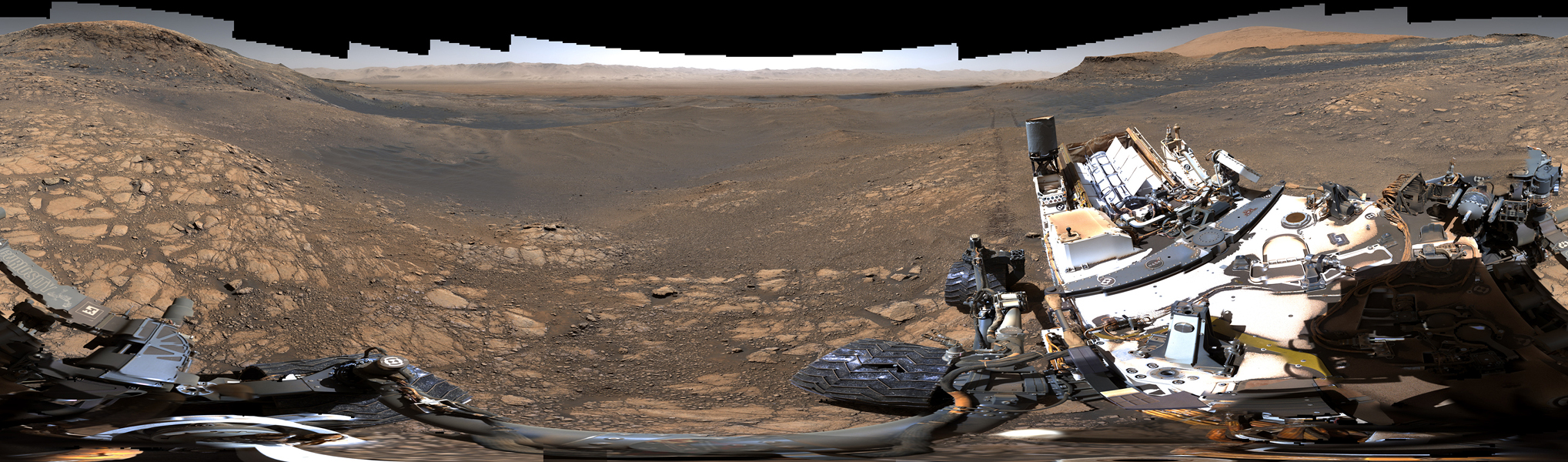
The Mars Rover named Curiosity recorded high-resolution, 360 degree views of its location on Mars late last year. The panoramic scene was stitched from over 1,000 images from Curiosity’s Mast camera or Mastcam. In this version, captured with Mastcam’s medium angle lens, the rover’s deck and robotic arm are in the foreground, stretched and distorted by the extreme wide perspective. Just beyond the rover are regions of clay rich rock, evidence for an ancient watery environment, with a clear view toward more distant martian ridges and buttes. Gale crater wall runs across the center (toward the north) in the background over 30 kilometers in the distance. The upper reaches of Mt. Sharp are at the far right. Images to construct the panorama were recorded over 4 consecutive sols between local noon and 2pm to provide consistent lighting. Zoom in to the panoramic scene and you can easily spot the shadow casting sundial mounted on rover’s deck (right). In July NASA plans to launch a new rover to Mars named Perseverance. via NASA https://ift.tt/3ay327u
The Light, the Dark, and the Dusty

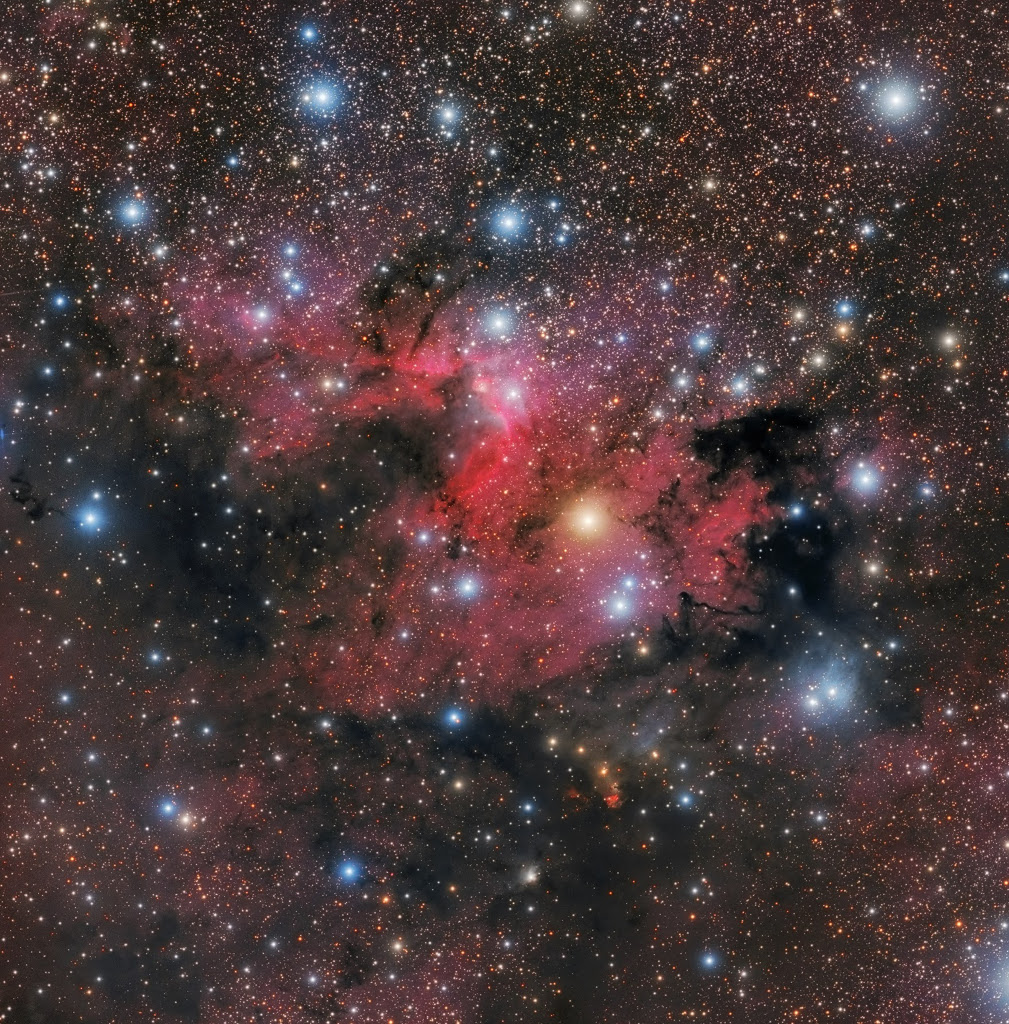
This colorful skyscape spans about four full moons across nebula rich starfields along the plane of our Milky Way Galaxy in the royal northern constellation Cepheus. Near the edge of the region’s massive molecular cloud some 2,400 light-years away, bright reddish emission region Sharpless (Sh) 155 is left of center, also known as the Cave Nebula. About 10 light-years across the cosmic cave’s bright walls of gas are ionized by ultraviolet light from the hot young stars around it. Dusty blue reflection nebulae, like vdB 155 at lower right, and dense obscuring clouds of dust also abound on the interstellar canvas. Astronomical explorations have revealed other dramatic signs of star formation, including the bright red fleck of Herbig-Haro (HH) 168. Below center in the frame, the Herbig-Haro object emission is generated by energetic jets from a newborn star. via NASA https://ift.tt/2vESTHc

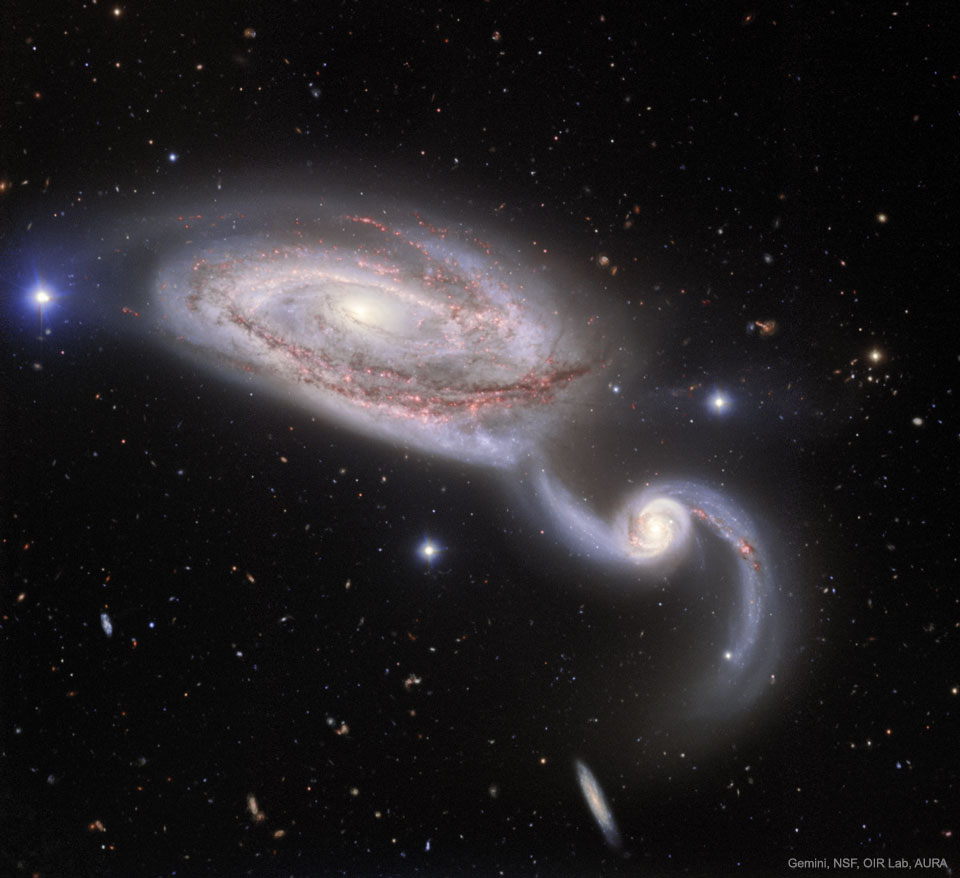
The Slow Dance of Galaxies NGC 5394 and 5395

If you like slow dances, then this may be one for you. A single turn in this dance takes several hundred million years. Two galaxies, NGC 5394 and NGC 5395, slowly whirl about each other in a gravitational interaction that sets off a flourish of sparks in the form of new stars. The featured image, taken with the Gemini North 8-meter telescope on Maunakea, Hawaii, USA, combines four different colors. Emission from hydrogen gas, colored red, marks stellar nurseries where new stars drive the evolution of the galaxies. Also visible are dark dust lanes that mark gas that will eventually become stellar nurseries. If you look carefully you will see many more galaxies in the background, some involved in their own slow cosmic dances. via NASA https://ift.tt/3arcAkm

Apollo 13 Views of the Moon


What if the only way to get back to Earth was to go around the far side of the Moon? Such was the dilemma of the Apollo 13 Crew in 1970 as they tried to return home in their unexpectedly damaged spacecraft. With the Moon in the middle, their perilous journey substituted spectacular views of the lunar farside for radio contact with NASA’s Mission Control. These views have now been digitally recreated from detailed images of the Moon taken by the robotic Lunar Reconnaissance Orbiter. The featured video starts by showing Earth disappear behind a dark lunar limb, while eight minutes later the Sun rises around the opposite side of the Moon and begins to illuminate the Moon’s unusual and spectacularly cratered surface. Radio contact was only re-established several minutes after that, as a crescent Earth rose into view. With the gravity of the Moon and the advice of many industrious NASA engineers and scientists, a few days later Apollo 13 opened its parachutes over the Pacific Ocean and landed safely back on Earth. via NASA https://ift.tt/3anXM6i

Sharpless 308: The Dolphin Nebula

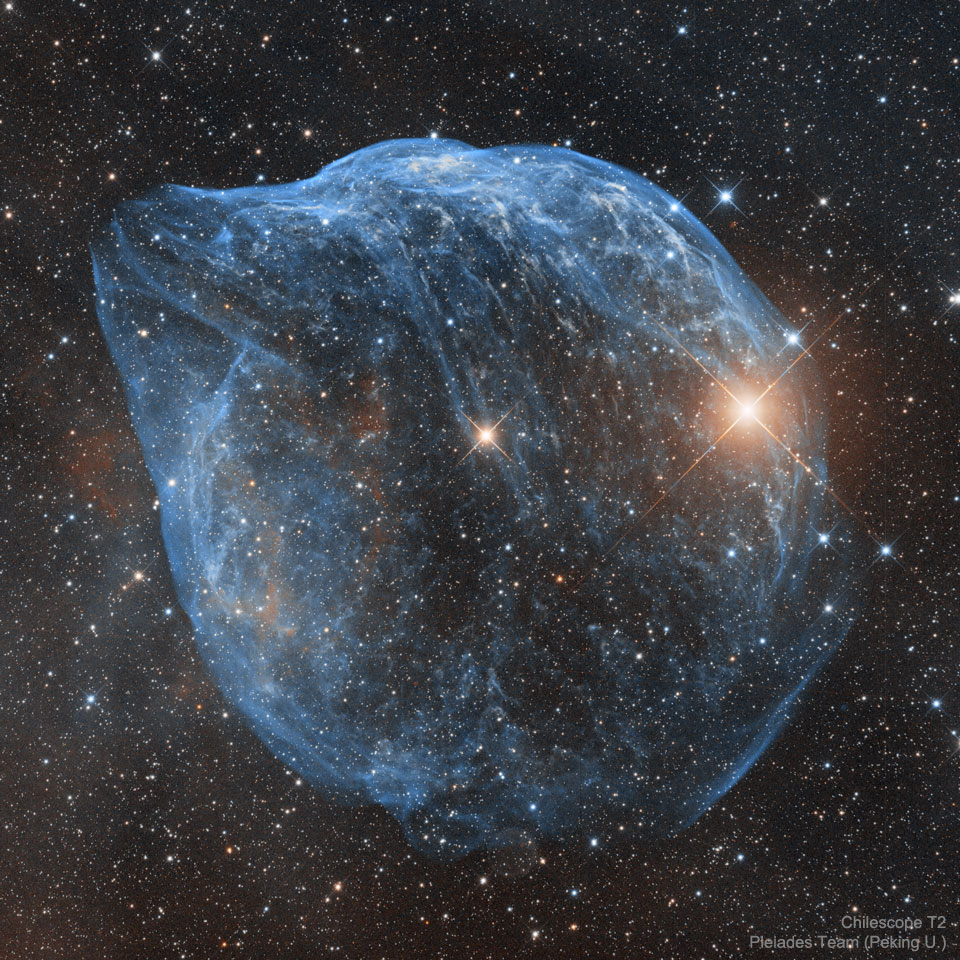
Blown by fast winds from a hot, massive star, this cosmic bubble is much larger than the dolphin it appears to be. Cataloged as Sharpless 2-308 it lies some 5,200 light-years away toward the constellation of the Big Dog (Canis Major) and covers slightly more of the sky than a Full Moon. That corresponds to a diameter of 60 light-years at its estimated distance. The massive star that created the bubble, a Wolf-Rayet star, is the bright one near the center of the nebula. Wolf-Rayet stars have over 20 times the mass of the Sun and are thought to be in a brief, pre-supernova phase of massive star evolution. Fast winds from this Wolf-Rayet star create the bubble-shaped nebula as they sweep up slower moving material from an earlier phase of evolution. The windblown nebula has an age of about 70,000 years. Relatively faint emission captured in the featured expansive image is dominated by the glow of ionized oxygen atoms mapped to a blue hue. via NASA https://ift.tt/2I8ZTyF

A Hole in Mars

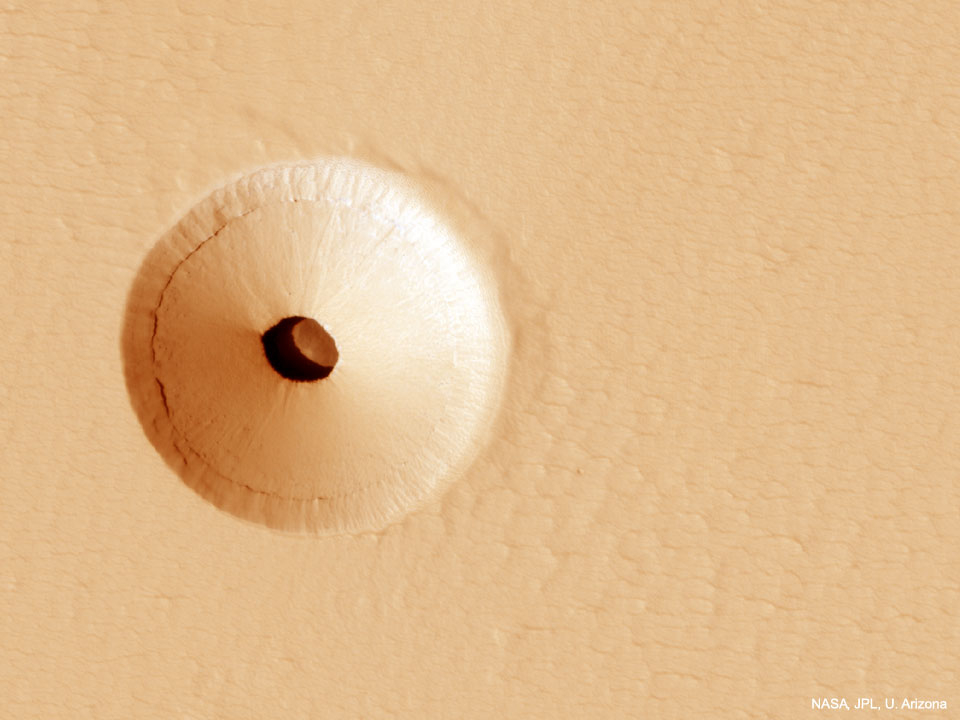
What created this unusual hole in Mars? The hole was discovered by chance in 2011 on images of the dusty slopes of Mars’ Pavonis Mons volcano taken by the HiRISE instrument aboard the robotic Mars Reconnaissance Orbiter currently circling Mars. The hole, shown in representative color, appears to be an opening to an underground cavern, partly illuminated on the image right. Analysis of this and follow-up images revealed the opening to be about 35 meters across, while the interior shadow angle indicates that the underlying cavern is roughly 20 meters deep. Why there is a circular crater surrounding this hole remains a topic of speculation, as is the full extent of the underlying cavern. Holes such as this are of particular interest because their interior caves are relatively protected from the harsh surface of Mars, making them relatively good candidates to contain Martian life. These pits are therefore prime targets for possible future spacecraft, robots, and even human interplanetary explorers. via NASA https://ift.tt/2T8SqWB

Julius Caesar and Leap Days

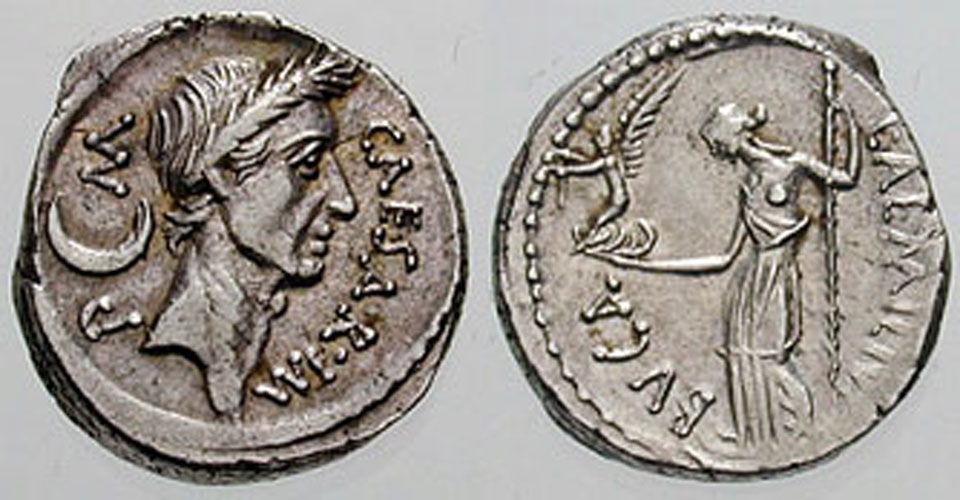
In 46 BC Julius Caesar reformed the calendar system. Based on advice by astronomer Sosigenes of Alexandria, the Julian calendar included one leap day every four years to account for the fact that an Earth year is slightly more than 365 days long. In modern terms, the time it takes for the planet to orbit the Sun once is 365.24219 mean solar days. So if calendar years contained exactly 365 days they would drift from the Earth’s year by about 1 day every 4 years and eventually July (named for Julius Caesar himself) would occur during the northern hemisphere winter. By adopting a leap year with an extra day every four years, the Julian calendar year would drift much less. In 1582 Pope Gregory XIII provided the further fine-tuning that leap days should not occur in years ending in 00, unless divisible by 400. This Gregorian Calendar system is the one in wide use today. Of course, tidal friction in the Earth-Moon system slows Earth’s rotation and gradually lengthens the day by about 14 milliseconds per century. That means that leap days like today will not be necessary … about 4 million years from now. via NASA https://ift.tt/39cQ9zs

South Celestial Rocket Launch

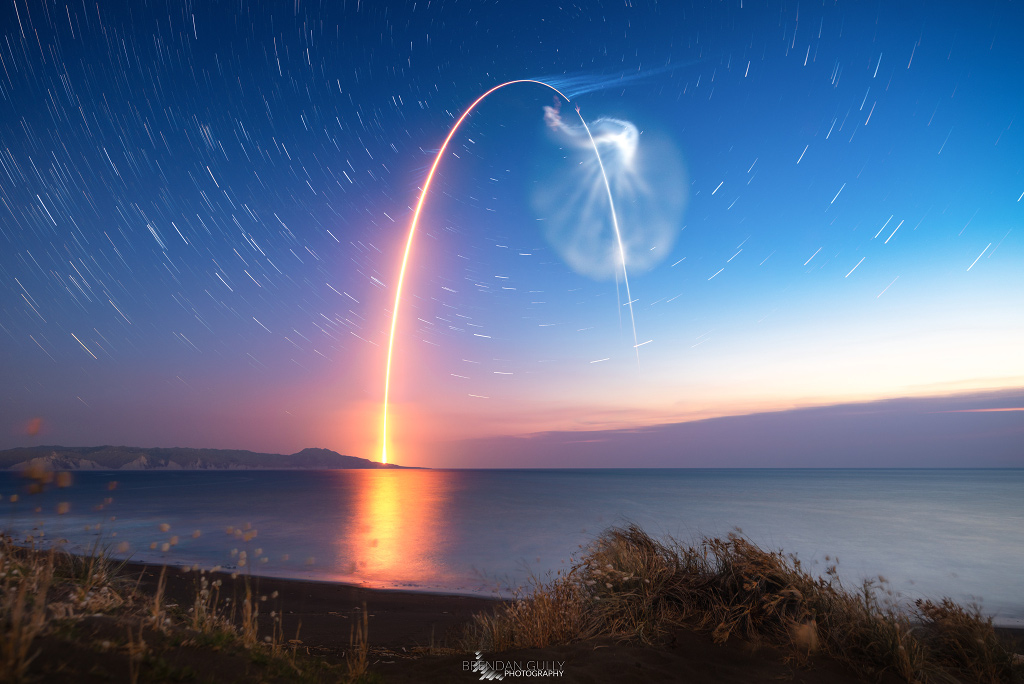
At sunset on December 6 a Rocket Lab Electron rocket was launched from a rotating planet. With multiple small satellites on board it departed on a mission to low Earth orbit dubbed Running Out of Fingers from Mahia Peninsula on New Zealand’s north island. The firey trace of the Electron’s graceful launch arc is toward the south in this southern sea and skyscape. Drifting vapor trails and rocket exhaust plumes catch the sunlight even as the sky grows dark though, the setting Sun still shinning at altitude along the rocket’s trajectory. Fixed to a tripod, the camera’s perspective nearly aligns the peak of the rocket arc with the South Celestial Pole, but no bright star marks that location in the southern hemisphere’s evening sky. Still, it’s easy to find at the center of the star trail arcs in the timelapse composite. via NASA https://ift.tt/2VtfLUw

Two Hemisphere Night Sky

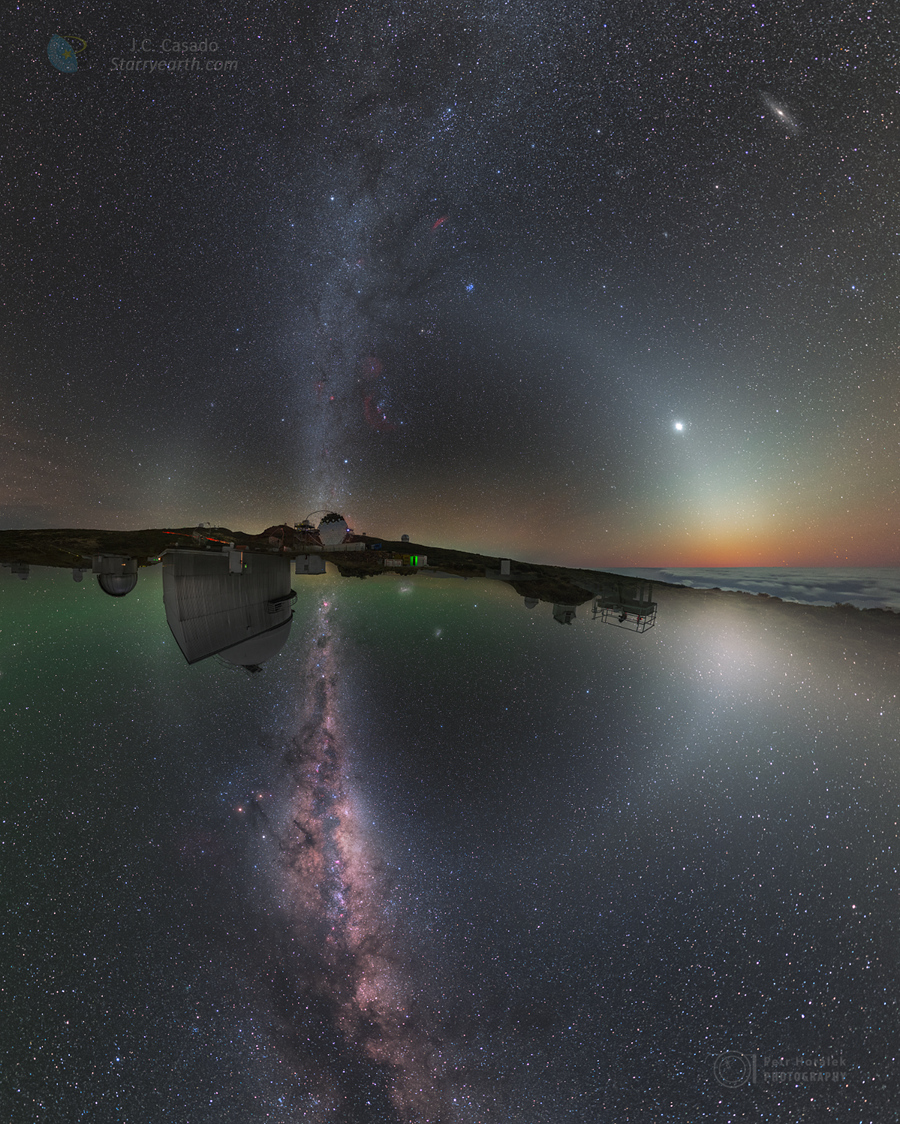
The Sun is hidden by a horizon that runs across the middle in this two hemisphere view of Earth’s night sky. The digitally stitched mosaics were recorded from corresponding latitudes, one 29 degrees north and one 29 degrees south of the planet’s equator. On top is the northern view from the IAC observatory at La Palma taken in February 2020. Below is a well-matched southern scene from the ESO La Silla Observatory recorded in April 2016. In this projection, the Milky Way runs almost vertically above and below the horizon. Its dark clouds and and bright nebulae are prominent near the galactic center in the lower half of the frame. In the upper half, brilliant Venus is immersed in zodiacal light. Sunlight faintly scattered by interplanetary dust, the zodiacal light traces the Solar System’s ecliptic plane in a complete circle through the starry sky. Large telescope domes bulge along the inverted horizon from La Silla while at La Palma, multi-mirror Magic telescopes stand above center. Explore this two hemisphere night sky and you can also find the Andromeda Galaxy and the Large and Small Magellanic Clouds. via NASA https://ift.tt/3cf8OMC

NGST 10b: Discovery of a Doomed Planet

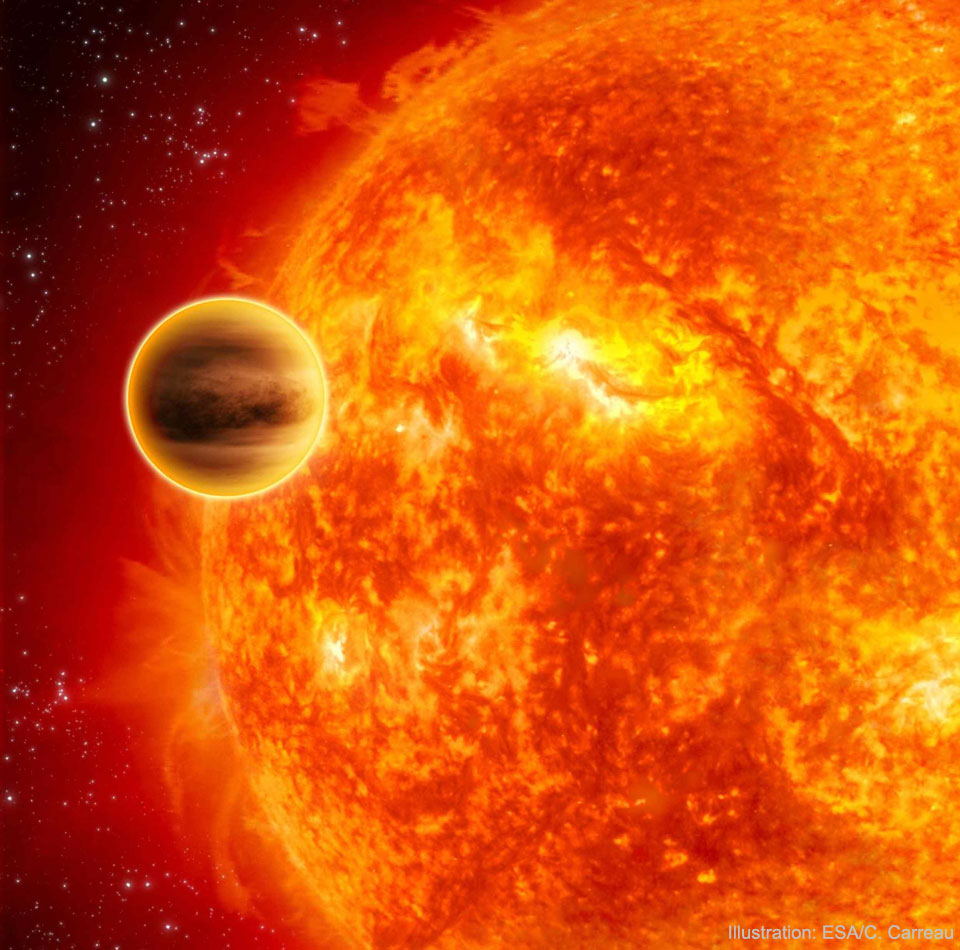
This hot jupiter is doomed. Hot jupiters are giant planets like Jupiter that orbit much closer to their parent stars than Mercury does to our Sun. But some hot jupiters are more extreme than others. NGTS-10b, illustrated generically, is the closest and fastest-orbiting giant planet yet discovered, circling its home star in only 18 hours. NGTS-10b is a little larger than Jupiter, but it orbits less than two times the diameter of its parent star away from the star’s surface. When a planet orbits this close, it is expected to spiral inward, pulled down by tidal forces to be eventually ripped apart by the star’s gravity. NGTS-10b, discovered by researchers at the University of Warwick, is named after the ESO’s Next Generation Transit Survey, which detected the imperiled planet when it passed in front of its star, blocking some of the light. Although the violent demise of NGTS-10b will happen eventually, we don’t yet know when. via NASA https://ift.tt/2SYL5J0