A Moon Dressed Like Saturn

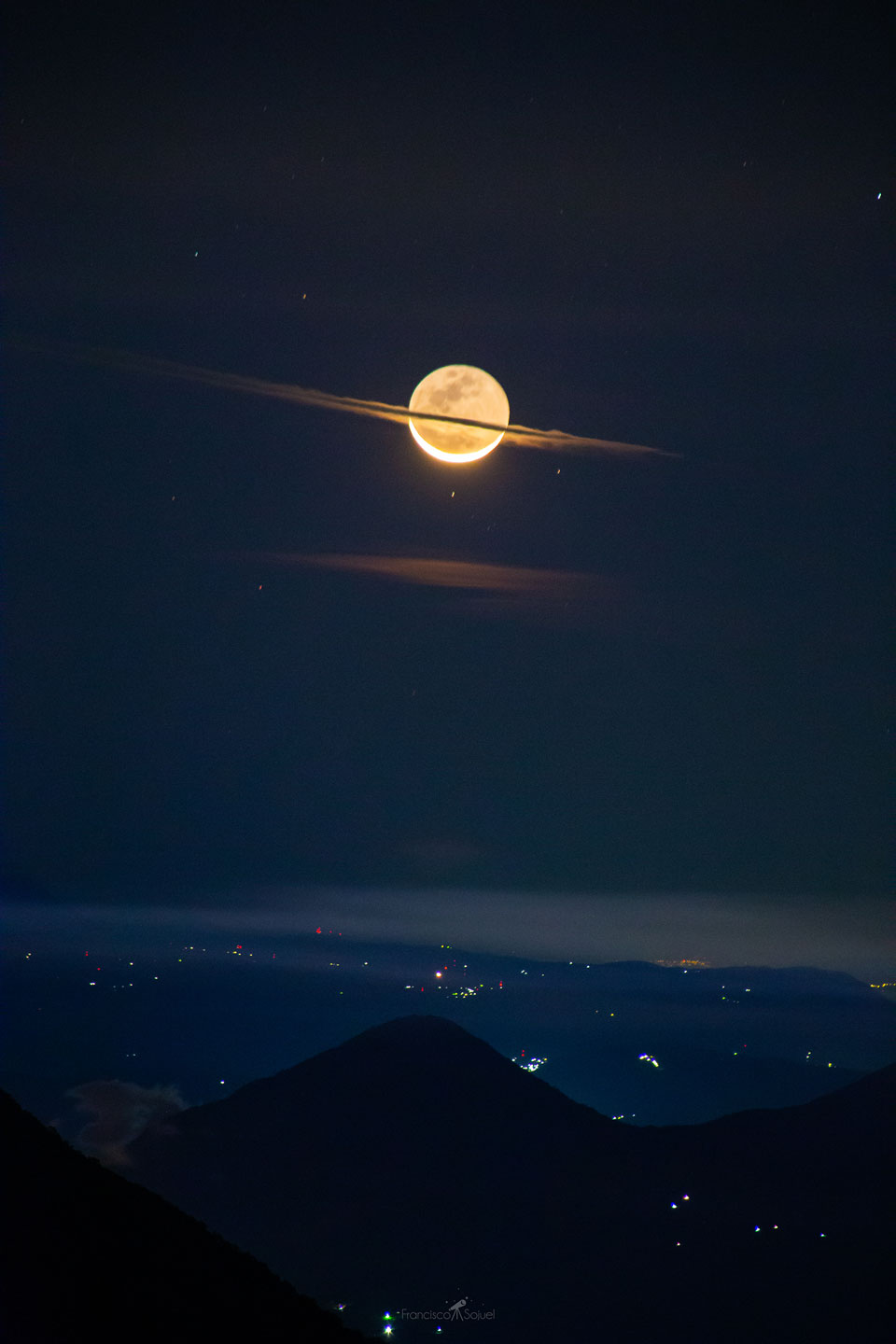
Why does Saturn appear so big? It doesn’t — what is pictured are foreground clouds on Earth crossing in front of the Moon. The Moon shows a slight crescent phase with most of its surface visible by reflected Earthlight known as ashen glow. The Sun directly illuminates the brightly lit lunar crescent from the bottom, which means that the Sun must be below the horizon and so the image was taken before sunrise. This double take-inducing picture was captured on 2019 December 24, two days before the Moon slid in front of the Sun to create a solar eclipse. In the foreground, lights from small Guatemalan towns are visible behind the huge volcano Pacaya. via NASA https://ift.tt/2wb0VHU
The Snows of Churyumov Gerasimenko


You couldn’t really be caught in this blizzard while standing by a cliff on Churyumov-Gerasimenko. Orbiting the comet — frequently abbreviated as 67P or CG — in June of 2016, the Rosetta spacecraft’s narrow angle camera did record streaks of dust and ice particles — similar to snow — as they drifted across the field of view near the camera and above the comet’s surface. Some of the bright specks in the scene, however, are likely due to a rain of energetic charged particles or cosmic rays hitting the camera, and the dense background of stars in the direction of the constellation of the Big Dog (Canis Major). In the featured video, these background stars are easy to spot trailing from top to bottom. The stunning movie was constructed from 33 consecutive images taken over 25 minutes while Rosetta cruised some 13 kilometers from the comet’s nucleus. via NASA https://ift.tt/38My4a9

Moonrise and Mountain Shadow

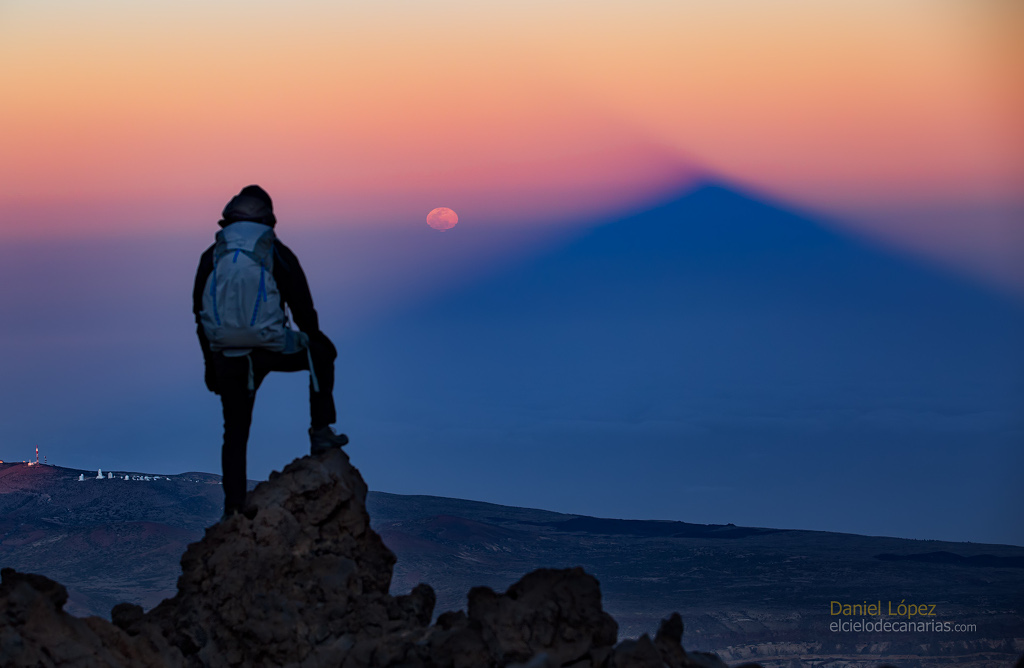
What phase of the Moon is 3.14 radians from the Sun? The Full Moon, of course. Even though the Moon might look full for several days, the Moon is truly at its full phase when it is 3.14 radians (aka 180 degrees) from the Sun in ecliptic longitude. That’s opposite the Sun in planet Earth’s sky. Rising as the Sun set on March 9, only an hour or so after the moment of its full phase, this orange tinted and slightly flattened Moon still looked full. It was photographed opposite the setting Sun from Teide National Park on the Canary Island of Tenerife. Also opposite the setting Sun, seen from near the Teide volcano peak about 3,500 meters above sea level, is the mountain’s rising triangular shadow extending into Earth’s dense atmosphere. Below the distant ridge line on the left are the white telescope domes of Teide Observatory via NASA https://ift.tt/2Q96ZaT

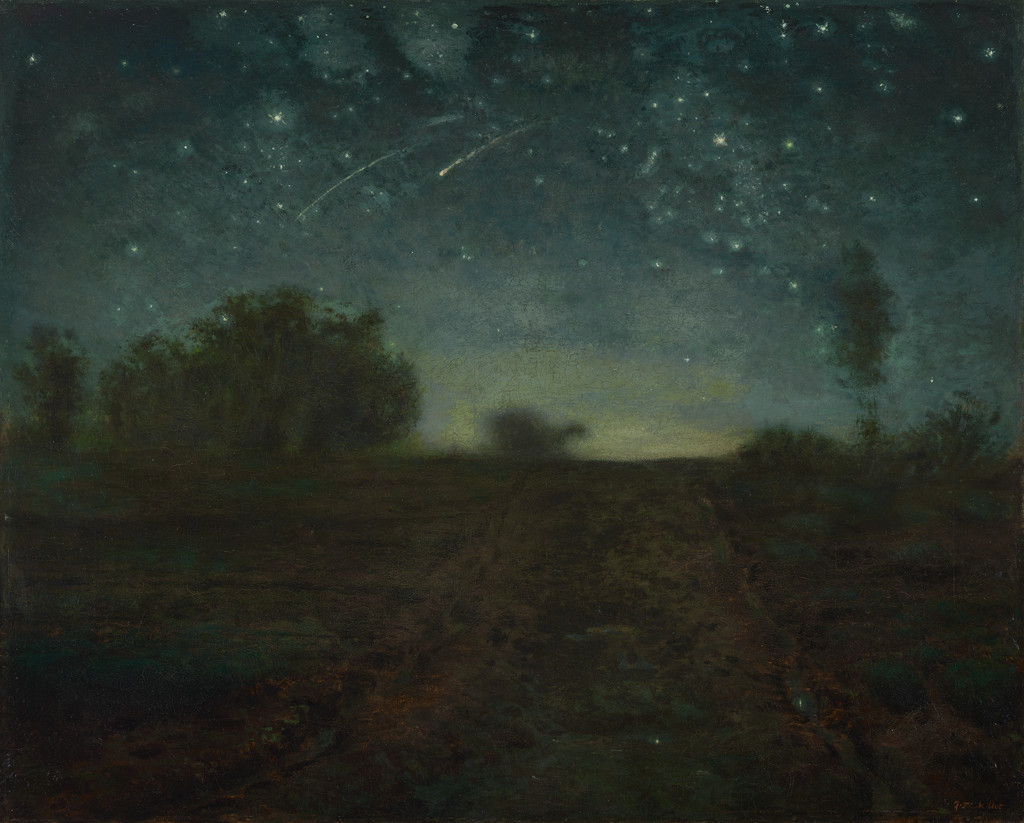
Starry Night by Jean François Millet

A dramatic nocturnal landscape from around 1850, this oil painting is the work of French artist Jean-Francois Millet. In the dark and atmospheric night sky are shooting stars, known too as meteors, above a landscape showing a path through the faintly lit countryside that leads toward trees and a cart in silhouette on the horizon. Millet was raised in a farming family in Normandy and is known for his paintings of rural scenes and peasant life. This Starry Night was painted after the artist moved to Barbizon, about 30 kilometers southeast of any 19th century light pollution from Paris. Millet wrote to his brother at this time, « If only you knew how beautiful the night is … the calm and grandeur of it are so awesome that I find that I actually feel overwhelmed. » Dutch artist Vincent van Gogh was an admirer of Millet’s work, and later also painted two dramatic starry nights. via NASA https://ift.tt/2TJyl9D

Falcon 9 Boostback

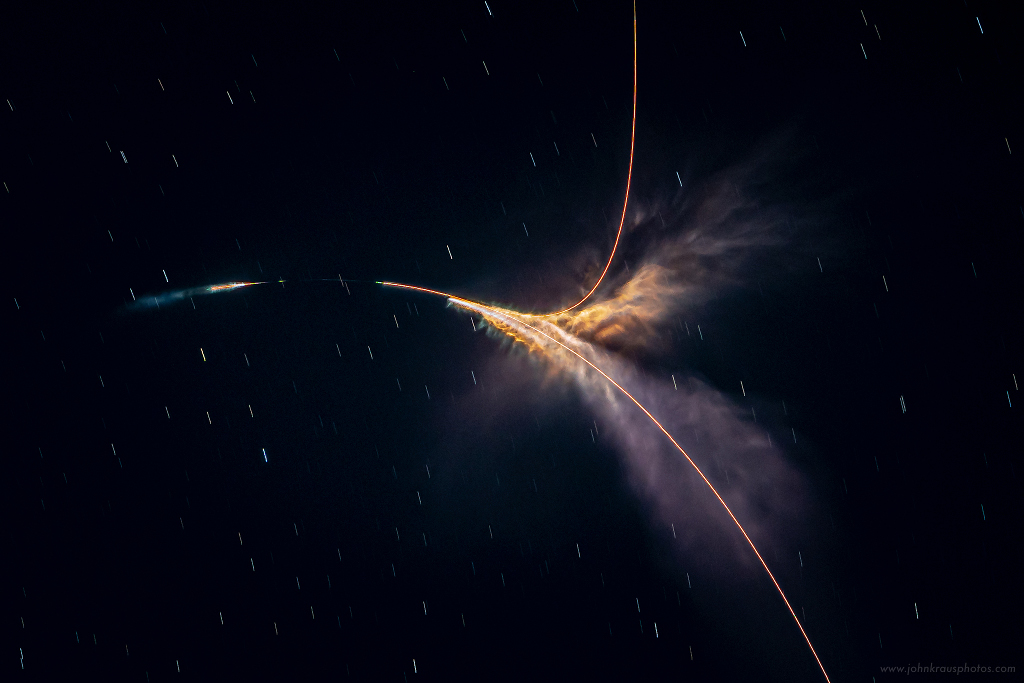
Short star trails appear in this single 84 second long exposure, taken on March 6 from a rotating planet. The remarkable scene also captures the flight of a Falcon 9 rocket and Dragon cargo spacecraft over Cape Canaveral Air Force Station shortly after launch, on a resupply mission bound for the International Space Station. Beginning its return to a landing zone about 9 kilometers from the launch site, the Falcon 9 first stage boostback burn arcs toward the top of the frame. The second stage continues toward low Earth orbit though, its own fiery arc traced below the first stage boostback burn from the camera’s perspective, along with expanding exhaust plumes from the two stages. This Dragon spacecraft was a veteran of two previous resupply missions. Successfully returning to the landing zone, this Falcon 9 first stage had flown before too. Its second landing marked the 50th landing of a SpaceX orbital class rocket booster. via NASA https://ift.tt/33auDJj

An Extreme Black Hole Outburst

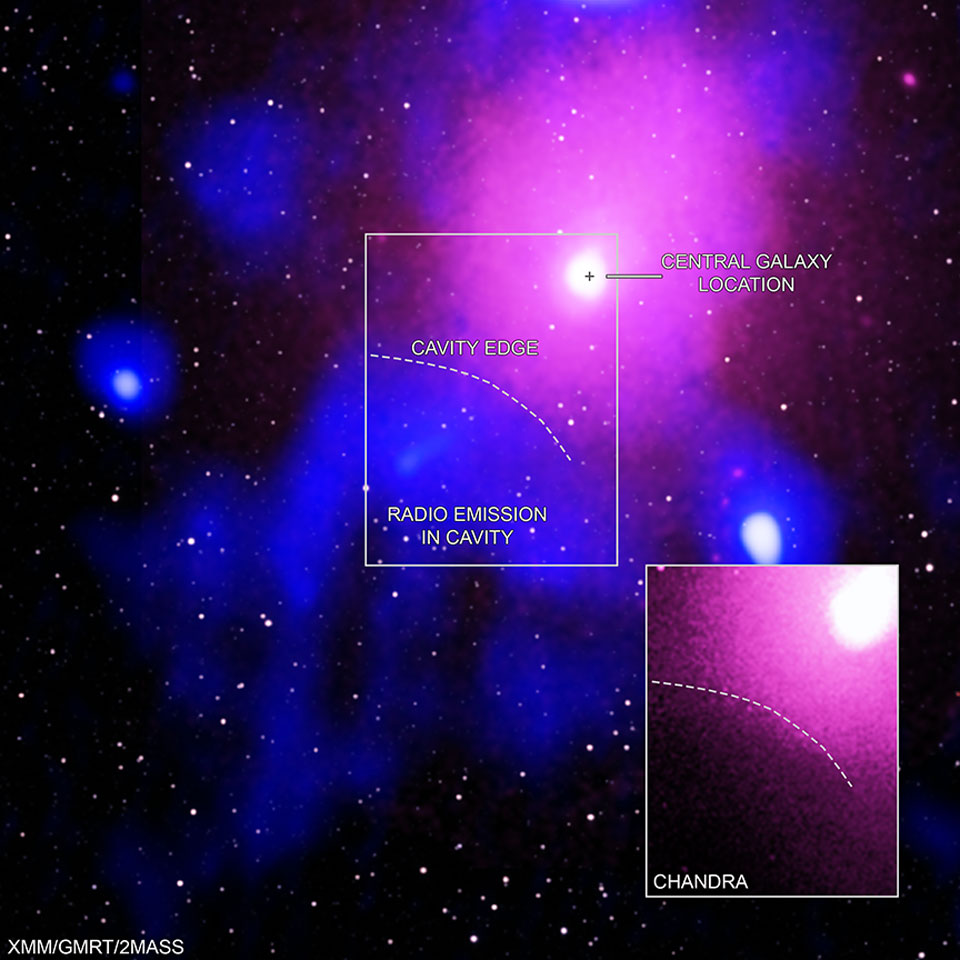
Astronomers believe they have now found the most powerful example of a black hole outburst yet seen in our Universe. The composite, false-color featured image is of a cluster of galaxies in the constellation of Ophiuchus, the serpent-bearer. The composite includes X-ray images (from the Chandra X-ray Observatory and XMM-Newton) in purple, and a radio image (from India’s Giant Metrewave Radio Telescope) in blue (along with an infrared image of the galaxies and stars in the field in white for good measure). The dashed line marks the border of a cavity blown out by the supermassive black hole which lurks at the center of the galaxy marked by the cross. Radio emission fills this cavity. This big blowout is believed to be due to the black hole eating too much and experiencing a transient bout of « black hole nausea », which resulted in the ejection of a powerful radio jet blasting into intergalactic space. The amount of energy needed to blow this cavity is equivalent to about 10 billion supernova explosions. via NASA https://ift.tt/39RSf8h

Wide Field: Fox Fur, Unicorn, and Christmas Tree

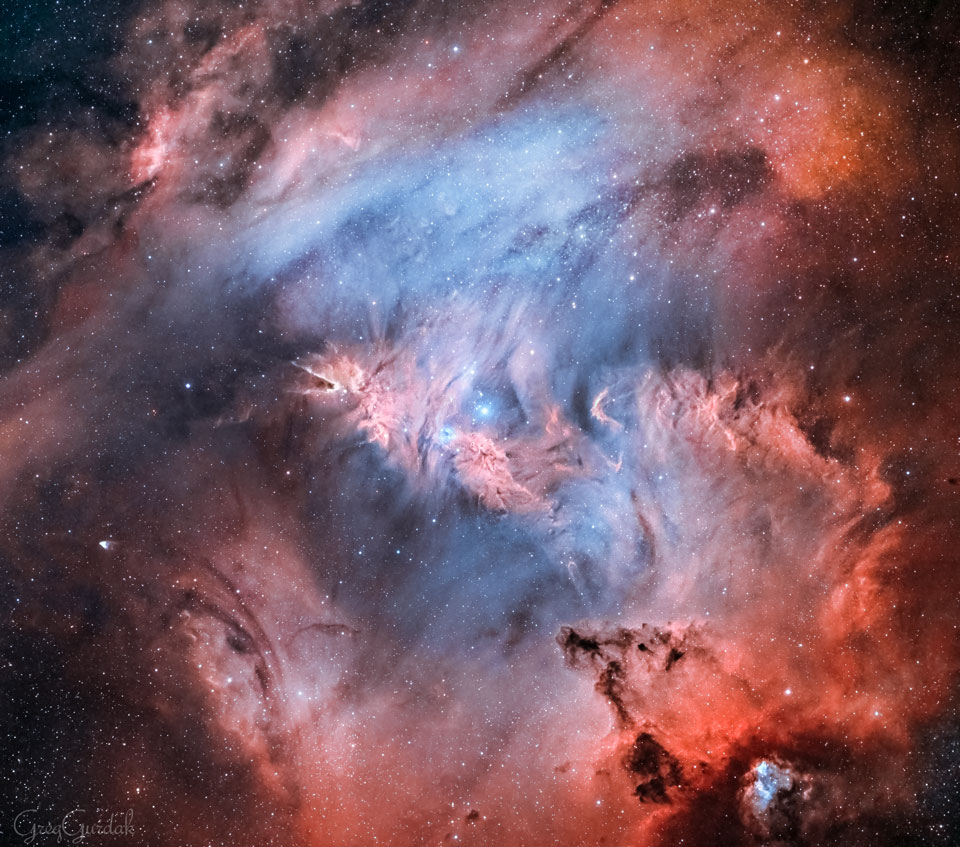
What do the following things have in common: a cone, the fur of a fox, and a Christmas tree? Answer: they all occur in the constellation of the unicorn (Monoceros). Pictured as a star forming region and cataloged as NGC 2264, the complex jumble of cosmic gas and dust is about 2,700 light-years distant and mixes reddish emission nebulae excited by energetic light from newborn stars with dark interstellar dust clouds. Where the otherwise obscuring dust clouds lie close to the hot, young stars they also reflect starlight, forming blue reflection nebulae. The featured wide-field image spans over three times the diameter of a full moon, covering over 100 light-years at the distance of NGC 2264. Its cast of cosmic characters includes the Fox Fur Nebula, whose convoluted pelt lies just to the lower right of the image center, bright variable star S Mon visible just above the Fox Fur, and the Cone Nebula just to the left. Given their distribution, the stars of NGC 2264 are also known as the Christmas Tree star cluster. via NASA https://ift.tt/39CDPst

Milky Way and Zodiacal Light over Chile

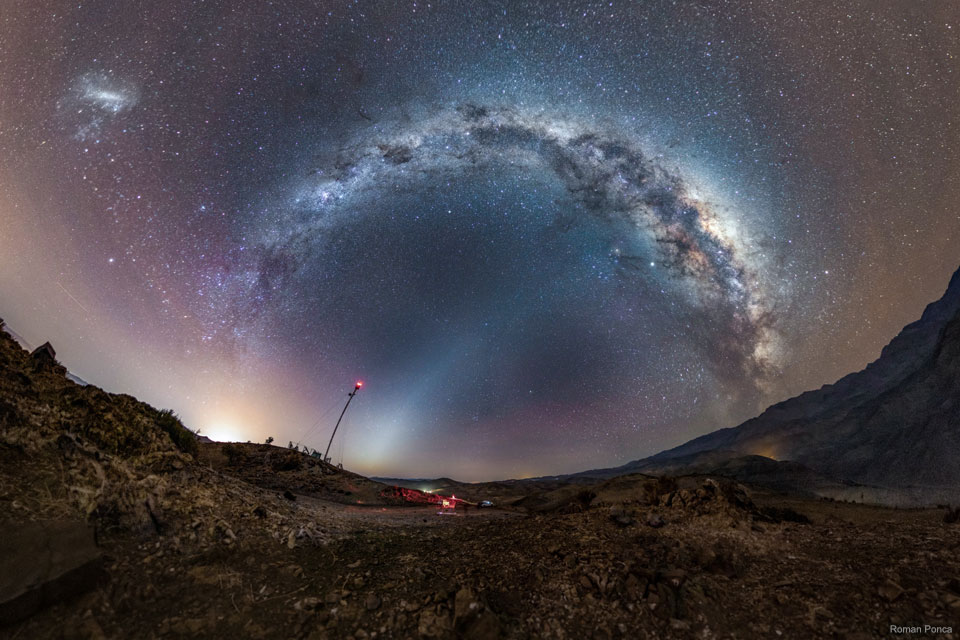
What is the band of light connecting the ground to the Milky Way? Zodiacal light — a stream of dust that orbits the Sun in the inner Solar System. It is most easily seen just before sunrise, where it has been called a false dawn, or just after sunset. The origin of zodiacal dust remains a topic of research, but is hypothesized to result from asteroid collisions and comet tails. The featured wide-angle image shows the central band of our Milky Way Galaxy arching across the top, while the Large Magellanic Cloud (LMC), a satellite galaxy to our Milky Way, is visible on the far left. The image is a combination of over 30 exposures taken last July near La Serena among the mountains of Chile. During the next two months, zodiacal light can appear quite prominent in northern skies just after sunset. via NASA https://ift.tt/3aFdxWC

Wolf Rayet Star 124: Stellar Wind Machine

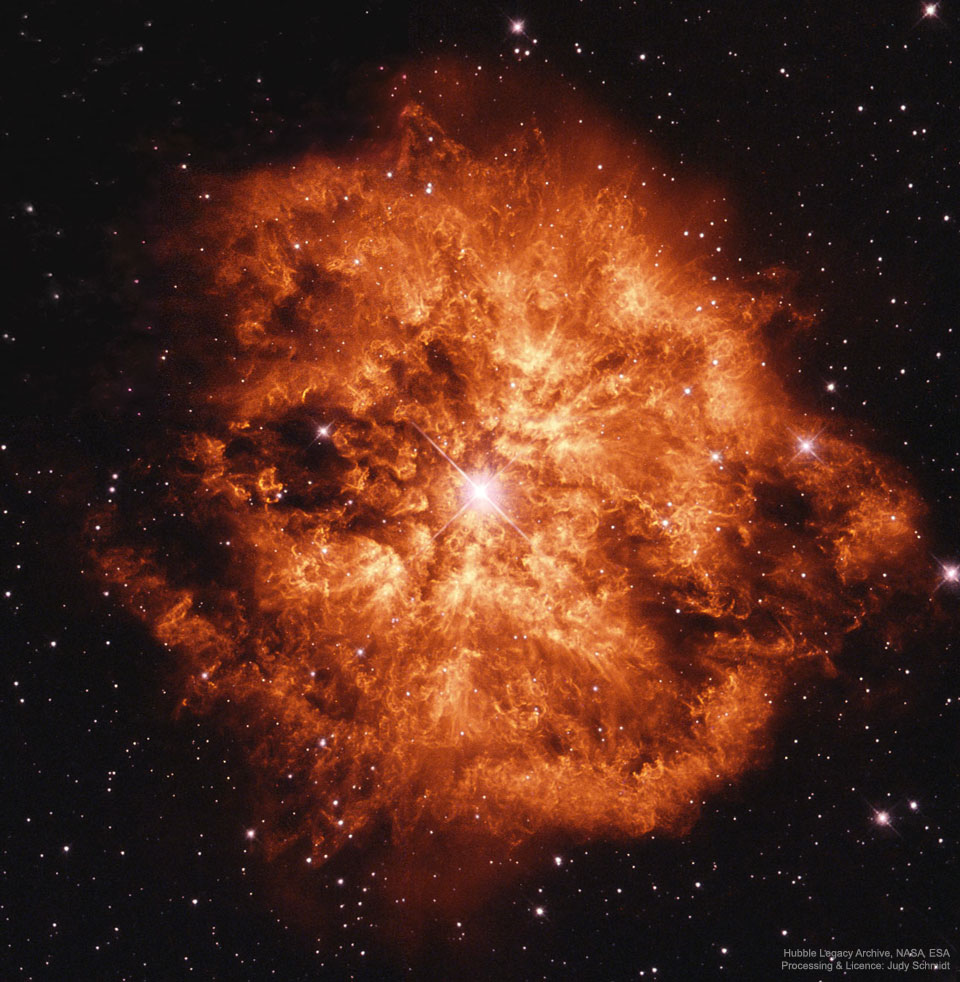
Some stars explode in slow motion. Rare, massive Wolf-Rayet stars are so tumultuous and hot that they are slowly disintegrating right before our telescopes. Glowing gas globs each typically over 30 times more massive than the Earth are being expelled by violent stellar winds. Wolf-Rayet star WR 124, visible near the featured image center spanning six light years across, is thus creating the surrounding nebula known as M1-67. Details of why this star has been slowly blowing itself apart over the past 20,000 years remains a topic of research. WR 124 lies 15,000 light-years away towards the constellation of the Arrow (Sagitta). The fate of any given Wolf-Rayet star likely depends on how massive it is, but many are thought to end their lives with spectacular explosions such as supernovas or gamma-ray bursts. via NASA https://ift.tt/330qF5P

Pic du Midi Panorama

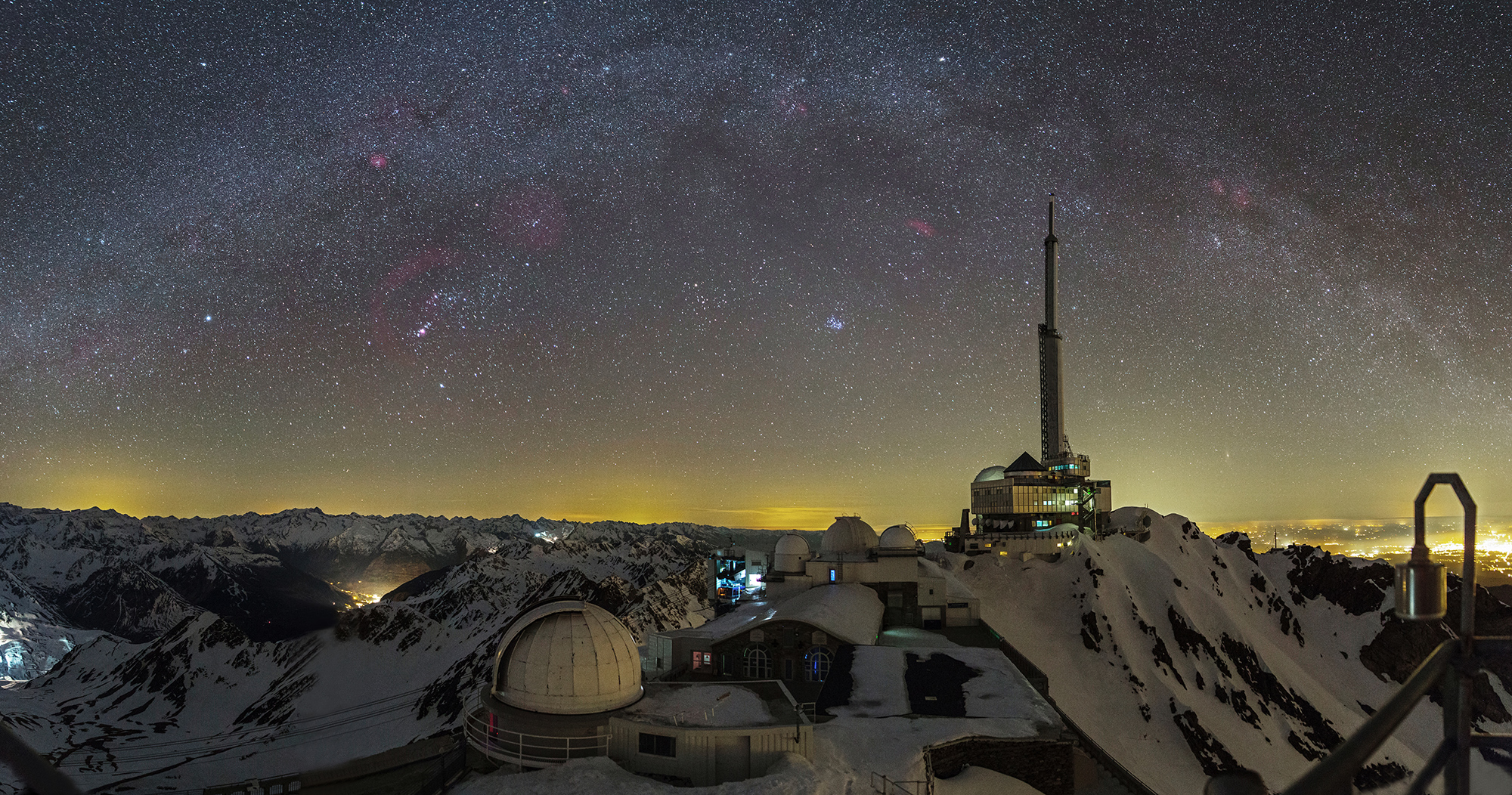
A surreal night skyscape, this panorama stitched from 12 photos looks to the west at an evening winter sky over Pic du Midi Observatory, Pyrenees Mountains, Planet Earth. Telescope domes and a tall communications tower inhabit the rugged foreground. On the right, lights from Tarbes, France about 35 kilometers away impinge on the designated dark sky site though, but more distant terrestrial lights seen toward the left are from cities in Spain. Stars and nebulae of the northern winter’s Milky Way arc through the sky above. Known to the planet’s night skygazers, the Pleiades and Hyades star clusters still hang over the western horizon near center. Captured in mid February the familiar stars of the constellation Orion are to the left and include the no longer fainting star Betelgeuse. via NASA https://ift.tt/3aBkEPO