NGC 253: The Silver Coin Galaxy

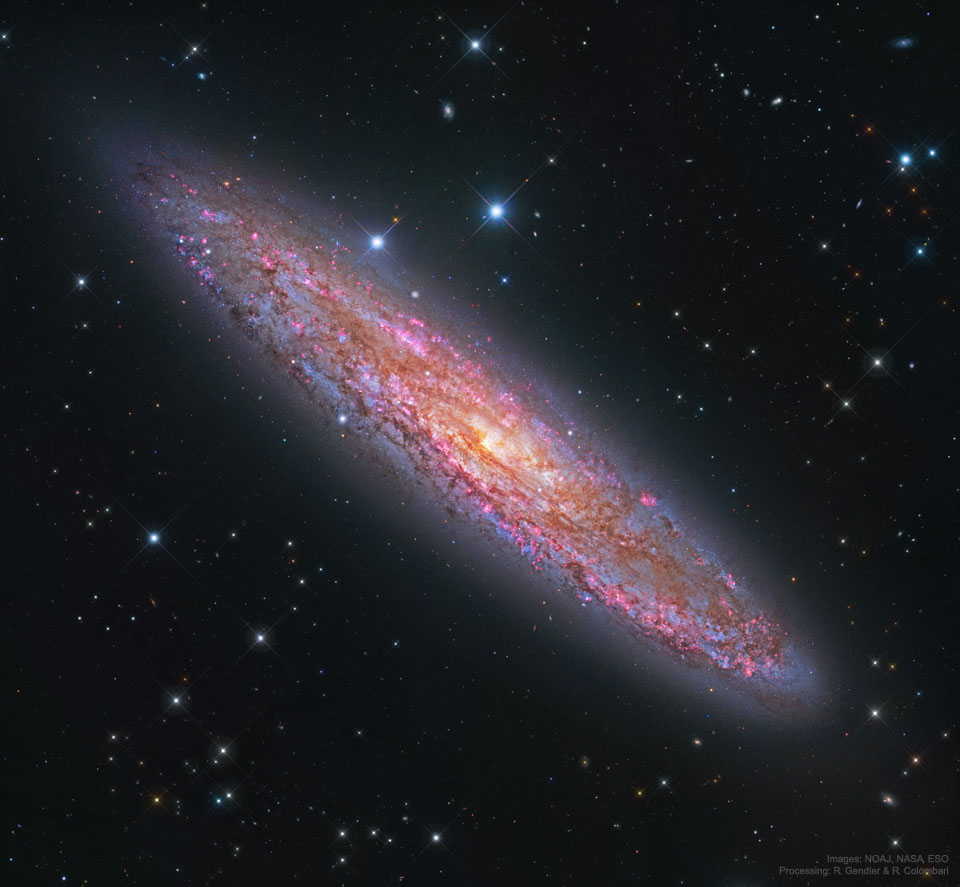
NGC 253 is one of the brightest spiral galaxies visible, but also one of the dustiest. Dubbed the Silver Coin for its appearance in smalltelescopes, it is more formally known as the Sculptor Galaxy for its location within the boundaries of the southern constellation Sculptor. Discovered in 1783 by mathematician and astronomer Caroline Herschel, the dusty island universe lies a mere 10 million light-years away. About 70 thousand light-years across, NGC 253, pictured, is the largest member of the Sculptor Group of Galaxies, the nearest to our own Local Group of galaxies. In addition to its spiral dust lanes, tendrils of dust seem to be rising from a galactic disk laced with young star clusters and star forming regions in this sharp color image. The high dust content accompanies frantic star formation, earning NGC 253 the designation of a starburst galaxy. NGC 253 is also known to be a strong source of high-energy x-rays and gamma rays, likely due to massive black holes near the galaxy’s center. Take a trip through extragalactic space in this short video flyby of NGC 253. via NASA https://ift.tt/2yYJ2NM
A Sailing Stone across Death Valley

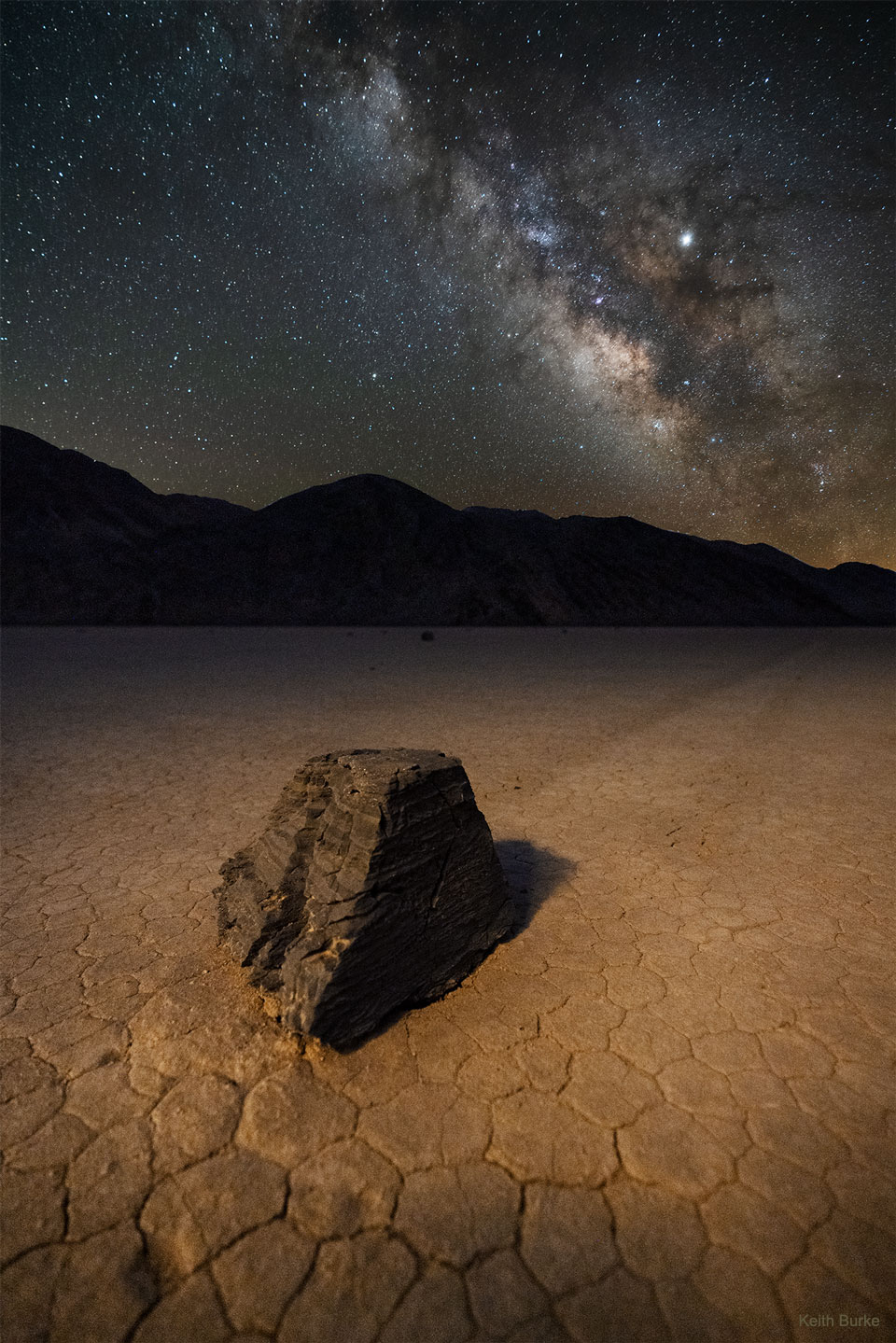
How did this big rock end up on this strange terrain? One of the more unusual places here on Earth occurs inside Death Valley, California, USA. There a dried lakebed named Racetrack Playa exists that is almost perfectly flat, with the odd exception of some very large stones, one of which is pictured here in April of 2019 beneath a dark, Milky-Way filled sky. Now the flatness and texture of large playa like Racetrack are fascinating but not scientifically puzzling — they are caused by mud flowing, drying, and cracking after a heavy rain. Only recently, however, has a viable scientific hypothesis been given to explain how heavy sailing stones end up near the middle of such a large flat surface. Unfortunately, as frequently happens in science, a seemingly surreal problem ends up having a relatively mundane solution. It turns out that in winter thin ice sheets form, and winds push ice sections laden with even heavy rocks across the temporarily slick playa when sunlight melts the ice. via NASA https://ift.tt/2RO01sP

The Horsehead Nebula in Infrared from Hubble

While drifting through the cosmos, a magnificent interstellar dust cloud became sculpted by stellar winds and radiation to assume a recognizable shape. Fittingly named the Horsehead Nebula, it is embedded in the vast and complex Orion Nebula (M42). A potentially rewarding but difficult object to view personally with a small telescope, the above gorgeously detailed image was taken in 2013 in infrared light by the orbiting Hubble Space Telescope in honor of the 23rd anniversary of Hubble’s launch. The dark molecular cloud, roughly 1,500 light years distant, is cataloged as Barnard 33 and is seen above primarily because it is backlit by the nearby massive star Sigma Orionis. The Horsehead Nebula will slowly shift its apparent shape over the next few million years and will eventually be destroyed by the high energy starlight. via NASA https://ift.tt/2Xstz2A

Venus and the Pleiades in April

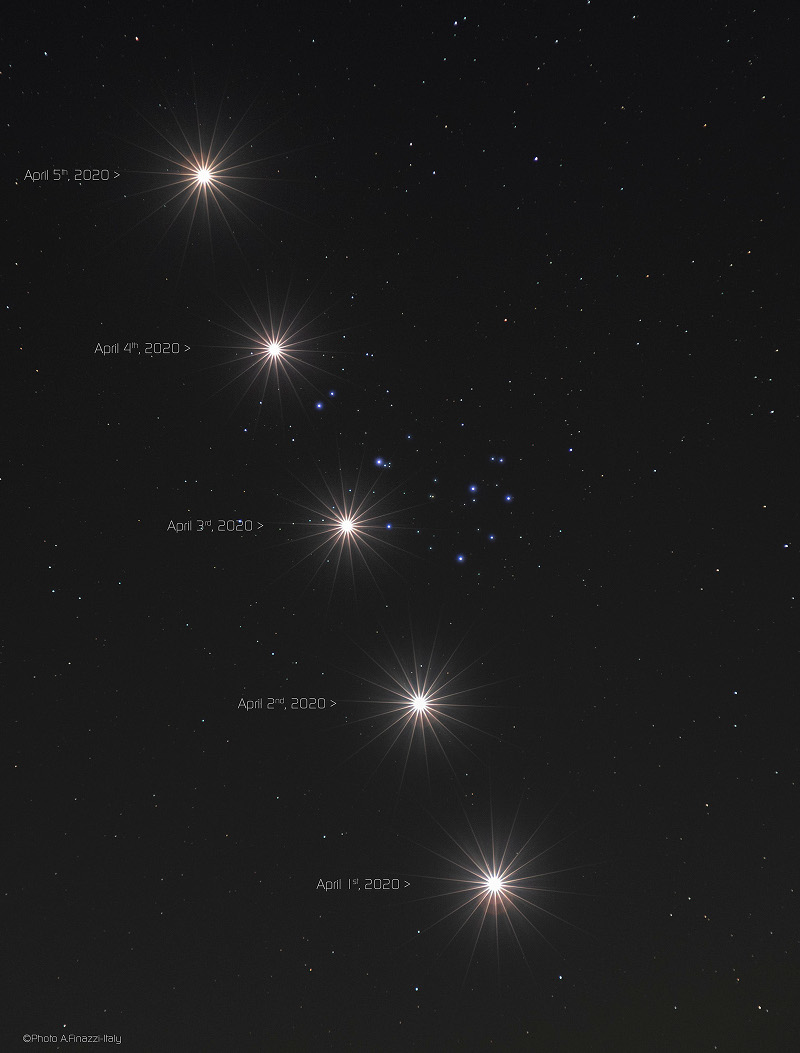
Shared around world in early April skies Venus, our brilliant evening star, wandered across the face of the lovely Pleiades star cluster. This timelapse image follows the path of the inner planet during the beautiful conjunction showing its daily approach to the stars of the Seven Sisters. From a composite of tracked exposures made with a telephoto lens, the field of view is also appropriate for binocular equipped skygazers. While the star cluster and planet were easily seen with the naked-eye, the spiky appearance of our sister planet in the picture is the result of a diffraction pattern produced by the camera’s lens. All images were taken from a home garden in Chiuduno, Bergamo, Lombardy, Italy, fortunate in good weather and clear spring nights. via NASA https://ift.tt/34pOKE2

Full Moon of Spring

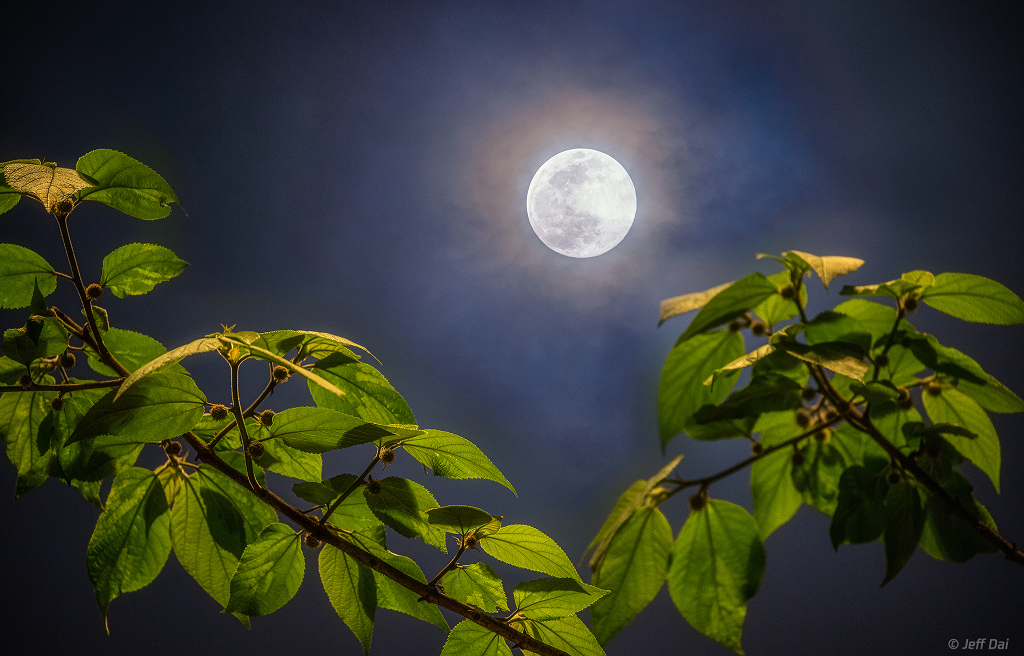
From home this Full Moon looked bright. Around our fair planet it rose as the Sun set on April 7/8, the first Full Moon after the vernal equinox and the start of northern hemisphere spring. April’s full lunar phase was also near perigee, the closest point in the Moon’s elliptical orbit. In fact, it was nearer perigee than any other Full Moon of 2020 making it the brightest Full Moon of the year. To create the visual experience a range of exposures were blended to capture the emerging foreground foliage and bright lunar disk. The hopefull image of spring was recorded from a home garden in skies over Chongqing, China. via NASA https://ift.tt/2UVOsS4

A Flow of Time

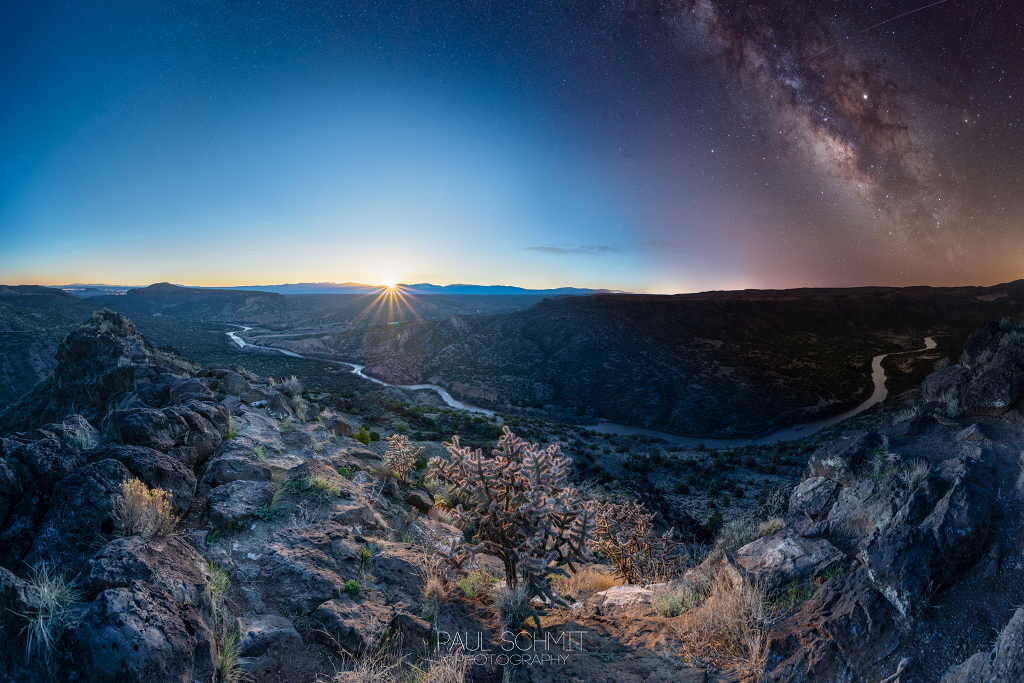
This surreal timelapse, landscape, panorama spans predawn, blue hour, and sunrise skies. Close to the start of planet Earth’s northern hemisphere spring, the flow of time was captured between 4:30 and 7:00 am from a location overlooking northern New Mexico’s Rio Grande Valley. In tracked images of the night sky just before twilight begins, the Milky Way is cast across the southern (right) edge of the panoramic frame. Toward the east, a range of short and long exposures resolves the changing brightness as the Sun rises over the distant peaks of the Sangre de Cristo Mountains. In between, exposures made during the spring morning’s tantalizing blue hour are used to blend the night sky and sunrise over the high desert landscape. via NASA https://ift.tt/3c7Qnc9

Country Sky versus City Sky

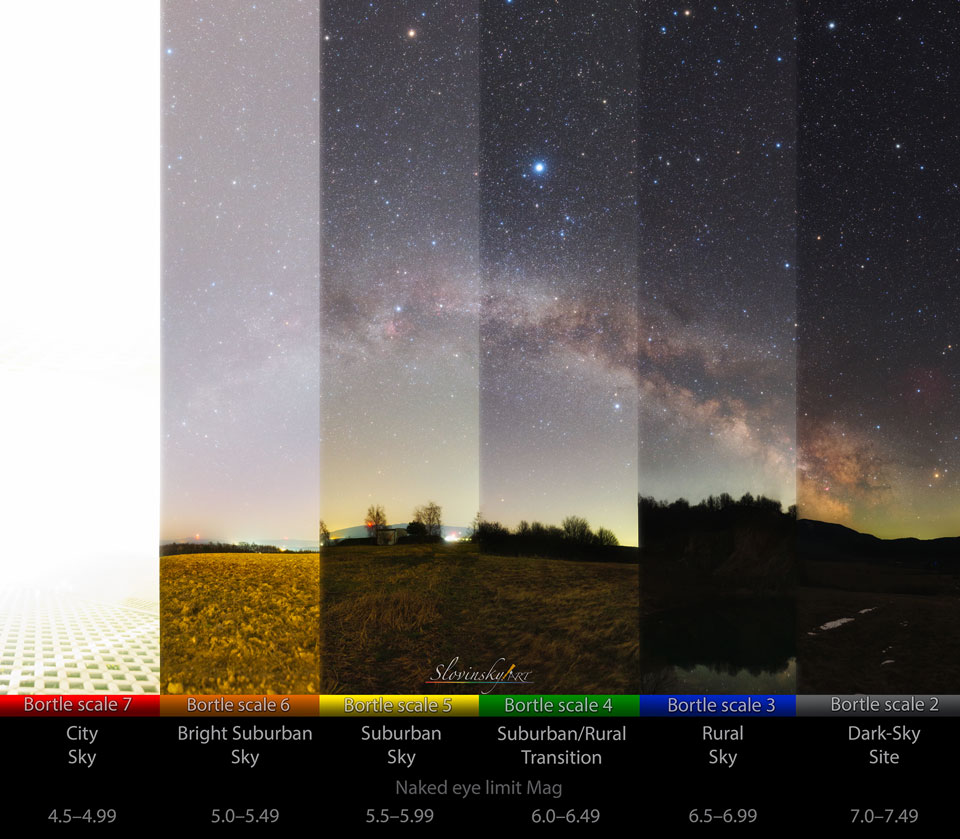
Dark skies are disappearing from the world. With modernization comes artificial lighting that brightens the night. While these lights allow modern humans to see, much light is wasted up into the sky. This light pollution not only wastes energy, but, when reflected by the Earth’s atmosphere back down, creates a nighttime brightness that disrupts wildlife and harms human health, while doing very little to prevent crime. Light pollution is also making a dark night sky a scarcity for new generations. While there is little that can be done in large cities, rural country areas could benefit from lighting that is fully shielded from exposing the night sky where it is not needed. The featured panorama contains 6 adjacent vertical segments taken from different locations across Slovakia — but with the same equipment and at the same time of night, and then subjected to the same digital post-processing. Although no stars are visible on the left-most city sky, the right-most country sky is magnificently dark. You can help protect the wonders of your night sky by favoring, when possible, dark sky friendly lightning. via NASA https://ift.tt/2XiAqf2

A Path North

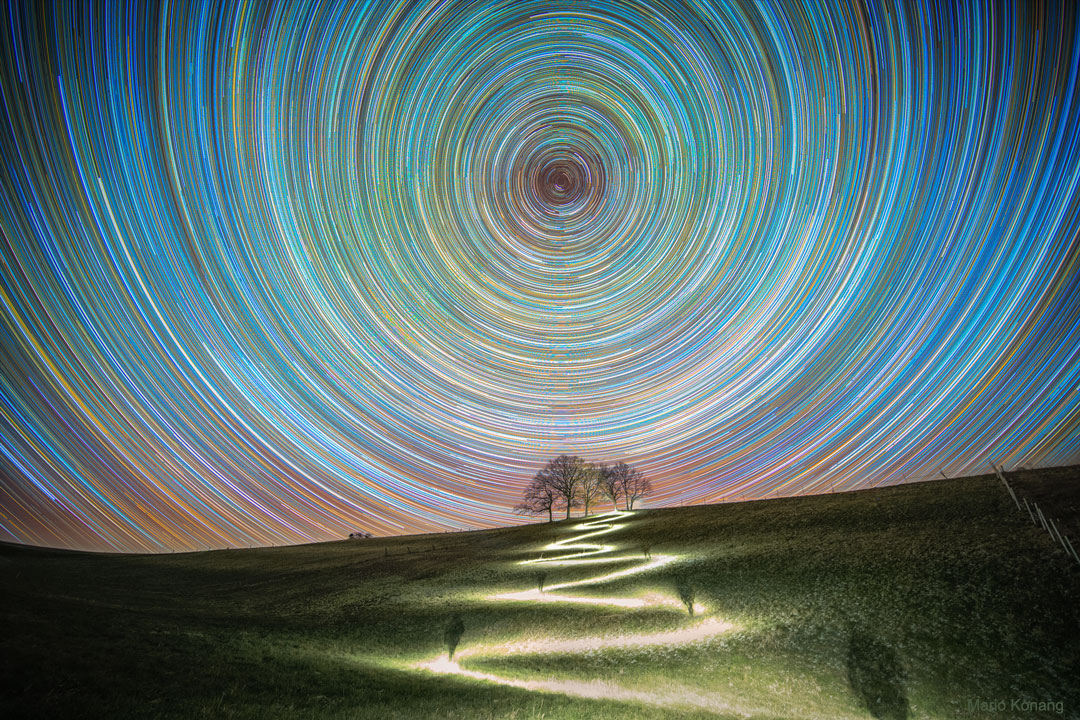
What happens if you keep going north? The direction north on the Earth, the place on your horizon below the northern spin pole of the Earth — around which other stars appear to slowly swirl, will remain the same. This spin-pole-of-the-north will never move from its fixed location on the sky — night or day — and its height will always match your latitude. The further north you go, the higher the north spin pole will appear. Eventually, if you can reach the Earth’s North Pole, the stars will circle a point directly over your head. Pictured, a four-hour long stack of images shows stars trailing in circles around this north celestial pole. The bright star near the north celestial pole is Polaris, known as the North Star. The bright path was created by the astrophotographer’s headlamp as he zigzagged up a hill just over a week ago in Lower Saxony, Germany. The astrophotographer can be seen, at times, in shadow. Actually, the Earth has two spin poles — and much the same would happen if you started below the Earth’s equator and went south. via NASA https://ift.tt/39Pcoej

NGC 1672: Barred Spiral Galaxy from Hubble

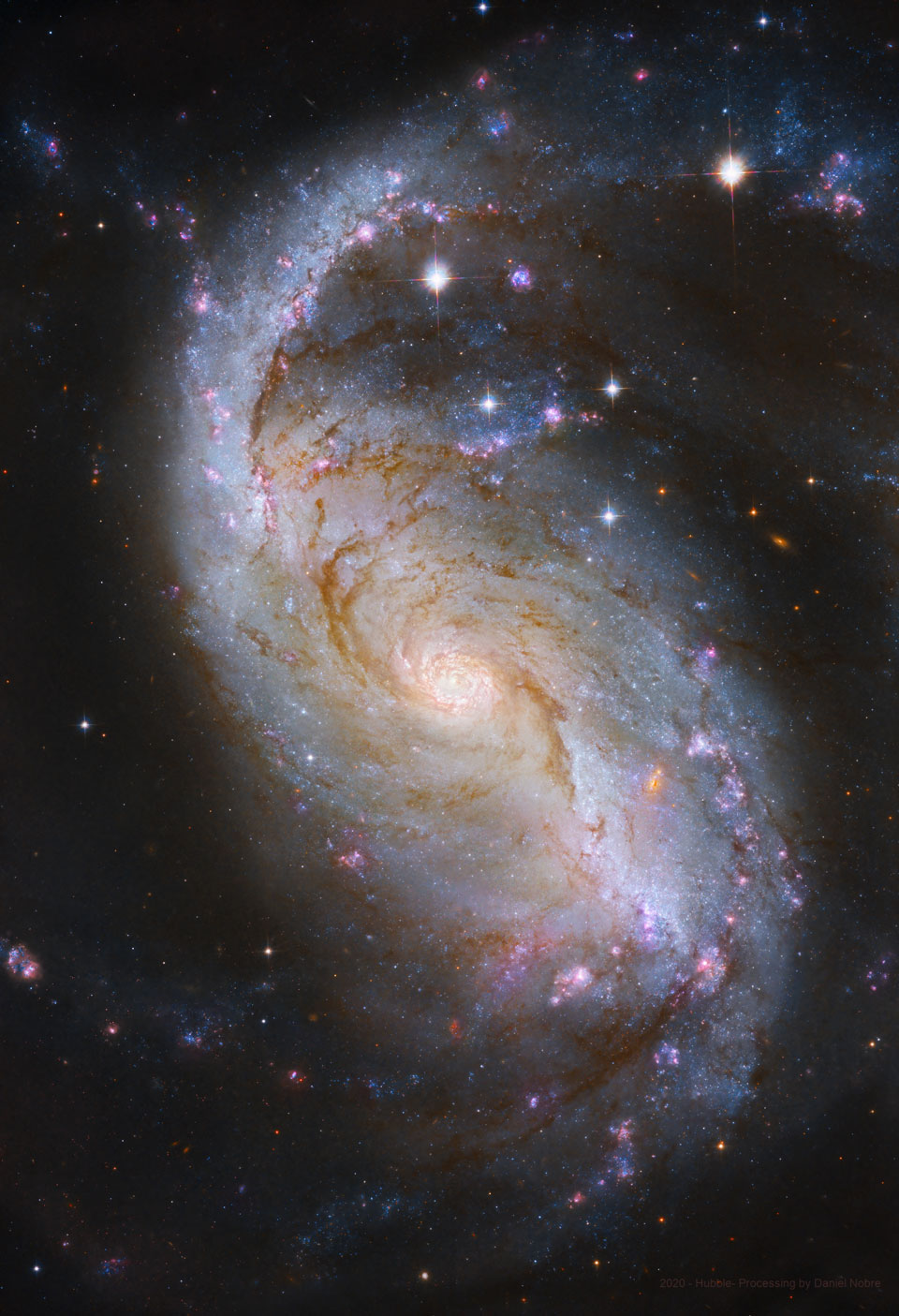
Many spiral galaxies have bars across their centers. Even our own Milky Way Galaxy is thought to have a modest central bar. Prominently barred spiral galaxy NGC 1672, featured here, was captured in spectacular detail in an image taken by the orbiting Hubble Space Telescope. Visible are dark filamentary dust lanes, young clusters of bright blue stars, red emission nebulas of glowing hydrogen gas, a long bright bar of stars across the center, and a bright active nucleus that likely houses a supermassive black hole. Light takes about 60 million years to reach us from NGC 1672, which spans about 75,000 light years across. NGC 1672, which appears toward the constellation of the Dolphinfish (Dorado), has been studied to find out how a spiral bar contributes to star formation in a galaxy’s central regions. via NASA https://ift.tt/2ReQoTH

Color the Universe

Wouldn’t it be fun to color in the universe? If you think so, please accept this famous astronomical illustration as a preliminary substitute. You, your friends, your parents or children, can print it out or even color it digitally. While coloring, you might be interested to know that even though this illustration has appeared in numerous places over the past 100 years, the actual artist remains unknown. Furthermore, the work has no accepted name — can you think of a good one? The illustration, first appearing in a book by Camille Flammarion in 1888, is used frequently to show that humanity’s present concepts are susceptible to being supplanted by greater truths. via NASA https://ift.tt/2Xb30Pe