Carina in Perspective

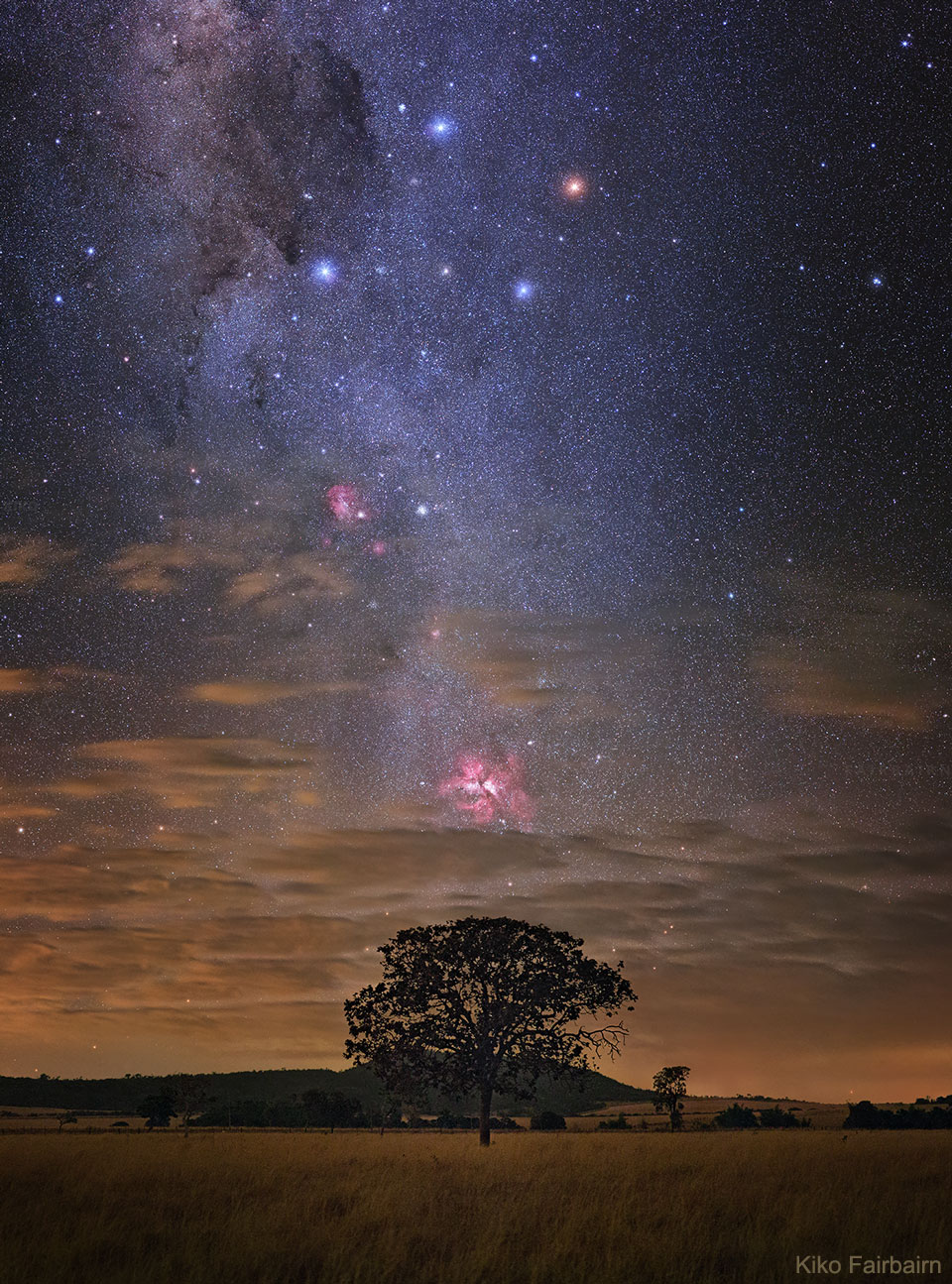
You need to be in the south, looking south, to see such a sky. And only then if you’re lucky. Just above the picturesque tree is the impressive Carina Nebula, one of the few nebulas in the sky that is visible to the unaided eye. The featured image had to be taken from a very dark location to capture the Carina Nebula with such perspective and so near the horizon. The Great Nebula in Carina, cataloged as NGC 3372, is home to the wildly variable star Eta Carinae that sometimes flares to become one of the brightest stars in the sky. Above Carina is IC 2944, the Running Chicken Nebula, a nebula that not only looks like a chicken, but contains impressive dark knots of dust. Above these red-glowing emission nebulas are the bright stars of the Southern Cross, while on the upper left of the image is the dark Coalsack Nebula. This image was composed from six consecutive exposures taken last summer from Padre Bernardo, Goiás, Brazil. Even with careful planning, the astrophotographer felt lucky to get this shot because clouds — some still visible near the horizon — kept getting in the way. via NASA https://ift.tt/3c9x9Di
Earth Flyby of BepiColombo

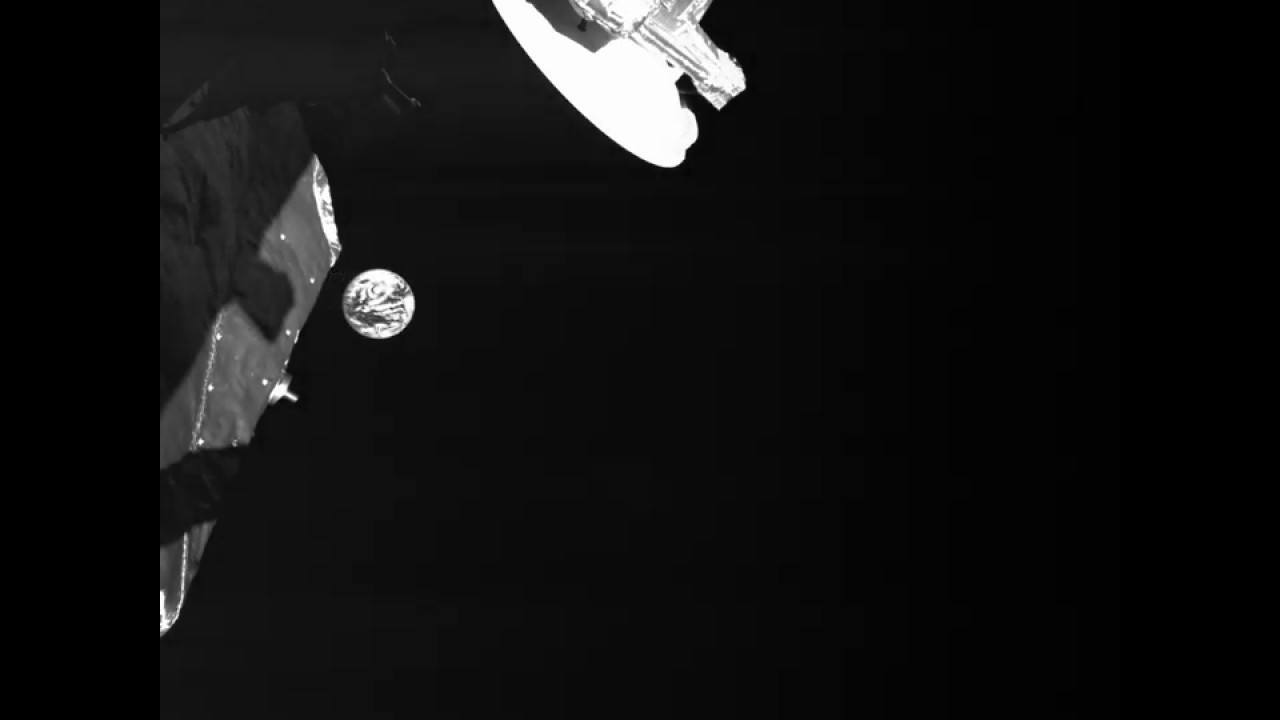
What it would look like to approach planet Earth? Such an event was recorded visually in great detail by ESA’s and JAXA’s robotic BepiColombo spacecraft last month as it swung back past Earth on its journey in to the planet Mercury. Earth can be seen rotating on approach as it comes out from behind the spacecraft’s high-gain antenna in this nearly 10-hour time-lapse video. The Earth is so bright that no background stars are visible. Launched in 2018, the robotic BepiColombo used the gravity of Earth to adjust its course, the first of nine planetary flybys over the next seven years — but the only one involving Earth. Scheduled to enter orbit in 2025, BepiColombo will take images and data of the surface and magnetic field of Mercury in an effort to better understand the early evolution of our Solar System and its innermost planet. via NASA https://ift.tt/3dexxAE

A Message from Earth

What are these Earthlings trying to tell us? The featured message was broadcast from Earth towards the globular star cluster M13 in 1974. During the dedication of the Arecibo Observatory – still one of the largest single radio telescopes in the world – a string of 1’s and 0’s representing the diagram was sent. This attempt at extraterrestrial communication was mostly ceremonial – humanity regularly broadcasts radio and television signals out into space accidentally. Even were this message received, M13 is so far away we would have to wait almost 50,000 years to hear an answer. The featured message gives a few simple facts about humanity and its knowledge: from left to right are numbers from one to ten, atoms including hydrogen and carbon, some interesting molecules, DNA, a human with description, basics of our Solar System, and basics of the sending telescope. Several searches for extraterrestrial intelligence are currently underway, including one where you can use your own home computer. via NASA https://ift.tt/3d42k2S

Radio, The Big Ear, and the WOW Signal

Since the early days of radio and television we have been freely broadcasting signals into space. For some time now, we have been listening too. A large radio telescope at Ohio State University known as affectionately The Big Ear was one of the first listeners. The Big Ear was about the size of three football fields and consisted of an immense metal ground plane with two fence-like reflectors, one fixed and one tiltable. It relied on the Earth’s rotation to help scan the sky. This photo, taken by former Big Ear student volunteer Rick Scott, looks out across the ground plane toward the fixed reflector with the radio frequency receiver horns in the foreground. Starting in 1965, the Big Ear was used in an ambitious survey of the radio sky. In the 1970s, it became the first telescope to continuously listen for signals from extraterrestrial civilizations. For an exciting moment during August 1977 a very strong, unexpected signal, dubbed the Wow! Signal, was detected by the Big Ear. But alas, heard only once, the source of the signal could not be determined. In May 1998 the final pieces of the Big Ear were torn down.
via NASA https://ift.tt/3ddM7sd

A View Toward M106

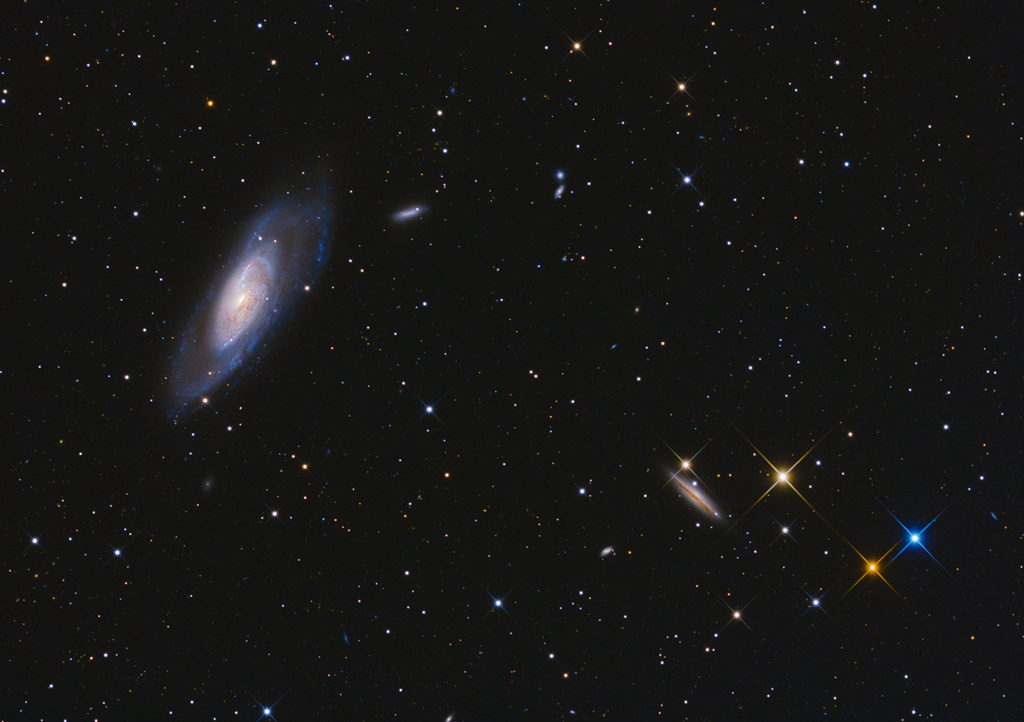
Big, bright, beautiful spiral, Messier 106 dominates this cosmic vista. The nearly two degree wide telescopic field of view looks toward the well-trained constellation Canes Venatici, near the handle of the Big Dipper. Also known as NGC 4258, M106 is about 80,000 light-years across and 23.5 million light-years away, the largest member of the Canes II galaxy group. For a far far away galaxy, the distance to M106 is well-known in part because it can be directly measured by tracking this galaxy’s remarkable maser, or microwave laser emission. Very rare but naturally occurring, the maser emission is produced by water molecules in molecular clouds orbiting its active galactic nucleus. Another prominent spiral galaxy on the scene, viewed nearly edge-on, is NGC 4217 below and right of M106. The distance to NGC 4217 is much less well-known, estimated to be about 60 million light-years, but the bright spiky stars are in the foreground, well inside our own Milky Way galaxy. Even the existence of galaxies beyond the Milky Way was questioned 100 years ago in astronomy’s Great Debate. via NASA https://ift.tt/2VSFy8D

Andromeda Island Universe

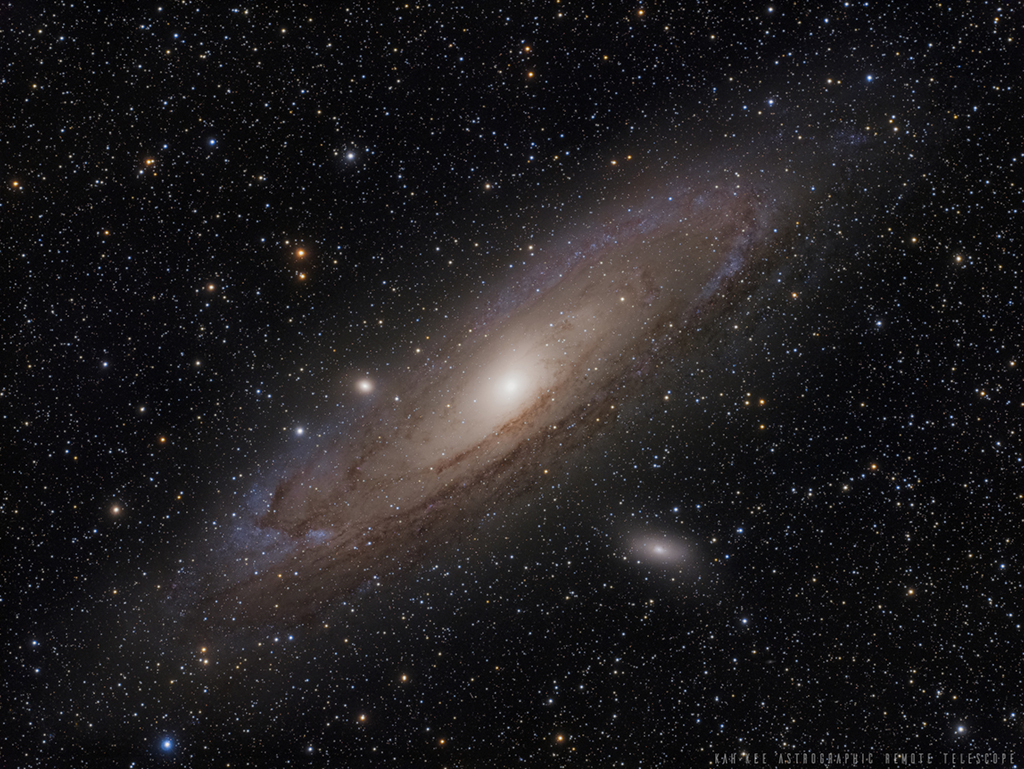
The most distant object easily visible to the unaided eye is M31, the great Andromeda Galaxy some two and a half million light-years away. But without a telescope, even this immense spiral galaxy – spanning over 200,000 light years – appears as a faint, nebulous cloud in the constellation Andromeda. In contrast, a bright yellow nucleus, dark winding dust lanes, expansive blue spiral arms and star clusters are recorded in this stunning telescopic image. While even casual skygazers are now inspired by the knowledge that there are many distant galaxies like M31, astronomers debated this fundamental concept 100 years ago. Were these « spiral nebulae » simply outlying components of our own Milky Way Galaxy or were they instead « island universes », distant systems of stars comparable to the Milky Way itself? This question was central to the famous Shapley-Curtis debate of 1920, which was later resolved by observations of M31 in favor of Andromeda, island universe. via NASA https://ift.tt/2zM6QF7

The Ion Tail of New Comet SWAN

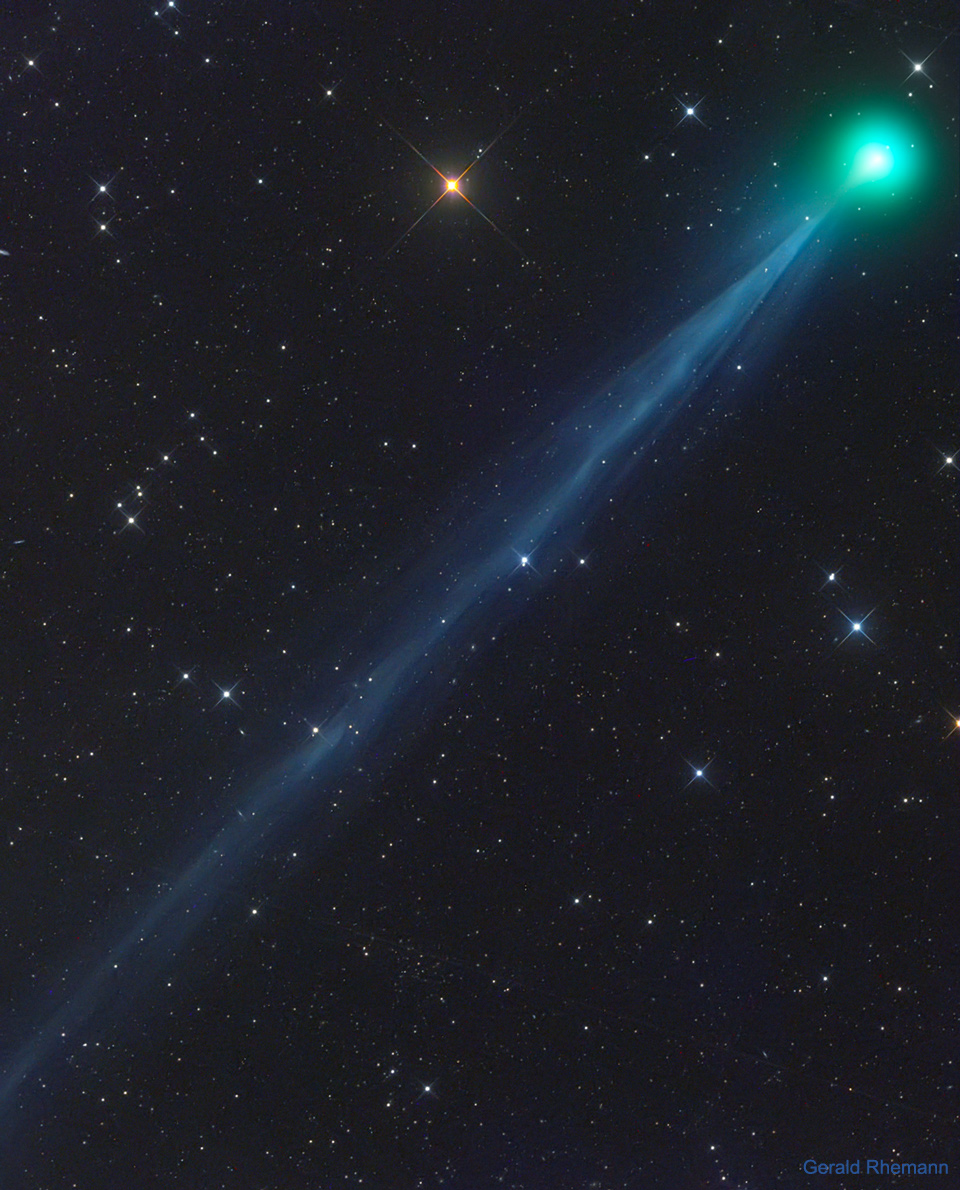
Newly discovered Comet SWAN has already developed an impressive tail. The comet came in from the outer Solar System and has just passed inside the orbit of the Earth. Officially designated C/2020 F8 (SWAN), this outgassing interplanetary iceberg will pass its closest to the Earth on May 13, and closest to the Sun on May 27. The comet was first noticed in late March by an astronomy enthusiast looking through images taken by NASA’s Sun-orbiting SOHO spacecraft, and is named for this spacecraft’s Solar Wind Anisotropies (SWAN) camera. The featured image, taken from the dark skies in Namibia in mid-April, captured Comet SWAN’s green-glowing coma and unexpectedly long, detailed, and blue ion-tail. Although the brightness of comets are notoriously hard to predict, some models have Comet SWAN becoming bright enough to see with the unaided eye during June. via NASA https://ift.tt/3bNGnov

The Kepler 90 Planetary System

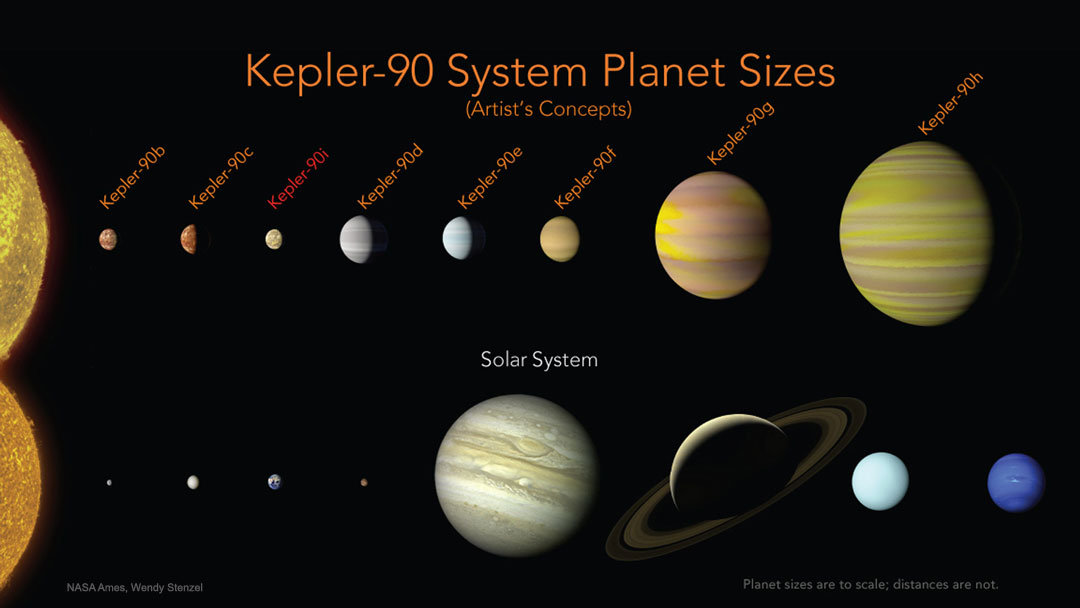
Do other stars have planetary systems like our own? Yes — one such system is Kepler-90. Cataloged by the Kepler satellite that operated from Earth orbit between 2009 and 2018, eight planets were discovered, giving Kepler-90 the same number of known planets as our Solar System. Similarities between Kepler-90 and our system include a G-type star comparable to our Sun, rocky planets comparable to our Earth, and large planets comparable in size to Jupiter and Saturn. Differences include that all of the known Kepler-90 planets orbit relatively close in — closer than Earth’s orbit around the Sun — making them possibly too hot to harbor life. However, observations over longer time periods may discover cooler planets further out. Kepler-90 lies about 2,500 light years away, and at magnitude 14 is visible with a medium-sized telescope toward the constellation of the Dragon (Draco). The exoplanet-finding mission TESS was launched in 2018, while missions with exoplanet finding capability planned for launch in the next decade include NASA’s JWST and WFIRST. via NASA https://ift.tt/2y4uHz9

Fresh Tiger Stripes on Saturns Enceladus

How will humanity first learn of extraterrestrial life? One possibility is to find it under the icy surface of Saturn’s moon Enceladus. A reason to think that life may exist there are long features — dubbed tiger stripes — that are known to be spewing ice from the moon’s icy interior into space. These surface cracks create clouds of fine ice particles over the moon’s South Pole and create Saturn’s mysterious E-ring. Evidence for this has come from the robot Cassini spacecraft that orbited Saturn from 2004 to 2017. Pictured here, a high resolution image of Enceladus is shown from a close flyby. The unusual surface tiger stripes are shown in false-color blue. Why Enceladus is active remains a mystery, as the neighboring moon Mimas, approximately the same size, appears quite dead. A recent analysis of ejected ice grains has yielded evidence that complex organic molecules exist inside Enceladus. These large carbon-rich molecules bolster — but do not prove — that oceans under Enceladus’ surface could contain life. Another Solar System moon that might contain underground life is Europa. via NASA https://ift.tt/2yR9Lvp

Edwin Hubble Discovers the Universe

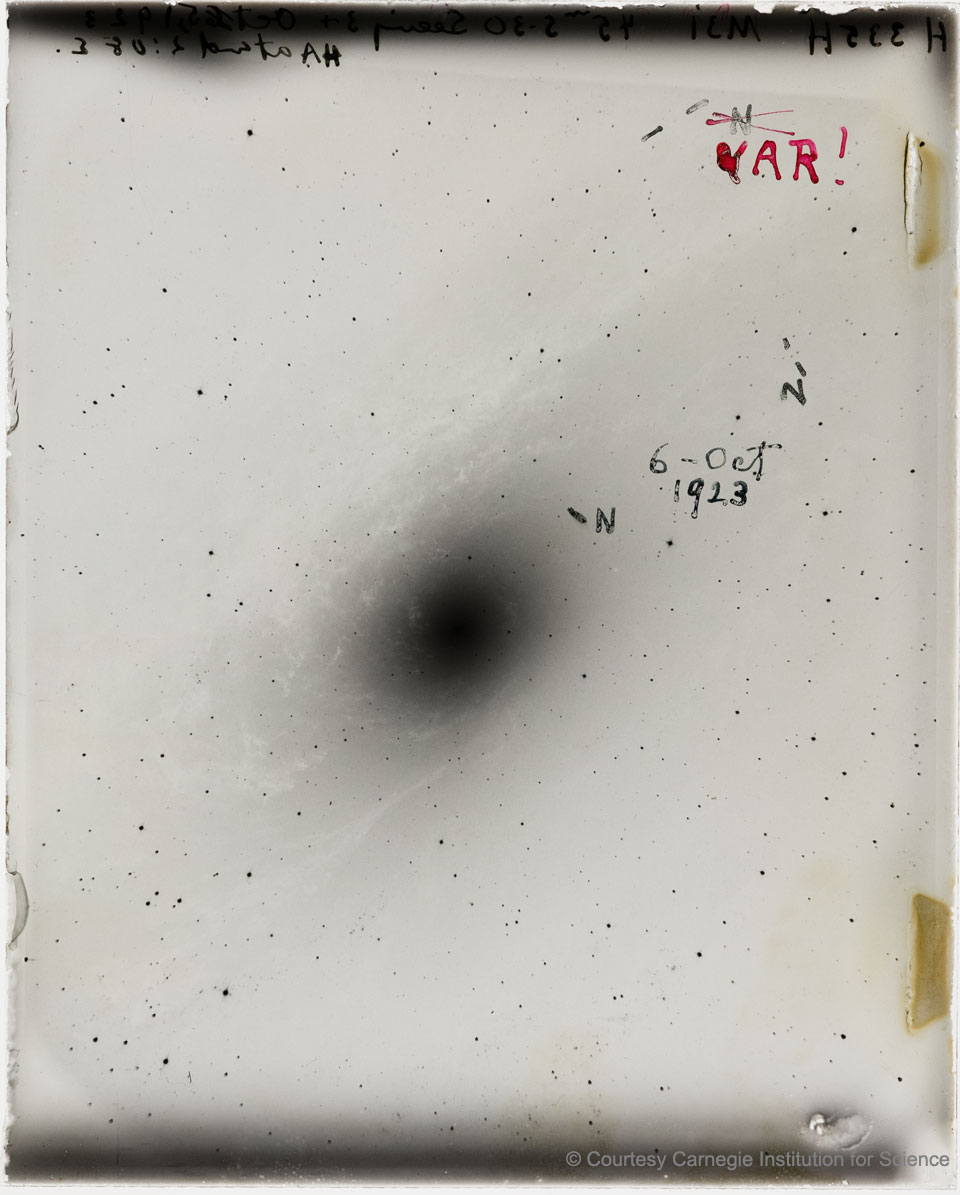
How big is our universe? This very question, among others, was debated by two leading astronomers 100 years ago today in what has become known as astronomy’s Great Debate. Many astronomers then believed that our Milky Way Galaxy was the entire universe. Many others, though, believed that our galaxy was just one of many. In the Great Debate, each argument was detailed, but no consensus was reached. The answer came over three years later with the detected variation of single spot in the Andromeda Nebula, as shown on the original glass discovery plate digitally reproduced here. When Edwin Hubble compared images, he noticed that this spot varied, and so wrote « VAR! » on the plate. The best explanation, Hubble knew, was that this spot was the image of a variable star that was very far away. So M31 was really the Andromeda Galaxy — a galaxy possibly similar to our own. The featured image may not be pretty, but the variable spot on it opened a door through which humanity gazed knowingly, for the first time, into a surprisingly vast cosmos. via NASA https://ift.tt/3cS9ebz