Archives de catégorie : Image

The Gum Nebula Expanse

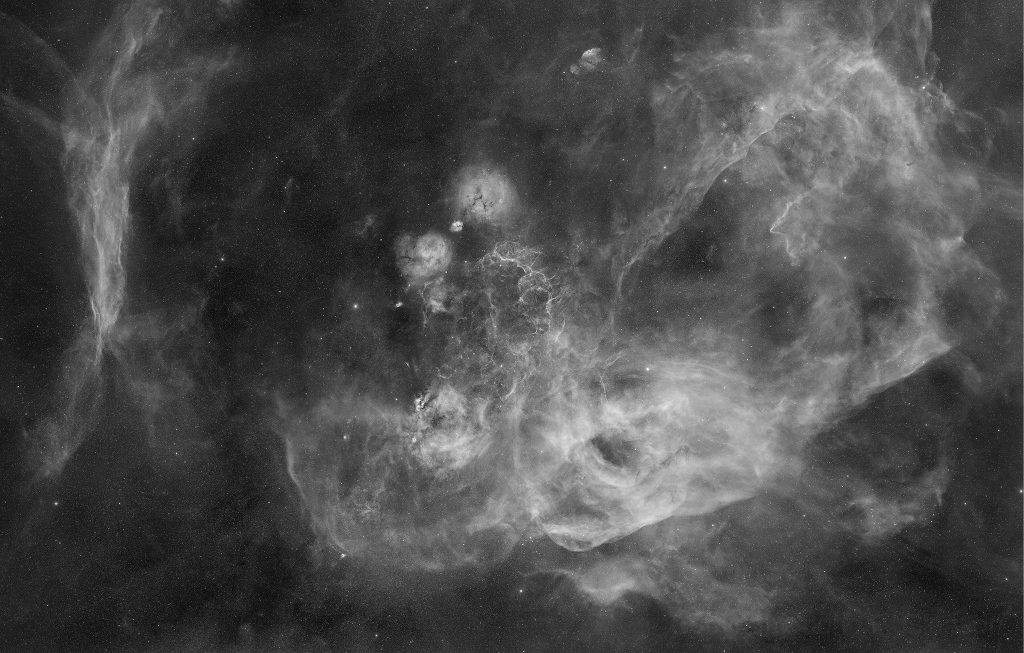
Named for a cosmic cloud hunter, Australian astronomer Colin Stanley Gum (1924-1960), The Gum Nebula is so large and close it is actually hard to see. In fact, we are only about 450 light-years from the front edge and 1,500 light-years from the back edge of this interstellar expanse of glowing hydrogen gas. Covered in this 40+ degree-wide monochrome mosaic of Hydrogen-alpha images, the faint emission region stands out against the background of Milky Way stars. The complex nebula is thought to be a supernova remnant over a million years old, sprawling across the Ship’s southern constellations Vela and Puppis. This spectacular wide field view also explores many objects embedded in The Gum Nebula, including the younger Vela supernova remnant. via NASA https://ift.tt/2J8zOBM
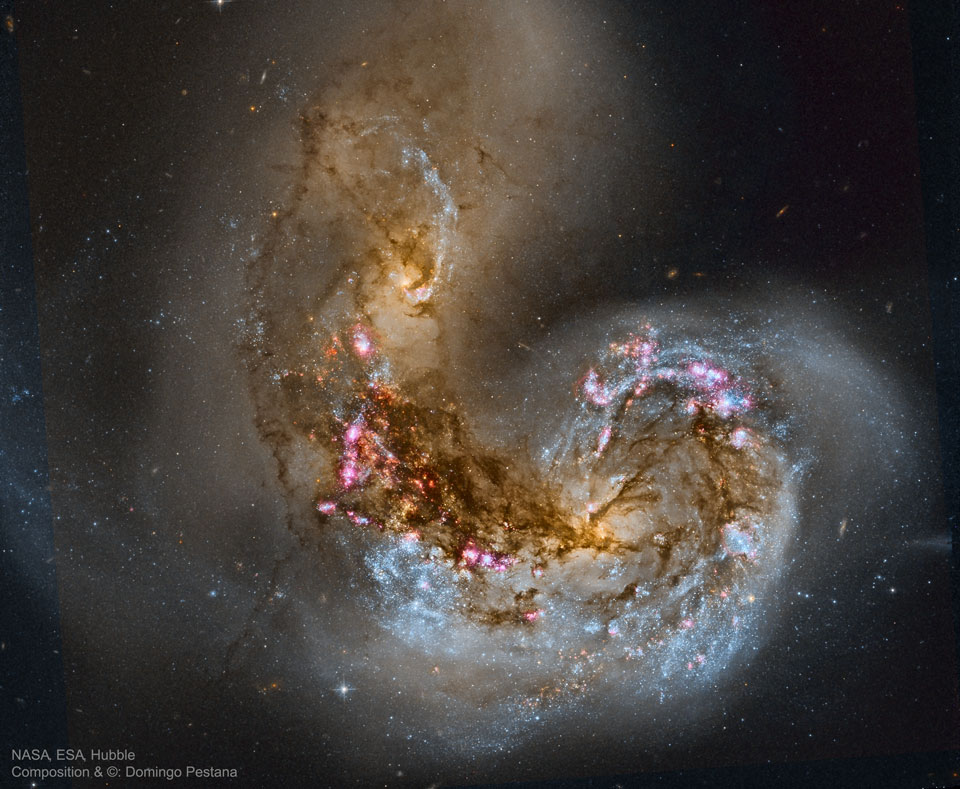
Spiral Galaxy NGC 4038 in Collision

This galaxy is having a bad millennium. In fact, the past 100 million years haven’t been so good, and probably the next billion or so will be quite tumultuous. Visible toward the lower right, NGC 4038 used to be a normal spiral galaxy, minding its own business, until NGC 4039, to its upper left, crashed into it. The evolving wreckage, known famously as the Antennae, is featured here. As gravity restructures each galaxy, clouds of gas slam into each other, bright blue knots of stars form, massive stars form and explode, and brown filaments of dust are strewn about. Eventually the two galaxies will converge into one larger spiral galaxy. Such collisions are not unusual, and even our own Milky Way Galaxy has undergone several in the past and is predicted to collide with our neighboring Andromeda Galaxy in a few billion years. The frames that compose this image were taken by the orbiting Hubble Space Telescope by professional astronomers to better understand galaxy collisions. These frames — and many other deep space images from Hubble — have since been made public, allowing interested amateurs to download and process them into, for example, this visually stunning composite. via NASA https://ift.tt/2xdXGj1

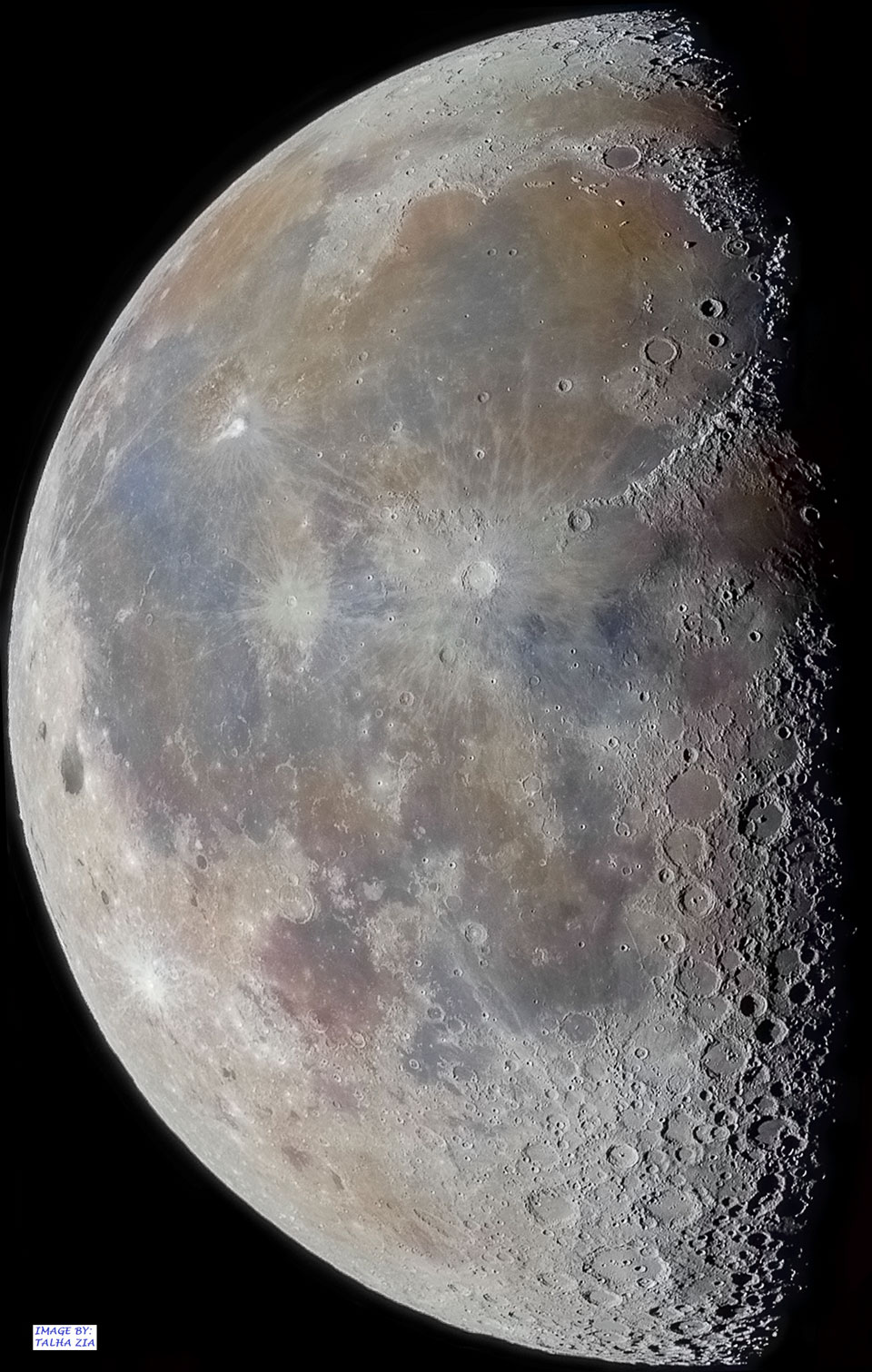
Craters and Shadows at the Lunar Terminator

Why does the right part of this image of the Moon stand out? Shadows. The terminator line — the line between light and dark — occurs in the featured image so that just over half the Moon’s face is illuminated by sunlight. The lunar surface appears different nearer the terminator because there the Sun is nearer the horizon and therefore causes shadows to become increasingly long. These shadows make it easier for us to discern structure, giving us depth cues so that the two-dimensional image, when dominated by shadows, appears almost three-dimensional. Therefore, as the Moon fades from light to dark, shadows not only tell us the high from the low, but become noticeable for increasingly shorter structures. For example, many craters appear near the terminator because their height makes them easier to discern there. The image was taken two weeks ago when the lunar phase was waning gibbous. The next full moon, a Moon without shadows, will occur one week from today. via NASA https://ift.tt/2IBQM8k

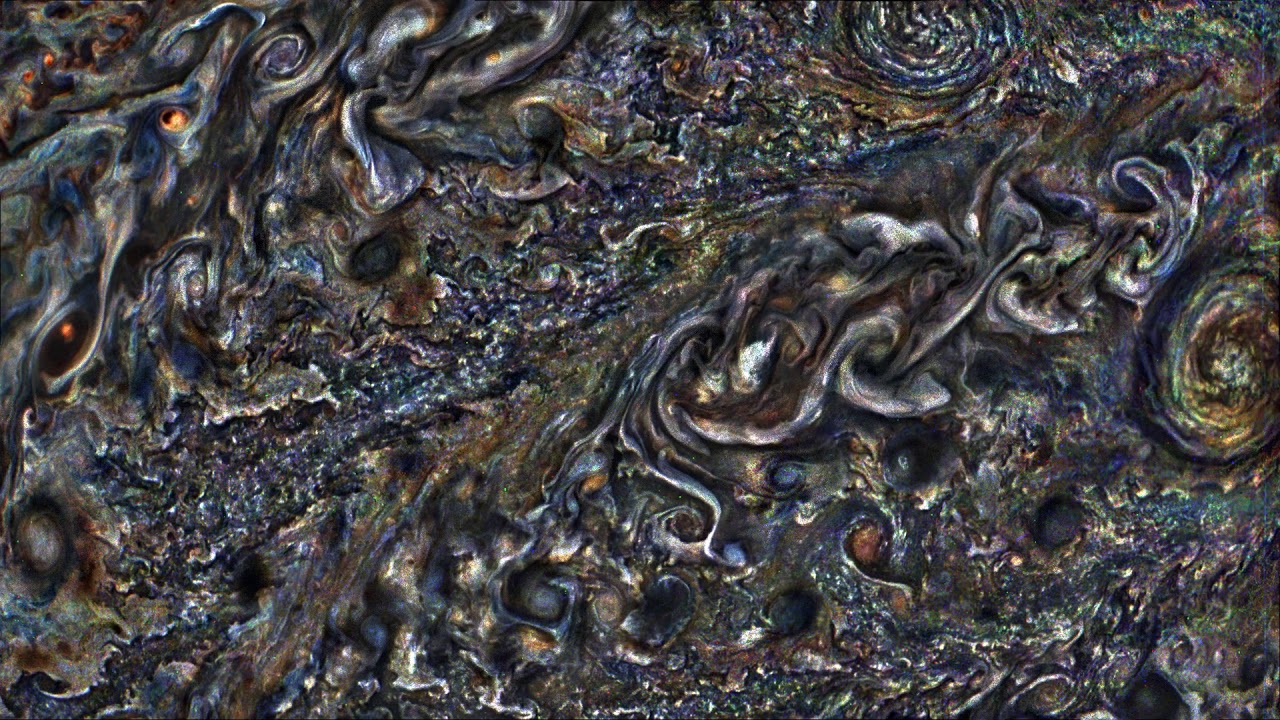
Jupiter Cloud Animation from Juno

How do Jupiter’s clouds move? To help find out, images taken with NASA’s Juno spacecraft during its last pass near Jupiter have been analyzed and digitally extrapolated into a time-lapse video. The eight-second time-lapse video, digitally extrapolated between two images taken only nine minutes apart, estimates how Jupiter’s clouds move over 29 hours. Abstractly, the result appears something like a psychedelic paisley dream. Scientifically, however, the computer animation shows that circular storms tend to swirl, while bands and zones appear to flow. This overall motion is not surprising and has been seen on time-lapse videos of Jupiter before, although never in this detail. The featured region spans about four times the area of Jupiter’s Great Red Spot. Results from Juno are showing, unexpectedly, that Jupiter’s weather phenomena can extend deep below its cloud tops. via NASA https://ift.tt/2GAdjka

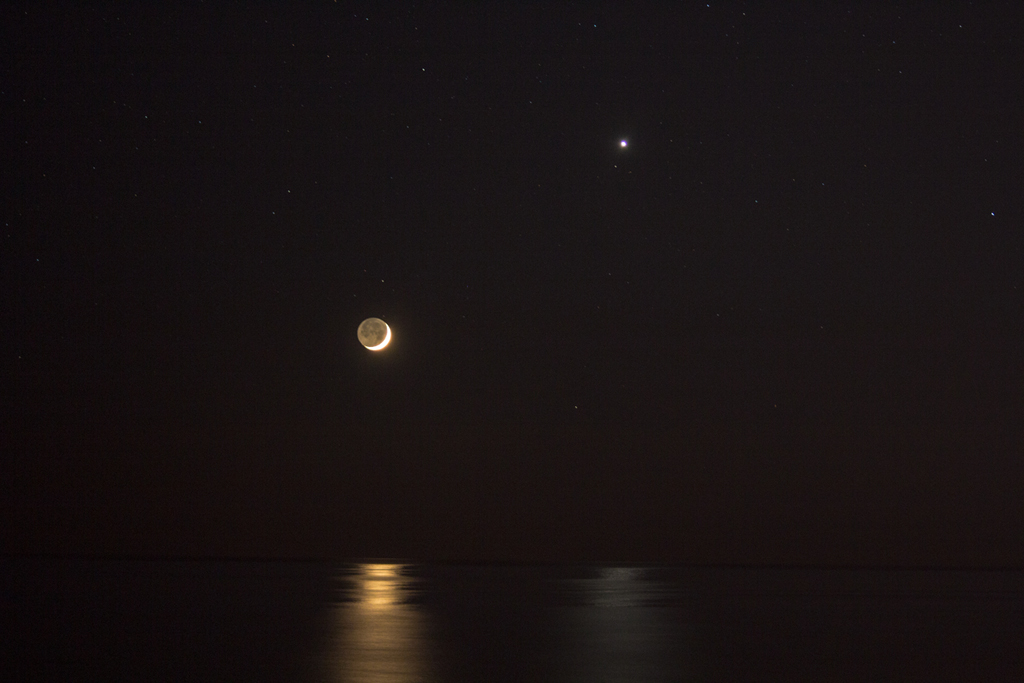
Reflections of Venus and Moon

Posing near the western horizon, a brilliant evening star and slender young crescent shared reflections in a calm sea last Thursday after sunset. Recorded in this snapshot from the Atlantic beach at Santa Marinella near Rome, Italy, the lovely celestial conjunction of the two brightest beacons in the night sky could be enjoyed around the world. Seaside, light reflected by briefly horizontal surfaces of the gentle waves forms the shimmering columns across the water. Similar reflections by fluttering atmospheric ice crystals can create sometimes mysterious pillars of light. Of course, earthlight itself visibly illuminates the faint lunar night side. via NASA https://ift.tt/2kaAqsO

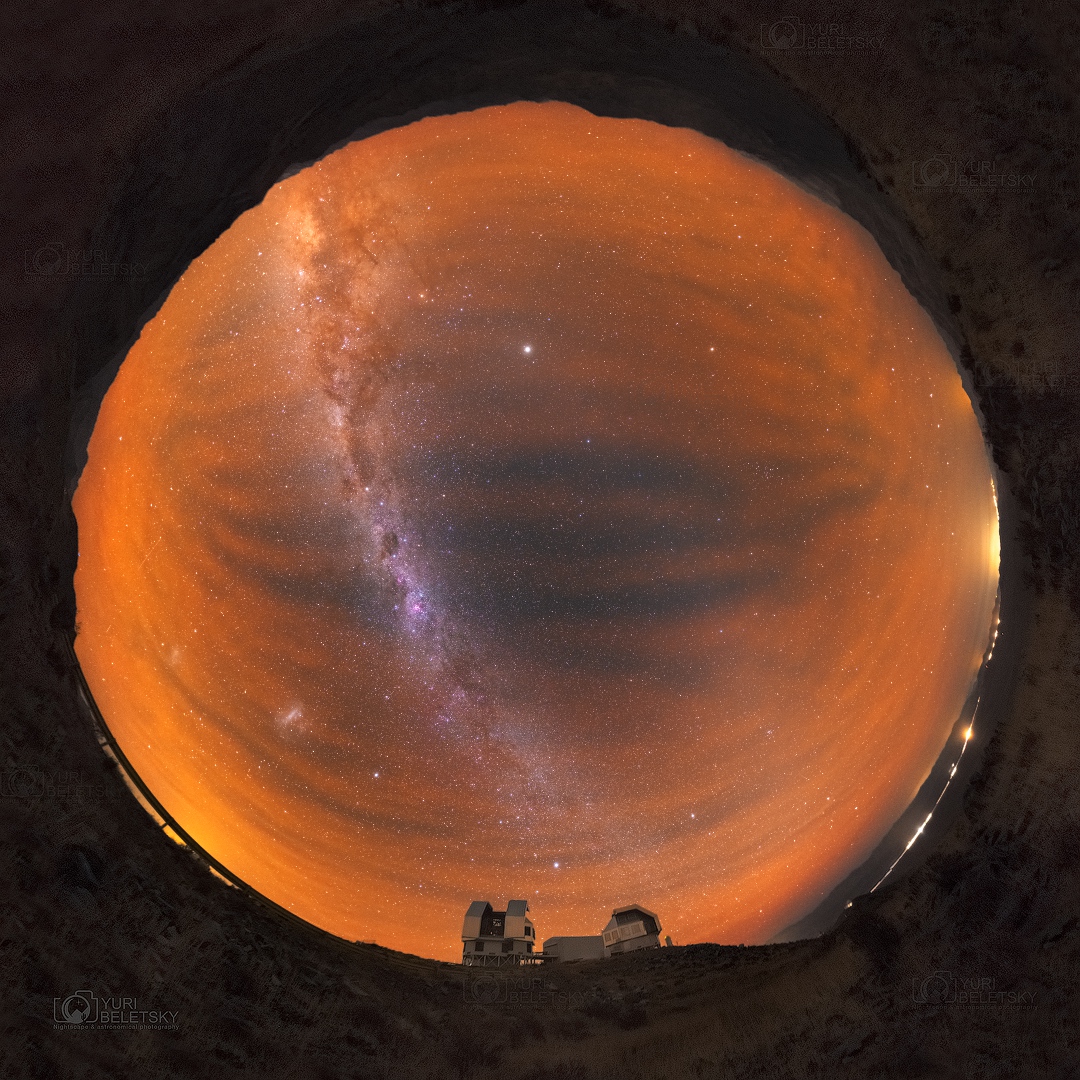
Milky Way vs Airglow Australis

Captured last week after sunset on a Chilean autumn night, an exceptional airglow floods this allsky view from Las Campanas Observatory. The airglow was so intense it diminished parts of the Milky Way as it arced horizon to horizon above the high Atacama desert. Originating at an altitude similar to aurorae, the luminous airglow is due to chemiluminescence, the production of light through chemical excitation. Commonly recorded in color by sensitive digital cameras, the airglow emission here is fiery in appearance. It is predominately from atmospheric oxygen atoms at extremely low densities and has often been present during southern hemisphere nights over the last few years. Like the Milky Way, on that dark night the strong airglow was very visible to the eye, but seen without color. Jupiter is brightest celestial beacon though, standing opposite the Sun and near the central bulge of the Milky Way rising above the eastern (top) horizon. The Large and Small Magellanic clouds both shine through the airglow to the lower left of the galactic plane, toward the southern horizon. via NASA https://ift.tt/2rL5eU4

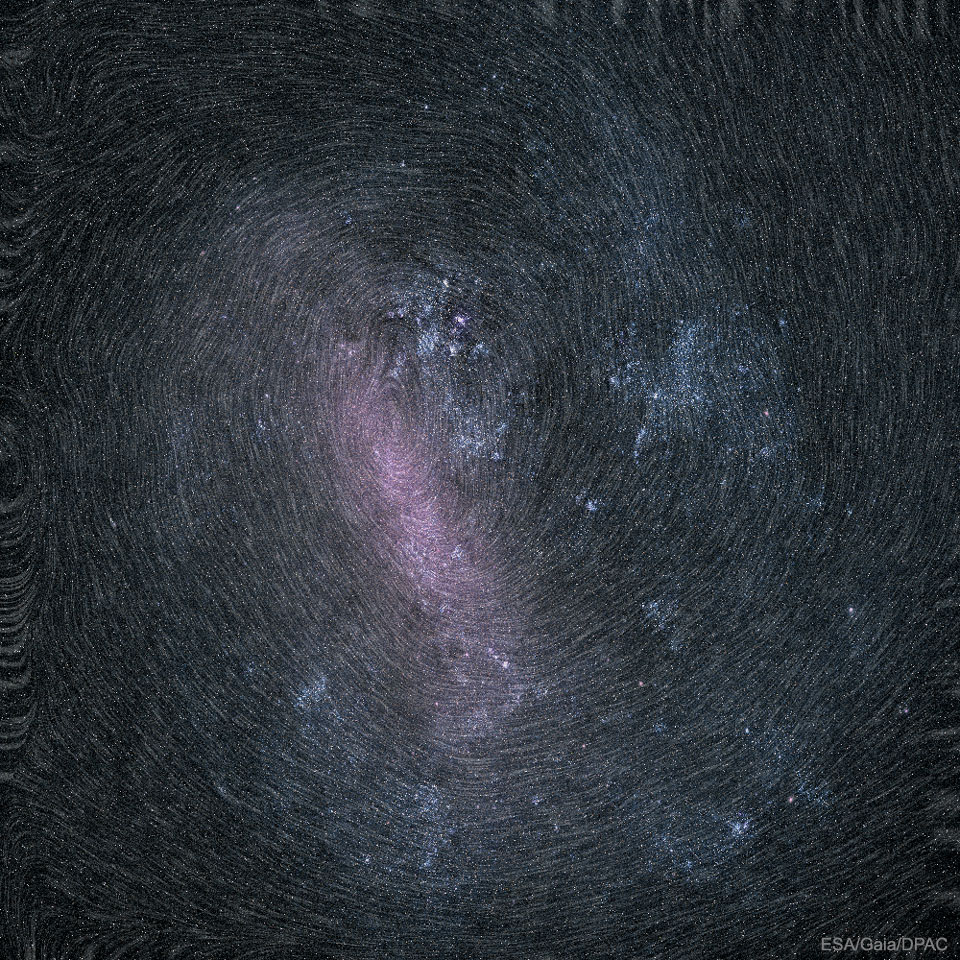
Rotation of the Large Magellanic Cloud

This image is not blurry. It shows in clear detail that the largest satellite galaxy to our Milky Way, the Large Cloud of Magellan (LMC), rotates. First determined with Hubble, the rotation of the LMC is presented here with fine data from the Sun-orbiting Gaia satellite. Gaia measures the positions of stars so accurately that subsequent measurements can reveal slight proper motions of stars not previously detectable. The featured image shows, effectively, exaggerated star trails for millions of faint LMC stars. Inspection of the image also shows the center of the clockwise rotation: near the top of the LMC’s central bar. The LMC, prominent in southern skies, is a small spiral galaxy that has been distorted by encounters with the greater Milky Way Galaxy and the lesser Small Magellanic Cloud (SMC). via NASA https://ift.tt/2IFqgy2

Saturns Hyperion in Natural Color

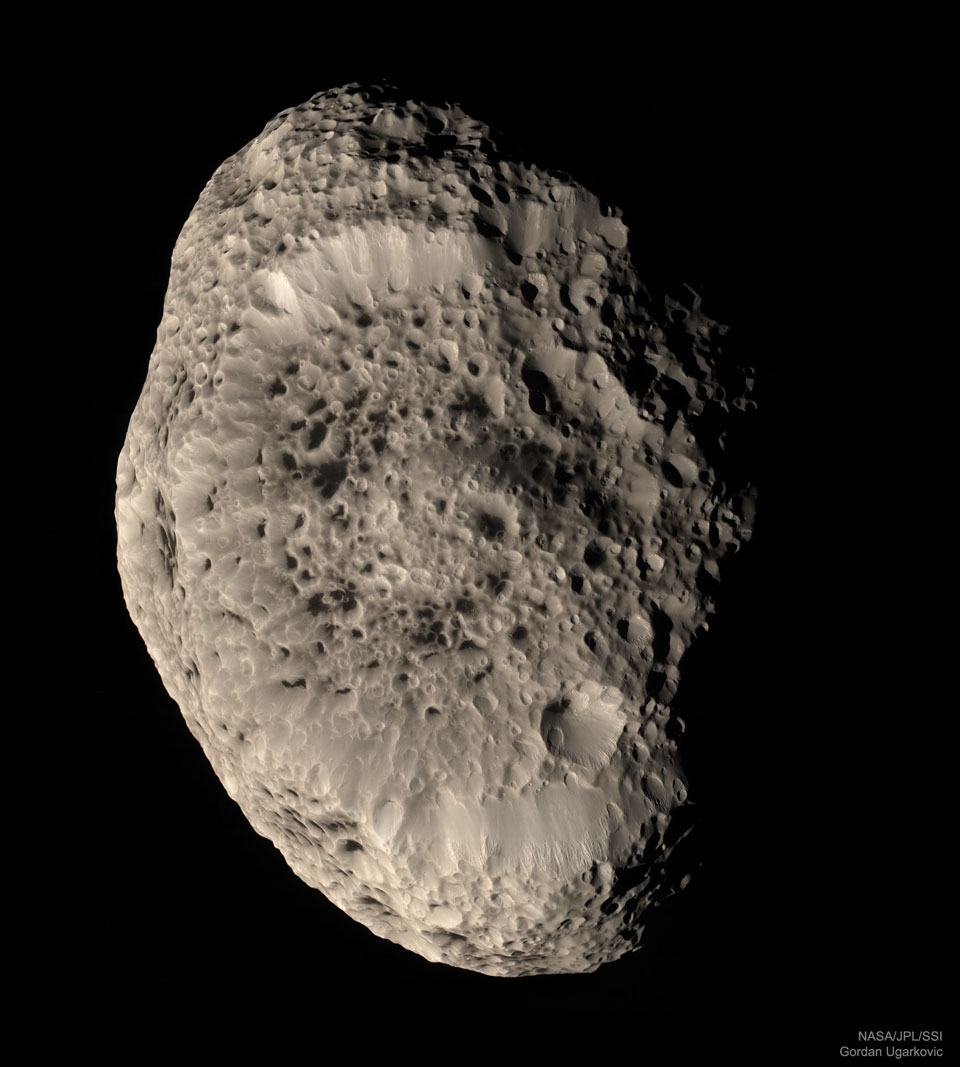
What lies at the bottom of Hyperion’s strange craters? To help find out, the robot Cassini spacecraft now orbiting Saturn swooped past the sponge-textured moon in 2005 and 2010 and took images of unprecedented detail. A six-image mosaic from the 2005 pass, featured here in natural color, shows a remarkable world strewn with strange craters and an odd sponge-like surface. At the bottom of most craters lies some type of unknown dark reddish material. This material appears similar to that covering part of another of Saturn’s moons, Iapetus, and might sink into the ice moon as it better absorbs warming sunlight. Hyperion is about 250 kilometers across, rotates chaotically, and has a density so low that it likely houses a vast system of caverns inside. via NASA https://ift.tt/2wF19qf

Sakurajima Volcano with Lightning

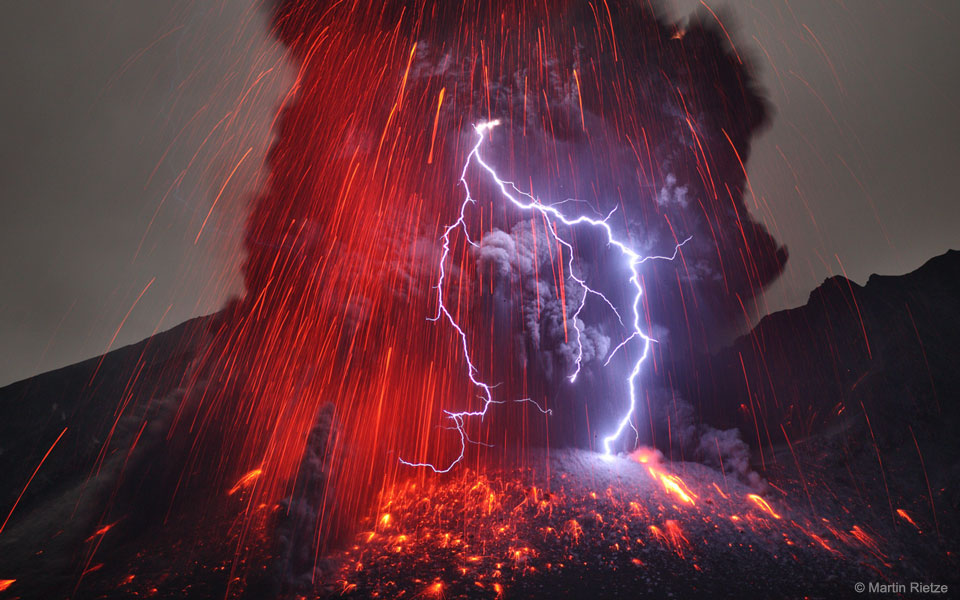
Why does a volcanic eruption sometimes create lightning? Pictured above, the Sakurajima volcano in southern Japan was caught erupting in 2013 January. Magma bubbles so hot they glowed shot away as liquid rock burst through the Earth’s surface from below. The featured image is particularly notable, however, for the lightning bolts caught near the volcano’s summit. Why lightning occurs even in common thunderstorms remains a topic of research, and the cause of volcanic lightning is even less clear. Surely, lightning bolts help quench areas of opposite but separated electric charges. Volcanic lightning episodes may be facilitated by charge-inducing collisions in volcanic dust. Lightning is usually occurring somewhere on Earth, typically over 40 times each second. via NASA https://ift.tt/2IeY6e5

The Red Rectangle Nebula from Hubble

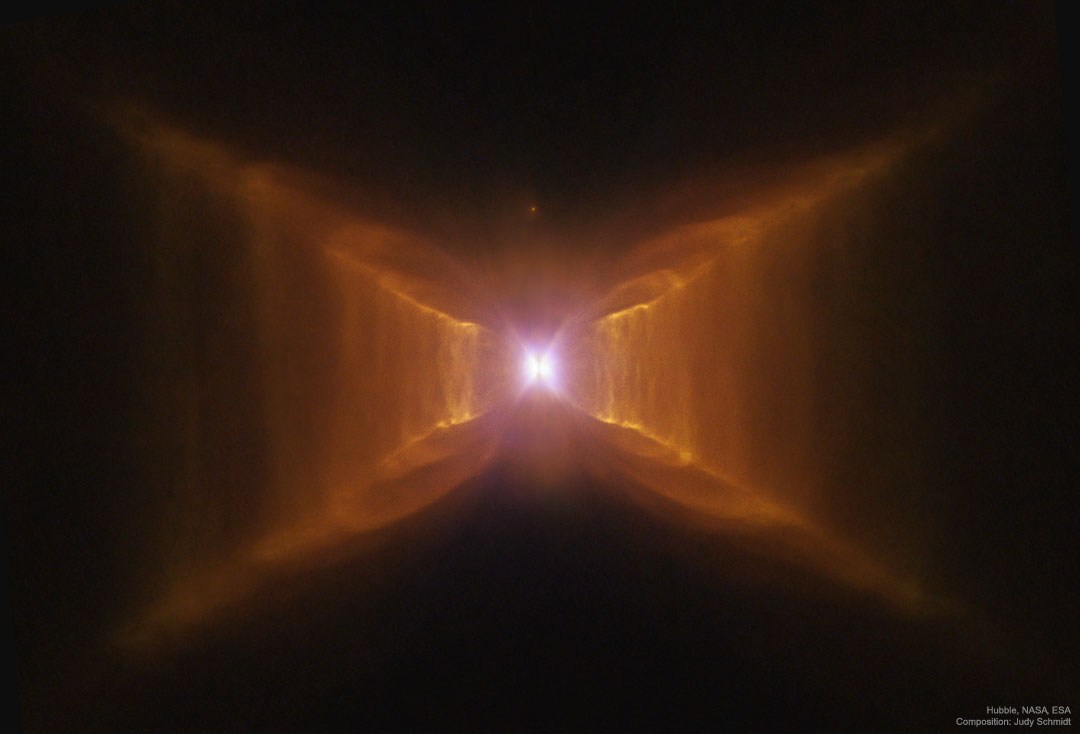
How was the unusual Red Rectangle nebula created? At the nebula’s center is an aging binary star system that surely powers the nebula but does not, as yet, explain its colors. The unusual shape of the Red Rectangle is likely due to a thick dust torus which pinches the otherwise spherical outflow into tip-touching cone shapes. Because we view the torus edge-on, the boundary edges of the cone shapes seem to form an X. The distinct rungs suggest the outflow occurs in fits and starts. The unusual colors of the nebula are less well understood, however, and speculation holds that they are partly provided by hydrocarbon molecules that may actually be building blocks for organic life. The Red Rectangle nebula lies about 2,300 light years away towards the constellation of the Unicorn (Monoceros). The nebula is shown here in great detail as recently reprocessed image from Hubble Space Telescope. In a few million years, as one of the central stars becomes further depleted of nuclear fuel, the Red Rectangle nebula will likely bloom into a planetary nebula. via NASA https://ift.tt/2rvELus